AI-Driven Smart Grids & Economic Load Dispatch: Navigating India's Power Sector Transformation
An analytical examination of modern power system optimization, real-time demand fluctuations, and key operational takeaways from the SGSITS Indore Expert Talk Series.
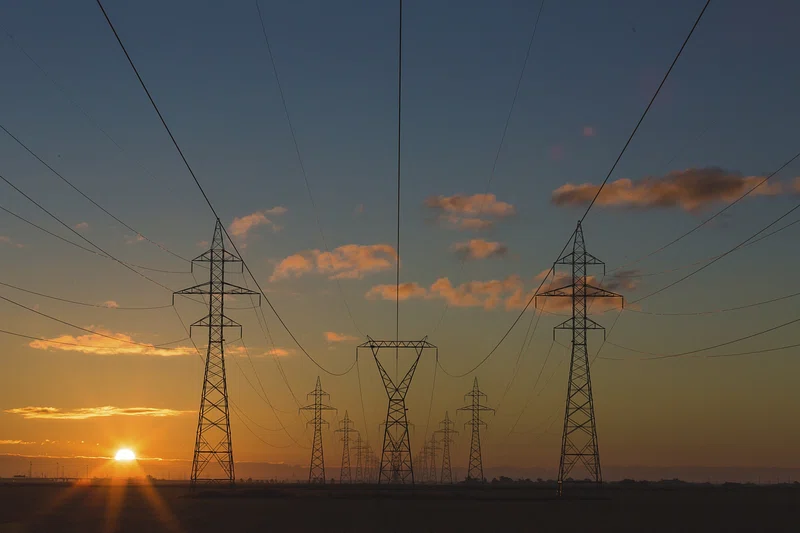
Modern transmission grids are evolving to accommodate fluctuating renewable energy inputs and rapid demand spikes using artificial intelligence.
Executive Summary
India’s electrical power sector is undergoing a massive structural shift. With non-fossil fuel capacity now representing over half of total generation capacity, the primary engineering challenge has pivoted from simply adding generation capacity to balancing real-time grid variability at minimum cost. At the heart of this operational balancing act sits Economic Load Dispatch (ELD).
This report explores the insights gathered from the four-day national expert talk series held at Shri Govindram Seksaria Institute of Technology and Science (SGSITS), Indore. It analyzes how classical mathematical power dispatch models are evolving into dynamic, machine learning-driven frameworks capable of handling high-density AI compute loads, extreme urban cooling spikes, and intermittent renewable sources.
1. SGSITS Indore Hosts National Seminar on Power System Optimization
From July 14 to July 17, 2026, the Department of Electrical Engineering at SGSITS, Indore, organized a comprehensive expert talk series titled "Recent Trends in Economic Load Dispatch." The event convened over 200 electrical engineers, academic researchers, and industry specialists to discuss technological solutions for modern power grid vulnerabilities.
The academic interactions were held under the patronage of SGSITS Director Prof. Neetesh Purohit and guided by Prof. Shailendra Kumar Sharma, Head of the Electrical Engineering Department. Keynote sessions were led by renowned academician Prof. R. S. Tare, who outlined the operational pressures placed on classical grid scheduling algorithms by the rapid integration of distributed solar, wind, and industrial microgrids.
"Electrical engineering is witnessing an unprecedented transformation with the integration of renewable energy, smart grids, artificial intelligence, and digital technologies. Our objective is to ensure that students remain academically strong while developing industry-ready skills aligned with emerging technological trends." — Prof. Shailendra Kumar Sharma, Head, Department of Electrical Engineering, SGSITS
The four-day programme was coordinated by a faculty committee comprising Prof. Rinki Rajpal, Prof. Sanjay Gothwal, Prof. Abhishek Dubey, and Prof. Himanshi Koli, highlighting the active role academic institutions play in equipping the technical workforce for next-generation utility operations.
2. What Is Economic Load Dispatch (ELD)?
In power system engineering, Economic Load Dispatch (ELD) is the process of allocating total electrical demand among available power generation units in a way that minimizes total operational costs while satisfying all technical and physical security constraints.
To make this concept accessible, imagine running a factory powered by three generators: a cheap but slow-starting generator, an expensive fast-acting generator, and a solar setup dependent on weather. Determining how much electricity each source should produce every second to keep the lights on at the absolute lowest cost is the fundamental goal of ELD.
The Mathematical Shift: Classical vs. Non-Convex Realities
In traditional thermal power systems, ELD relied on simple quadratic cost functions solved via classical calculus (such as the equal incremental cost method or Lambda Iteration). The primary objective function seeks to minimize total fuel cost ($C_T$):
Subject to Active Power Balance:
∑ P_i = Power_Demand + Power_Losses
While these deterministic equations worked well for steady thermal generators, modern grids introduce complex, non-convex constraints including:
- Valve-Point Loading Effects: Sudden ripple effects in fuel consumption caused by opening steam valves in thermal turbines.
- Ramp-Rate Limits: Physical constraints on how quickly a thermal plant can increase or decrease output.
- Multi-Fuel Flexibility: Power plants operating on variable gas-coal-biomass blends with fluctuating spot prices.
- Intermittent Renewable Injection: Sudden, unexpected solar or wind power drops caused by localized weather changes.
3. The 2026 Grid Reality: Data Centers, Climate Events, and Volatility
During the panel discussions at SGSITS, speakers underscored three major macroeconomic catalysts reshaping electricity demand profiles across India in 2026:
A. High-Density AI Data Center Clusters
The rapid proliferation of artificial intelligence computing clusters in tier-1 and tier-2 tech corridors has altered regional load baselines. Unlike traditional cloud computing, high-density GPU server racks create localized, persistent power demands ranging from 80 kW to 150 kW per rack. Sudden bursts in AI workload processing create sharp step-changes in power demand, requiring immediate secondary frequency response.
B. Evening Peak Demand Shifts
Widespread adoption of residential solar panels has lowered midday net demand (creating the classic "duck curve"). However, as solar output drops toward zero in the late afternoon, urban air conditioning and industrial shifts create sharp evening demand surges, forcing grid operators to rapidly spin up peak-load resources.
C. Dynamic Transmission Capacity
Grid operators are moving away from conservative static rating limits on transmission lines. Instead, Sensor networks and IoT devices are enabling Dynamic Line Rating (DLR), allowing line capacity limits to adjust dynamically based on real-time wind speeds and ambient temperatures.
4. Architectural Comparison: Traditional vs. AI-Driven Smart Dispatch
| Parameter | Traditional Economic Dispatch | AI-Driven Dynamic Smart Dispatch |
|---|---|---|
| Primary Computational Model | Lambda Iteration, Gradient Search | Particle Swarm Optimization (PSO), Deep Reinforcement Learning (DRL) |
| Data Ingestion Rate | Hourly / 15-minute static snapshots | Sub-second real-time telemetry from SCADA & PMUs |
| Renewable Energy Integration | Treated as static deduction (Negative Load) | Dynamic probabilistic forecasting with real-time confidence intervals |
| Battery Storage (BESS) Handling | Manual / Rule-based dispatch | Automated charge/discharge scheduling optimized for tariff arbitrage |
| Adaptability to Unplanned Trips | Slow re-calculation; risk of load shedding | Pre-trained neural networks provide immediate mitigation strategies |
Key Takeaways for Energy Professionals & Academics
- Invest in Hybrid Forecasting Models: Combining physical weather prediction models with deep neural networks significantly reduces renewable forecasting errors.
- Accelerate Battery Storage Deployment: Energy storage systems (BESS) are critical for absorbing solar generation surpluses and smoothing out rapid ramps.
- Update Engineering Curricula: Electrical engineering education must blend classical circuit analysis with data science, Python programming, and automated optimization tools.
- Expand Automated Generation Control (AGC): Real-time signal exchange between regional dispatch centers and power generators is essential for grid stability.
Conclusion
The transition toward clean energy requires equal innovation in computational grid management. As highlighted during the SGSITS expert talk series, achieving a stable, low-cost power grid relies on combining classical engineering principles with advanced machine learning tools. Initiatives that foster dialogue between academic researchers and utility practitioners are vital to building a resilient, energy-efficient future.