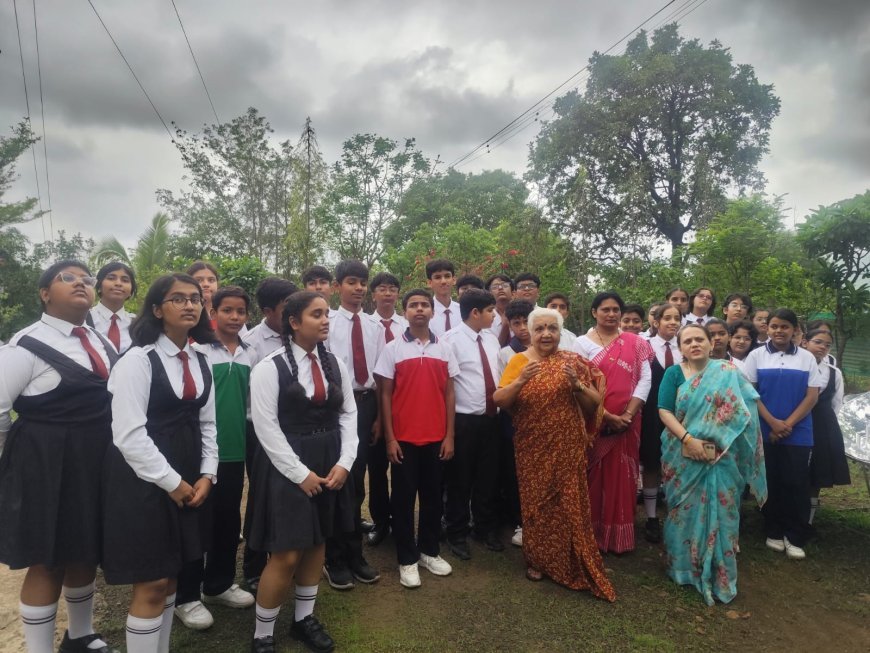
Students of Laurels School International Learn Sustainability in Action at Jimmy McGilligan Centre
- Class 8A students from Laurels School International, Indore visited the Jimmy McGilligan Centre for Sustainable Development.
- Students learnt about renewable energy, biodiversity conservation and zero-waste practices.
- The visit connected classroom education with practical sustainable technologies.
- Students interacted with environmentalist Janak Palta McGilligan and explored green innovations.
Students of Class 8A from Laurels School International, Indore, visited the Jimmy McGilligan Centre for Sustainable Development to gain practical knowledge about renewable energy, biodiversity conservation and zero-waste practices.
The students were accompanied by faculty members Firdous Ghori Khan, Atishuchi Sinha and Anjali Balakhe, who guided them throughout the educational visit and encouraged them to understand sustainable solutions beyond classroom lessons.
Connecting Classroom Learning with Sustainable Technologies
The educational visit was organised with the aim of connecting academic concepts with real-world applications of sustainable technologies. Through interactive demonstrations and practical experiences, students explored how renewable energy systems, biodiversity conservation methods and circular economy practices can contribute towards a more sustainable future.
During the tour, students gained insights into the functioning of off-grid renewable energy systems, the importance of conserving indigenous plant species and the role of responsible resource management in reducing environmental impact.
Students Interact with Janak Palta McGilligan
The group interacted with Janak Palta McGilligan, founder of the Jimmy McGilligan Centre for Sustainable Development, who shared her experiences and work in promoting solar cooking, sustainable living and skill development among rural and tribal communities.
She explained how renewable energy technologies can help create self-reliant communities by reducing dependence on conventional energy sources and encouraging environmentally responsible lifestyles.
Students Explore Off-Grid Solar and Wind Hybrid Energy Systems
During the visit, Janak Palta McGilligan demonstrated the centre’s off-grid solar and wind hybrid energy system and explained how renewable sources are combined to generate and store energy for continuous power supply without relying on fossil fuels.
Students learnt how solar panels and wind energy systems work together to provide clean energy solutions. The demonstration helped them understand the importance of renewable technologies in building energy-efficient and environmentally responsible communities.
The students also observed the functioning of solar dehydrators used at the centre for preserving fruits and herbs without electricity or chemical preservatives. They learnt how simple sustainable technologies can help reduce waste while supporting natural food preservation methods.
Learning About Wind Energy and Sustainable Power Solutions
The functioning of the on-site windmill was also demonstrated during the educational tour. Students were explained how wind energy can be used for pumping groundwater and generating supplementary electricity.
The demonstration highlighted the importance of hybrid renewable energy systems in meeting energy requirements throughout the year by combining different clean energy sources.
The practical exposure allowed students to understand that renewable energy is not only a concept in textbooks but also a workable solution that can support communities while protecting the environment.
Students Discover Indigenous Plants and Biodiversity Conservation
During their visit to the organic orchard, students were introduced to several indigenous plant species by Janak Palta McGilligan. She explained the ecological importance and practical uses of various plants maintained at the centre.
She explained that Aritha (soapnut) contains natural saponins and can be used as a biodegradable alternative to chemical detergents. This natural resource helps reduce dependence on synthetic cleaning products and supports eco-friendly practices.
Students also learnt about Parijat and its medicinal applications. Janak Palta McGilligan explained the traditional importance of this plant and how indigenous species play an important role in preserving biodiversity.
Another plant introduced to the students was Hanuman Ji Ka Sindoor (Bixa orellana), which produces a natural red dye. The students learnt how such natural colours can serve as alternatives to synthetic colouring agents and contribute to sustainable practices.
Understanding Zero-Waste Practices at the Centre
During the visit to the centre’s food processing units, Janak Palta McGilligan explained the importance of converting waste materials into useful resources.
“Waste is only waste if we waste it.”
She demonstrated how agricultural residues, including dry leaves and crop waste, are collected and processed into biomass fuel instead of being burnt in fields.
The students learnt that biomass produced from agricultural waste is used in smokeless cookstoves, reducing dependence on firewood and limiting exposure to harmful smoke.
Students Learn Value Addition Through Solar Drying
The students were also introduced to the use of solar dryers for producing organic powders, herbal teas and dried fruit products.
Janak Palta McGilligan explained how solar drying helps farmers and communities add value to agricultural produce while reducing food waste. The process allows natural preservation of products without relying on excessive energy consumption or chemical preservatives.
The demonstration gave students a practical understanding of how sustainable technologies can create livelihood opportunities while protecting natural resources.
Students Take Inspiration from Sustainable Living Practices
The educational visit provided students with a deeper understanding of how sustainable practices can be adopted in everyday life. From renewable energy systems and biodiversity conservation to waste management and natural resource protection, the students witnessed practical examples of environmental responsibility.
The experience encouraged students to think beyond classroom lessons and recognise their role in creating a cleaner, greener and more sustainable future.
The visit to the Jimmy McGilligan Centre for Sustainable Development served as an important learning opportunity, showing students that small actions and innovative solutions can create meaningful environmental change.
Conclusion
The visit of Laurels School International students to the Jimmy McGilligan Centre highlighted the importance of experiential learning in understanding sustainability. Through demonstrations, discussions and practical observations, students gained valuable insights into renewable energy, biodiversity conservation and zero-waste practices.
The initiative reflected the importance of introducing young learners to sustainable technologies and encouraging them to become responsible citizens who actively contribute towards environmental protection.