Leopard Enters Bicholi Mardana Residential Area After Chasing Delivery Worker in Indore
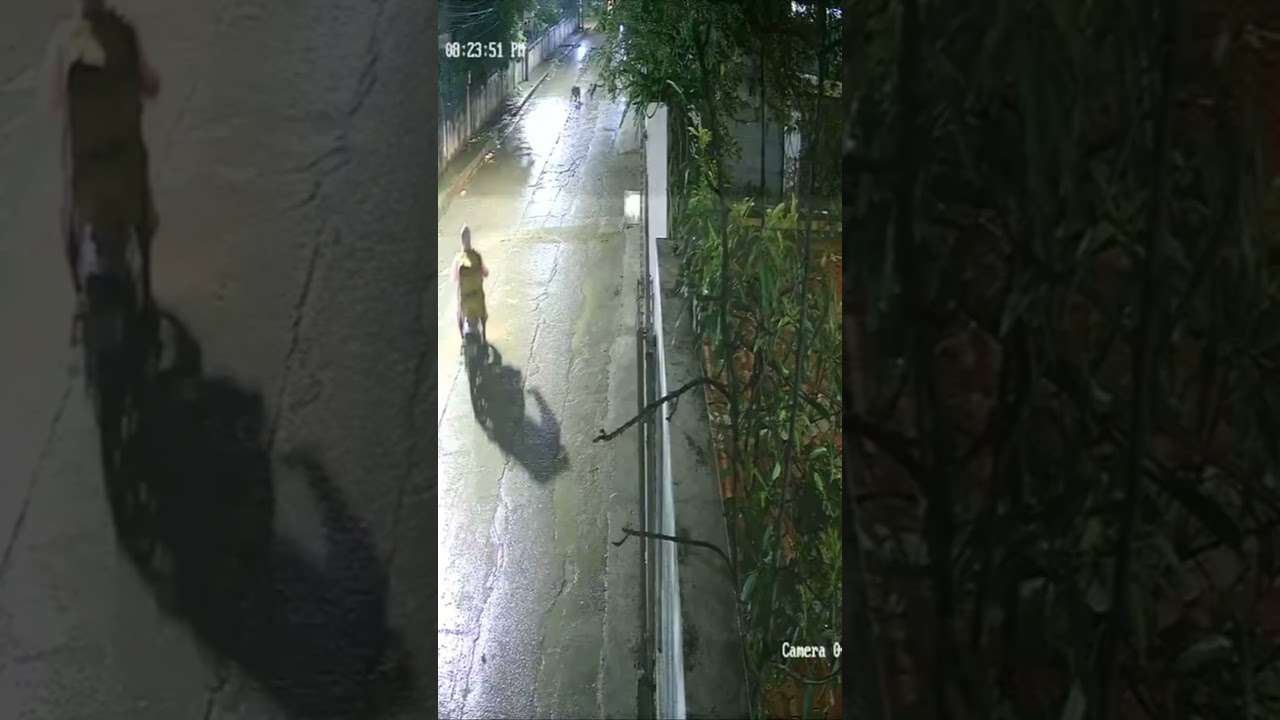
A leopard entering a residential neighbourhood in Bicholi Mardana, Indore created panic late at night after the animal reportedly chased a delivery worker before taking shelter inside a house. The incident drew a large crowd, prompting police and Forest Department officials to launch a rescue operation that continued despite heavy rainfall and poor visibility.
The dramatic sequence of events was captured on CCTV cameras installed in the locality, with videos quickly spreading across social media. Although the encounter frightened residents and temporarily disrupted movement in the area, officials stated that the delivery worker escaped safely and rescue teams immediately began efforts to locate and safely capture the wild animal.
The incident has once again highlighted the growing interaction between wildlife and rapidly expanding urban neighbourhoods on the outskirts of Indore. Areas located near the Ralamandal Wildlife Sanctuary and surrounding forest patches have witnessed occasional movement of leopards and other wild animals over the years, particularly during the monsoon season when natural habitats experience increased disturbance.
- A leopard entered the Bicholi Mardana area of Indore during the night.
- A delivery worker was reportedly chased but escaped without serious injury.
- The animal later entered a residential property and was seen inside a bathroom.
- Police and Forest Department officials reached the area and initiated a rescue operation.
- Heavy rain, darkness and large crowds made rescue efforts more challenging.
- Residents were advised to remain indoors and immediately report fresh sightings.
Leopard Spotted in Bicholi Mardana Sparks Panic Across Residential Locality
According to information available at the time of reporting, the leopard was first seen moving near a private school situated in Bicholi Mardana, a rapidly developing residential area along Indore's bypass corridor. Because several housing colonies in this region are located relatively close to forested landscapes, wildlife sightings occasionally occur, although encounters inside densely populated neighbourhoods remain uncommon.
At approximately 9:00 PM, a delivery executive arrived in the locality to complete a routine parcel delivery. CCTV footage indicates that moments after entering the lane, the leopard suddenly appeared nearby, causing the worker to abandon his motorcycle and run to safety. Residents who witnessed the incident immediately alerted neighbours while emergency services were informed through the police control room.
Soon afterwards, the leopard reportedly entered the compound of a nearby residence and was believed to have taken shelter inside a bathroom. Family members safely evacuated the building while nearby residents gathered outside to observe the situation from a distance. As videos circulated online, increasing numbers of people reached the location, creating additional challenges for authorities attempting to secure the area.
Officials repeatedly appealed to the public to maintain a safe distance. Wildlife experts generally advise against approaching wild animals or attempting to record them from close range, as loud noises and crowding can increase stress for the animal and complicate rescue efforts.
Why This Incident Has Drawn Widespread Attention
Although leopard sightings around Indore's outskirts are not entirely new, an incident involving a residential colony naturally attracts significant public attention because it raises questions about human-wildlife interaction, urban expansion and public safety. Videos showing the animal moving through narrow residential lanes quickly gained attention across social media platforms, prompting many residents to seek official updates regarding the rescue operation.
Wildlife experts note that leopards generally avoid direct contact with humans and often move under the cover of darkness while searching for safe routes back toward forested areas. However, when startled, cornered or surrounded by crowds, they may display defensive behaviour. This is why forest officials consistently request residents not to chase, provoke or attempt to capture wild animals on their own.
Growing Importance of Wildlife Awareness in Urban Areas
The Bicholi Mardana incident also serves as a reminder that cities expanding toward forest boundaries increasingly share landscapes with native wildlife. Conservation authorities across India continue to encourage greater public awareness about safe behaviour during wildlife sightings, emphasizing that responsible reporting and cooperation with trained rescue teams remain the safest approach for both residents and animals.
How the Leopard Encounter Unfolded: A Timeline of Events
Initial reports indicate that the leopard entered the Bicholi Mardana locality during the evening hours after moving through vegetation and open land situated near the residential colony. The area, which has witnessed rapid residential development in recent years, lies within a landscape where patches of forest and open fields still exist. Wildlife experts note that such corridors can occasionally be used by animals travelling between fragmented habitats.
Residents first became aware of the animal after CCTV cameras captured movement near a private school. Within minutes, messages warning neighbours about the leopard began circulating through local WhatsApp groups and community networks. Several residents chose to remain indoors while others gathered outside in an attempt to understand the situation.
Around 9:00 PM, a delivery executive reportedly entered the lane on a motorcycle to complete a parcel delivery. According to eyewitness accounts and available video footage, the leopard suddenly appeared nearby, forcing the delivery worker to abandon the motorcycle and run toward a safer location.
Officials later confirmed that the delivery worker managed to escape without serious injuries. While the encounter created understandable fear, no fatalities were reported during the incident.
Delivery Executive Escapes After Unexpected Encounter
For delivery personnel, residential neighbourhoods are part of their routine work environment, making unexpected wildlife encounters extremely rare. The delivery worker reportedly had little warning before noticing the leopard. As the animal appeared in close proximity, the quickest option was to leave the motorcycle behind and move away from the area immediately.
Experts generally advise that when a person unexpectedly encounters a wild leopard, avoiding sudden attempts to approach the animal and creating distance as safely as possible offers the best chance of reducing confrontation. Every wildlife situation is different, and trained rescue officials remain the most appropriate authorities to manage such incidents.
The motorcycle remained at the scene until emergency personnel secured the immediate surroundings, after which normal access to the area was gradually restored.
Leopard Takes Shelter Inside a Residential House
Following the initial encounter, the leopard reportedly moved deeper into the residential colony before entering the premises of a nearby house. According to local residents, the animal eventually sought shelter inside a bathroom, creating an unusual and potentially dangerous situation for the occupants.
The family immediately exited the property and informed neighbours while maintaining a safe distance. Officials later praised residents for avoiding direct confrontation with the animal, as cornered wildlife may behave unpredictably when frightened or surrounded.
As news spread across the locality, increasing numbers of people arrived to witness the incident. Managing these crowds quickly became one of the biggest operational challenges for responding authorities.
Police Secure the Area While Forest Officials Begin Rescue Operations
After receiving emergency calls, local police reached the neighbourhood and began restricting public movement around the affected residence. The Forest Department was informed soon afterwards, with trained personnel from the Ralamandal range mobilised to assess the situation.
Wildlife rescue operations require careful planning because officials must protect nearby residents while also ensuring the safety of the animal. Unlike domestic animals, wild leopards can become increasingly stressed when exposed to loud noises, flashing lights or large crowds.
Authorities therefore focused on creating a secure perimeter before attempting further action. Residents living nearby were requested to remain inside their homes until the situation became clearer.
Heavy Rain and Darkness Complicate Rescue Efforts
Weather conditions significantly affected the response operation. Continuous rainfall reduced visibility across the locality, while wet roads and poor lighting made movement more difficult for rescue teams. Officials also had to work cautiously because locating a camouflaged leopard in darkness carries additional risks.
Search teams inspected surrounding streets, open plots and nearby vegetation after reports suggested that the animal might have moved from its initial location. However, rainfall can quickly wash away footprints and other signs that normally assist wildlife trackers.
These conditions meant that the rescue operation required patience rather than rapid intervention, with authorities prioritising public safety over unnecessary risk.
Forest Department Officials Coordinate Search Operation
Forest Department personnel, assisted by local police, continued monitoring the area throughout the night. Officers conducted systematic searches while also speaking with residents who reported possible sightings.
According to officials, one of the biggest priorities during wildlife rescues inside populated areas is preventing panic. Crowds attempting to photograph or follow the animal can unintentionally block escape routes, increasing the likelihood of defensive behaviour.
For this reason, officials repeatedly appealed to residents to cooperate with instructions and avoid gathering near the affected property.
"The teams searched the locality extensively, but continuous rainfall and poor visibility made it difficult to locate the animal during the night," officials said during the rescue operation.
Residents Urged to Remain Calm and Follow Official Instructions
As the rescue operation continued, authorities issued repeated advisories asking residents not to spread unverified information on social media. Officials emphasised that only confirmed updates released by the Forest Department or local administration should be relied upon.
People living in nearby colonies were advised to keep doors and gates securely closed, avoid unnecessary outdoor movement after dark and immediately report any fresh sightings through official channels rather than attempting to investigate independently.
Although incidents involving leopards in urban neighbourhoods are uncommon, wildlife authorities state that coordinated action between residents, police and trained rescue teams is essential for ensuring both public safety and the successful management of such situations.
Why Are Leopards Being Seen Near Residential Areas in Indore?
The leopard sighting in Bicholi Mardana has renewed public discussion about wildlife movement around Indore. While such incidents often generate significant attention, wildlife experts explain that they are usually the result of changing landscapes rather than unusual animal behaviour. As cities expand toward forest boundaries, the chances of humans and wildlife crossing paths naturally increase.
Leopards are highly adaptable wild cats capable of surviving in a variety of habitats, including forests, scrubland, rocky terrain and agricultural landscapes. Unlike many other large predators, they are known to move quietly over long distances, particularly during the evening and night, when human activity is relatively low.
When natural habitats become fragmented because of roads, housing developments or commercial construction, animals may travel through villages and urban fringes while searching for food, water or safer routes between forest patches. In many cases, these movements are temporary, and the animals attempt to return to less populated areas once they find an escape path.
Ralamandal Wildlife Sanctuary and Nearby Forest Areas
Several residential neighbourhoods in southern and western Indore are located close to forested landscapes associated with the Ralamandal Wildlife Sanctuary and surrounding green zones. These natural areas support a variety of wildlife, including deer, jackals, peafowl, reptiles and occasionally leopards.
The sanctuary plays an important role in conserving local biodiversity while also serving as a green buffer for the rapidly growing city. However, continued urban expansion means that the distance between residential colonies and wildlife habitats has become smaller in some locations than it was a decade ago.
During the monsoon season, dense vegetation, increased water availability and changing movement patterns can make wildlife sightings more likely in areas bordering forests. This does not necessarily indicate an increase in leopard populations, but it can lead to more reported encounters as animals move through shared landscapes.
Urban Growth and Human-Wildlife Interaction
Indore has experienced significant residential and infrastructure development over recent years, particularly along the bypass corridor and surrounding suburban areas. New housing projects, educational institutions and commercial establishments have transformed locations that were once largely open land.
As development expands, wildlife corridors that animals have used for generations may become interrupted. In some cases, animals continue following familiar routes, even though those paths now pass near homes, roads or public spaces.
Conservation experts often emphasize that human-wildlife conflict is not always the result of aggressive animal behaviour. Instead, many encounters occur because both people and wildlife are using the same landscape for different purposes.
Factors That Can Increase Wildlife Sightings
- Expansion of residential colonies near forest boundaries.
- Reduction or fragmentation of natural wildlife corridors.
- Seasonal movement during the monsoon.
- Availability of water sources outside protected forests.
- Presence of stray animals that may attract predators.
- Construction activity altering traditional movement routes.
Do Leopards Usually Attack Humans?
Wildlife authorities consistently note that leopards generally avoid direct interaction with humans whenever possible. Most sightings involve animals attempting to move unnoticed through an area rather than actively seeking confrontation.
Incidents involving attacks often occur when an animal is surprised at close range, feels trapped, is unable to find an escape route or becomes stressed because of surrounding crowds. This is one reason officials repeatedly request residents to avoid approaching wild animals or attempting to capture photographs from a close distance.
Every wildlife encounter is unique, and the behaviour of an individual animal cannot be predicted with certainty. For that reason, official guidance should always take priority over rumours or advice circulating on social media.
Challenges Faced During Urban Wildlife Rescue Operations
Rescuing a wild leopard from a populated neighbourhood is a highly specialised operation that requires careful coordination between the Forest Department, local police and, where necessary, trained veterinarians. The primary objective is to ensure public safety while minimizing stress and injury to the animal.
Unlike rescue operations in open forests, urban environments present several additional challenges. Narrow streets, boundary walls, parked vehicles and crowds can all restrict the movement of rescue teams while also limiting safe escape routes for the animal.
If a leopard feels surrounded, it may attempt to hide in enclosed spaces such as garages, sheds, empty buildings or bathrooms, as reported during the Bicholi Mardana incident. Rescue personnel therefore work systematically to secure the area before making any attempt to locate or safely contain the animal.
Common Steps During a Leopard Rescue
- Secure the surrounding area and restrict public access.
- Gather information from eyewitnesses and CCTV footage.
- Identify the animal's last confirmed location.
- Monitor possible escape routes.
- Deploy trained wildlife personnel and equipment.
- Safely tranquilize or guide the animal when necessary.
- Conduct a health assessment before relocation.
Role of CCTV in Wildlife Incidents
Modern CCTV systems increasingly assist authorities in understanding wildlife movement within urban areas. Video footage can help confirm the time of an animal's appearance, identify its direction of travel and reduce the spread of misinformation during rapidly developing situations.
In the Bicholi Mardana incident, CCTV recordings also helped illustrate how quickly the situation unfolded, allowing investigators to reconstruct the sequence of events more accurately than relying solely on eyewitness accounts.
As residential surveillance systems become more common across Indian cities, they are expected to play an increasingly important role in wildlife monitoring, public safety and emergency response.
Balancing Conservation and Public Safety
India is home to one of the world's largest populations of wild leopards, making conservation an important national priority. At the same time, ensuring the safety of communities living near forested areas requires ongoing cooperation between government agencies, conservation organisations and local residents.
Experts emphasize that long-term solutions involve protecting natural habitats, maintaining wildlife corridors, strengthening public awareness and improving rapid-response capabilities for emergency wildlife rescues.
Incidents such as the one reported in Bicholi Mardana highlight the importance of balancing urban development with environmental conservation. As cities continue to grow, responsible planning and community awareness will play an increasingly important role in reducing human-wildlife conflict while protecting both people and native wildlife.
How Residents Can Stay Safe During Wildlife Sightings
Wildlife authorities stress that public cooperation is one of the most important factors in safely managing incidents involving wild animals. While seeing a leopard in a residential neighbourhood can be alarming, panic and crowding often make rescue operations more difficult. Staying calm and following official instructions helps reduce risks for both people and the animal.
Residents living near forested areas or urban fringes should remain aware of their surroundings, especially during early morning and late evening hours when wildlife movement is generally more common. If a leopard or any other wild animal is spotted, the safest course of action is to move indoors, avoid attracting attention and immediately inform the Forest Department or local police.
- Stay indoors if a wild animal is reported nearby.
- Do not attempt to chase, corner or provoke the animal.
- Avoid gathering in crowds near the sighting location.
- Keep children and pets inside until authorities declare the area safe.
- Use outdoor lighting where possible during the night.
- Report sightings only through official emergency numbers or the Forest Department.
- Avoid sharing unverified rumours on social media.
What This Means for Delivery Workers and Night Shift Employees
Delivery personnel, security guards, sanitation workers and other professionals who work during evening or overnight hours often travel through residential streets with relatively little pedestrian activity. Incidents such as the one reported in Bicholi Mardana highlight the importance of remaining alert while working in areas located near forest boundaries.
Companies that employ field staff may also benefit from reviewing emergency response procedures and encouraging workers to immediately report unusual wildlife sightings rather than attempting to continue deliveries in potentially unsafe conditions.
Experts recommend that workers encountering any wild animal should prioritize personal safety, avoid sudden movements if possible and create distance without provoking the animal. Local authorities should then be informed so trained personnel can assess the situation.
Community Awareness Plays an Important Role
Rapid communication among residents can help emergency services respond more quickly, but accuracy is equally important. False information or outdated social media posts may unintentionally create unnecessary panic and divert emergency resources.
Resident welfare associations, schools and local community groups can contribute by sharing verified safety information and encouraging people to rely on official announcements rather than speculation. Community awareness programmes also help residents understand how to respond appropriately if wildlife is seen near homes, parks or roads.
What Happens After a Leopard Rescue?
After a leopard has been safely located and secured, Forest Department officials generally assess the animal's health before deciding on the most appropriate course of action. Depending on the circumstances, the leopard may be released into a suitable forest habitat or managed according to wildlife conservation protocols.
Officials may also conduct follow-up monitoring in nearby areas to determine whether additional wildlife movement is occurring. In some situations, camera traps or increased patrols are used to better understand animal activity and reduce the likelihood of future encounters.
Residents are typically informed when authorities determine that the immediate risk has passed and normal activity can safely resume.
Broader Lessons from the Bicholi Mardana Incident
Although the leopard sighting caused concern among residents, it also highlights the importance of coordinated emergency response, public awareness and wildlife conservation. Successful management of such incidents depends on cooperation between local communities, police, forest officials and trained wildlife rescue teams.
As Indore continues to expand, balancing urban development with environmental conservation will remain an important challenge. Preserving green spaces, maintaining wildlife corridors and promoting public education can help reduce the likelihood of future human-wildlife conflicts while protecting biodiversity.
Experts also emphasize that coexistence with wildlife requires informed decision-making rather than fear. Responsible reporting, respect for official safety guidance and continued conservation efforts all contribute to safer communities and healthier ecosystems.
Frequently Asked Questions (FAQ)
Was anyone injured during the Bicholi Mardana leopard incident?
According to official information available at the time of reporting, the delivery worker managed to escape safely. Authorities responded quickly after receiving reports of the leopard's presence in the residential area.
Why do leopards sometimes enter residential areas?
Leopards may travel through urban fringes while moving between forest habitats, searching for water or following traditional wildlife corridors. Rapid urban development near forested areas can increase the chances of such encounters.
Where was the leopard seen?
The leopard was reported in the Bicholi Mardana area of Indore, where it was seen moving through a residential locality before reportedly taking shelter inside a house.
How did officials respond?
Police secured the area while Forest Department personnel initiated a rescue operation. Weather conditions and public crowds presented additional operational challenges during the response.
Should residents approach a leopard if they see one?
No. Wildlife authorities advise residents to remain at a safe distance, move indoors where possible and immediately inform the Forest Department or police. Approaching or attempting to photograph a wild animal from close range may increase risks.
Are leopard sightings common in Indore?
Sightings are relatively uncommon within densely populated neighbourhoods, but areas located near forest habitats may occasionally experience wildlife movement, particularly during certain seasons.
Can CCTV footage help wildlife rescue teams?
Yes. CCTV recordings can assist officials by confirming the animal's movements, identifying the time of sightings and helping reconstruct the sequence of events during rescue operations.
Key Facts at a Glance
| Category | Details |
|---|---|
| Location | Bicholi Mardana, Indore |
| Incident | Leopard entered a residential locality and was later reported inside a house. |
| Initial Response | Police secured the area and informed the Forest Department. |
| Operational Challenges | Heavy rainfall, darkness and crowd control. |
| Public Advisory | Remain indoors, avoid crowds and report sightings to authorities. |
Conclusion
The leopard sighting in Bicholi Mardana serves as an important reminder of the changing relationship between expanding cities and surrounding wildlife habitats. While such incidents naturally attract public attention, experts emphasize that informed public behaviour and timely action by trained rescue teams remain the most effective ways to protect both residents and wildlife.
Authorities continue to encourage residents to stay alert, rely on verified information and cooperate with official instructions whenever wildlife is reported in populated areas. As Indore grows, continued investment in conservation, public awareness and emergency preparedness will play a key role in reducing future human-wildlife encounters.
Editor's Note: This article is based on information available from official statements and eyewitness reports at the time of publication. If authorities release additional verified information regarding the incident or rescue operation, this report will be updated accordingly.