Indore’s Ganeshotsav 2026: Eight Pandals That Capture the Changing Face of the Festival
From an immersive forest and a Coconut Ganesh to a Gen-Z “wall of thoughts” and grand traditional darbars, these eight pandals show how Indore is giving the temporary Ganesh celebration new visual and social meaning.
With nearly 1,400 temporary Ganesh pandals across Indore this year, the city's Ganeshotsav has become a sprawling mix of devotion, craftsmanship, spectacle and social messaging. While some committees continue with the traditional Raja format, others have turned their pandals into elaborate environments — a forest, an environmental tableau, a material-art installation or a grand architectural darbar.
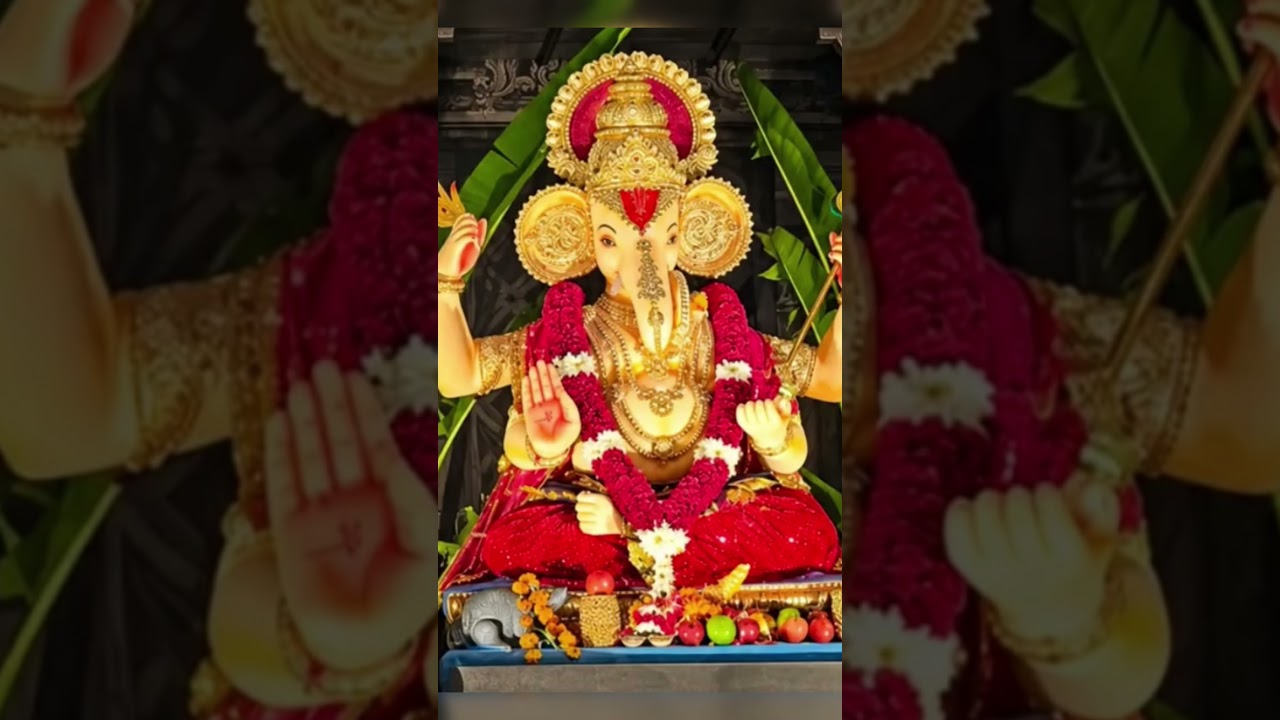
Among the most distinctive 2026 installations are Jairampur Colony Ganesh, Veer Gali's Coconut Ganesh, Tilak Nagar Ke Raja, Maharana Pratap Chowk's Raja Ganesh, Rambagh Ke Raja, Lalbagh Ke Raja, Sindhi Colony's community pandals and Palda Ke Raja.
Together, they show how Indore's temporary Ganesh celebrations are evolving. The attraction is no longer only the height of the idol or the size of the decoration. Increasingly, it is the look of the murti, the setting around it and the idea behind the pandal that draw visitors.
Maharana Pratap Chowk: A Gen-Z Conversation with Bappa
At Maharana Pratap Chowk in Usha Nagar, the organisers have given the traditional Ganesh pandal a distinctly contemporary treatment.
The 2026 Raja Ganesh installation carries a Gen-Z theme, with a “wall of thoughts” where young visitors can write their ideas, questions and messages. The pandal therefore works as both a place for darshan and an interactive space.
The idol remains at the centre of the installation, but the surrounding presentation is designed to encourage young visitors to stop, participate and leave their own mark rather than simply pass through after darshan.
It is a relatively simple idea, but it changes the character of the pandal. The visitor becomes part of the display.
Jairampur: Ganesha in a Forest
Jairampur Colony offers perhaps the most immersive visual experience of the eight.
For its 43rd Ganeshotsav, the committee has built a large forest landscape around the theme of environmental conservation. Mountains rise behind the main tableau, with trees, plants and waterfalls filling the setting. Peacocks, butterflies, deer, elephants, pigeons, parrots and monkeys are placed through the landscape.
Then comes the central figure: Ganesha presented in the form of Hanuman.
He is not simply seated on a throne. The tableau places him in a series of rural scenes — riding a bullock cart, moving through a field, sitting on a swing and carrying a kanwar. These details give the idol a more animated, narrative character.
Lord Jagannath is also part of the installation. At the entrance, two mice appear as dwarapalas, turning Ganesha's familiar vahana into the guardians of the pandal.
Above this forest setting is a 12-foot Adiyogi Shiva. A Shivling and Nandi accompany him, and water is released over the Shivling to create the effect of a continuous abhishek.
The result is a pandal in which the visitor's eye keeps moving — from the animals and greenery to Ganesha-Hanuman, then upwards towards Adiyogi.
The environmental message also extends to the festival programme. The committee plans to distribute plants and educational material for children along with prasad during the 12-day celebration. Forty-three people associated with social work will also be felicitated.
Last year, Jairampur presented a very different spectacle: a 40-foot chariot inspired by the Jagannath Rath of Puri, with Ganesha presented as Lord Jagannath. This year, the committee has replaced the giant chariot with an entire forest.
The pandal does not merely decorate the idol. It builds an entire environment around it, turning darshan into a visual journey through greenery, animals, mythology and an environmental message.
Veer Gali: Ganesha Made from Coconut
At Veer Gali, visitors are likely to notice the surface of the idol before anything else.
The 2026 Coconut Ganesh has been created using coconut shells, coconut fibre and other coconut material, with approximately 11 kg of cowries incorporated into the work.
The coconut pieces give the idol a textured, handcrafted appearance that is very different from the smooth, painted surface of a conventional murti. The cowries add another layer of texture and detail.
Here, the material is effectively the design. Instead of being hidden beneath paint or decoration, the coconut and cowries remain visible and become the defining feature of the Ganesha.
The result is an idol that rewards a closer look. From a distance, it is a Ganesha; up close, the unusual construction becomes the attraction.
Tilak Nagar: The Cute Raja Made from Three Tonnes of Clay
At Tilak Nagar, it is the face that draws attention.
The 2026 Tilak Nagar Ke Raja has a distinctly cute and endearing appearance, giving the 14-foot idol a softer personality than many of the more imposing Rajas across the city. Its expressive features and approachable look have made the idol particularly appealing to visitors and children.
The scale, however, is anything but small. The Ganesha stands 14 feet tall and has been made using approximately three tonnes of clay.
That contrast is what makes the idol memorable: a large, substantial murti presented with a gentle, almost child-friendly expression.
The use of clay also gives the installation an environmental dimension. But unlike a pandal where the ecological message dominates the visual presentation, at Tilak Nagar it is the character of the Ganesha himself that makes the first impression.
Rambagh: A Traditional Raja Behind a Grand Façade
At Rambagh, the eye is drawn first to the setting.
The 2026 Rambagh Ke Raja sits within an elaborate illuminated façade, with ornate architectural detailing framing the idol. The structure has the appearance of a grand temple or darbar, giving the Ganesha a formal and imposing setting.
The idol itself is traditionally presented and richly adorned. A prominent crown and elaborate ornamentation draw attention to the face and upper body, while the lighting around the structure gives the entire installation a warm, ceremonial appearance.
It is a classic Raja presentation: the idol is the centrepiece, but the architecture around it is designed to make the darshan feel grand.
Lalbagh: A Blue-Clad Raja in a Richly Decorated Darbar
Lalbagh's 2026 Raja takes a similarly traditional route but has a noticeably different colour palette.
Lalbagh Ke Raja is dressed prominently in blue, with an elaborate crown, floral garlands and traditional ornaments. The Ganesha sits on a decorated throne, framed by a richly detailed backdrop with a carved, architectural appearance.
The blue clothing immediately distinguishes the idol. Against the warmer golden-brown tones of the backdrop and the flowers around him, the colour gives the Raja a strong visual presence.
The overall effect is that of a formal darbar — richly decorated, symmetrical and ceremonial — rather than an immersive thematic set.
Rambagh and Lalbagh therefore offer an interesting contrast. Both retain the familiar Raja format, but the two pandals create different visual impressions through their façades, lighting,