
Mistake the Section, Lose the Mark: CBSE Class 10 Digital Evaluation Rules Explained
For Class 10 students, getting an answer right is only one part of writing a strong board examination. Understanding the question paper, following its section headings and keeping answers organised can also help prevent avoidable mistakes.
Schools across Indore are preparing students to pay closer attention to section-wise answer placement in the context of the Central Board of Secondary Education's On-Screen Marking system. Educators are encouraging candidates to practise answer-sheet organisation during classroom assessments and pre-board examinations rather than waiting until the final board paper.
Watch: CBSE Class 10 Section-Wise Answer Writing
Watch this video for an overview of CBSE Class 10 On-Screen Marking, section-wise answer placement and practical answer-sheet precautions. Follow the instructions issued for your own examination.
Watch on YouTubeVideo published on YouTube on October 20, 2026 (IST), as supplied by the publisher.
Read the instructions printed on your question paper and answer booklet. Keep each response clearly associated with its question, follow the specified section structure and check your answer sheet before submission. Verify any claim about a particular marking penalty against the latest official CBSE instructions.
This article explains the reported concerns and provides practical examination advice. The claim that every answer written in the wrong section automatically receives zero marks should not be treated as a universally established CBSE rule without checking the relevant official circular. The exact consequences depend on the applicable examination instructions and evaluation procedure.
- What the Indore report says
- What On-Screen Marking means
- What CBSE city coordinator UK Jha said
- Science and Social Science answer placement
- Nisha Ahmad on examination discipline
- A practical answer-sheet method
- Three-hour examination planner
- Interactive exam-readiness checklist
- Mistakes students should avoid
- Official CBSE resources
- Frequently asked questions
CBSE Class 10 Students Asked to Pay Attention to Section-Wise Answers
INDORE: Schools across Indore have commenced intensive preparations to align Class 10 candidates with strict section-wise answer placement protocols described in connection with the Central Board of Secondary Education's On-Screen Marking digital evaluation system.
Board officials warned that answers written outside their designated subject sections could receive zero marks, regardless of accuracy, if the answers are not routed to the appropriate examiner under the applicable evaluation arrangement. Under On-Screen Marking, physical answer booklets are scanned, digitised and segmented into subject-specific pages before digital allocation to relevant subject examiners.
The concern is particularly relevant for students who leave questions unanswered during the first round and return to them at the end of the examination. If an answer is added in a place that does not comply with the paper's instructions, it may create difficulties in identifying, associating or evaluating that response.
For candidates, the practical lesson is not to become anxious about the technology. It is to develop a consistent method of reading instructions, identifying sections, numbering answers and reviewing the completed booklet.
What Is On-Screen Marking and Why Does Answer Placement Matter?
On-Screen Marking, commonly shortened to OSM, is a digital evaluation process in which scanned answer scripts are made available to authorised examiners through an electronic platform. The approach enables examiners to evaluate digitised material rather than relying solely on the physical movement of answer booklets.
The digitisation process makes the organisation and identification of answers important. Depending on the examination's design and the evaluation workflow, scripts or portions of scripts may be associated with particular subjects, questions or evaluators.
Students should not assume that digital evaluation means an examiner will automatically locate every response written anywhere in a booklet. Equally, they should not assume that a specific penalty applies to every misplaced answer unless the relevant official instructions establish that consequence.
What students control
Reading the directions, using the required answer locations, writing clear question numbers, maintaining legibility and checking the completed script.
What students must verify
The official section structure, any mandatory page or margin instructions, permitted answer-order flexibility and the applicable evaluation rules.
For board examination preparation, the safest approach is to combine subject revision with answer-writing practice. A student who regularly completes timed papers can develop a routine that makes it easier to follow instructions even when the examination feels stressful.
UK Jha Warns Students About Answers Written in the Wrong Section

"Answers written in the wrong subject section could receive zero marks, even if they were correct," said CBSE city coordinator UK Jha. "For instance, a Chemistry answer written in the Biology section may not be considered by the Chemistry evaluator."
Jha stated that marks forfeited due to incorrect section placement cannot be reclaimed through post-result verification or re-evaluation procedures.
The warning highlights a concern that students should take seriously: an answer must be presented in a way that allows it to be identified and evaluated under the applicable examination rules. Candidates should therefore avoid placing an answer in an unrelated section merely because it is convenient at the time.
However, students and parents should distinguish between the reported warning and a formally published board rule. Questions about whether a misplaced answer receives zero marks, and whether a particular review process is available afterward, should be checked against the current official CBSE notification and the rules applicable to that examination.
Why verification matters
Examination rules can be specific to a particular paper format, academic session or evaluation process. A news report can alert students to a potential risk, but the official instructions remain the appropriate reference for binding requirements.
Students should use the report as a reason to improve their answer-sheet discipline, not as a reason to panic or assume that every small layout mistake will automatically invalidate an otherwise correct response.
Science and Social Science Need Different Answer-Management Strategies
Under the paper structures described in the report, Science is categorised into Biology, Chemistry and Physics sections, while Social Science covers History, Geography, Political Science and Economics. The actual section structure must always be confirmed from the question paper for the relevant academic session.
Science: Keep numerical problems, equations and diagrams organised
Science papers may require students to move between definitions, chemical equations, numerical calculations, diagrams, experiments and explanatory answers. When a paper has distinct subject sections, candidates should check the heading before beginning each group of responses.
A Physics numerical should be written in the location specified for that question. A Chemistry equation should be presented clearly, and a Biology diagram should be labelled neatly where required. Students should also make sure that question numbers and subparts are easy to identify.
Where a paper contains integrated or case-based questions, candidates should follow the printed placement instructions rather than deciding on their own that a response belongs in another section.
Social Science: Maintain a clear sequence across subjects
Social Science can involve historical events, geographical concepts, political institutions and economic reasoning. Students may be tempted to jump between sections to answer questions they find easier.
Before doing so, they should check whether the question paper permits their preferred order of answering. If section-specific directions apply, those directions should take priority. Keeping question numbers clear and checking the heading before starting a new section can reduce confusion.
During every practice paper, evaluate two things separately: whether the answer is academically correct and whether it follows the paper's presentation and placement instructions. Improving both habits can make examination performance more consistent.
Why Students Should Not Leave Every Skipped Answer Until the Final Page
Arva Shakir, a senior educator at a CBSE-affiliated school, observed that candidates frequently leave unattempted questions to answer on the final pages of the booklet. She noted that under On-Screen Marking, out-of-sequence responses risk failing to reach the assigned evaluator.
"Students sometimes leave questions unfinished and attempt them on the final pages of the answer booklet," Shakir said. "Under the digital marking system, an answer written in the wrong section might not reach the examiner responsible for that subject."
Shakir advised candidates to reserve blank space within the specific section when postponing an attempt, rather than appending answers at the end of the script.
This advice addresses a common examination habit. A student encounters a difficult question, skips it and continues. Later, the student remembers the answer but has already filled the pages that would have been the natural place to write it.
The better solution is to plan the answer sequence. Students should use any permitted method for tracking unanswered questions and return to them in accordance with the booklet instructions. They should not assume that writing an answer on the last page is acceptable simply because the answer is correct.
Nisha Ahmad Highlights the Importance of Discipline Under Exam Stress
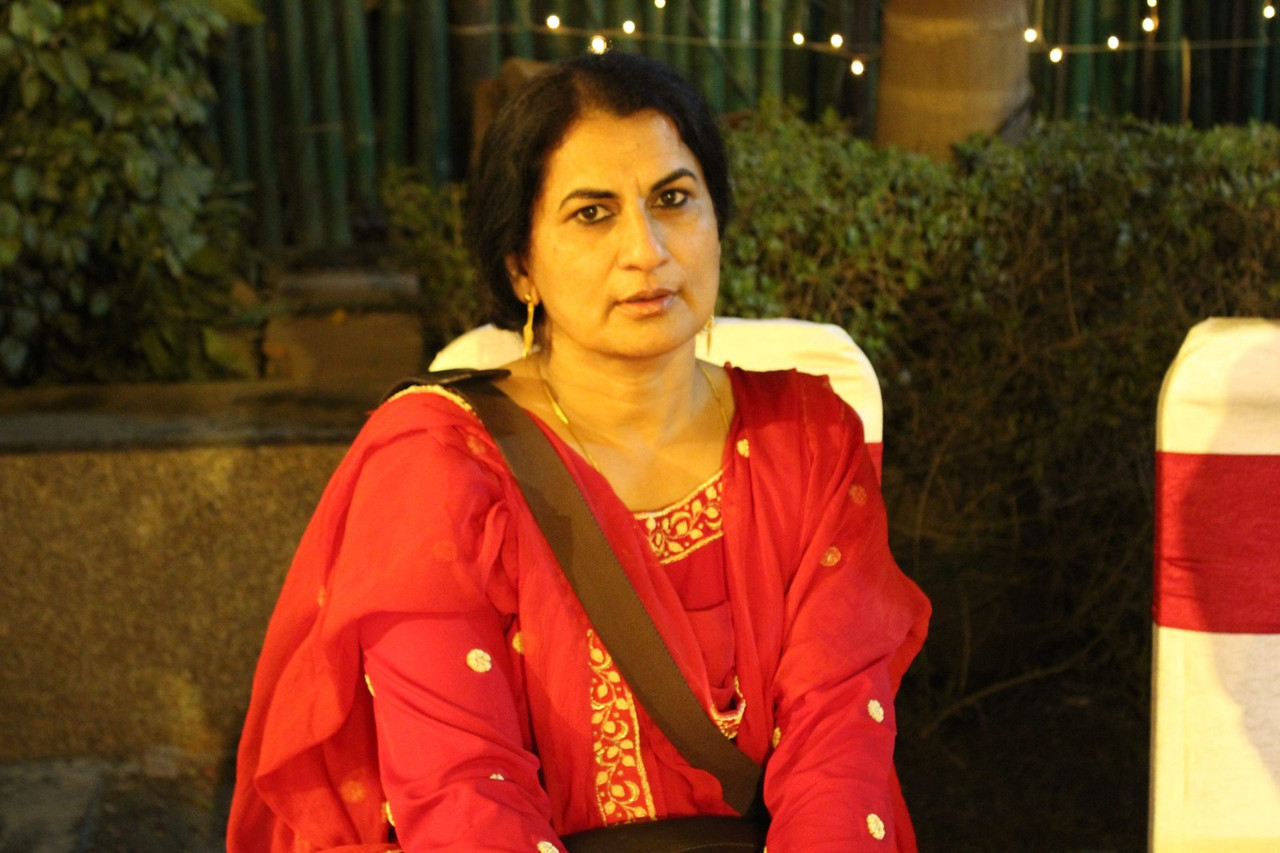
"Science requires clear categorization—mixing up a Physics numerical in a Chemistry section under exam stress is a common pitfall students face," Ahmad said. "With On-Screen Marking, neatness and discipline are as important as subject knowledge. We are guiding students during mock tests to map out their answer sheets carefully, strictly maintain section headers, and leave sufficient blank space within a section rather than appending missed questions at the very end of the booklet."
Ahmad's comments draw attention to a problem that is not limited to students who have failed to prepare. Even well-prepared candidates can make organisational mistakes when they rush, worry about the remaining time or try to finish a difficult question at the last moment.
Mock tests give students an opportunity to practise these decisions before the actual examination. They can learn to recognise when to move on, how to return to a skipped question and when to stop writing in order to review the answer sheet.
Teachers can also assess answer-sheet management during pre-board examinations. Instead of checking only the marks earned, they can identify whether students are following question numbering, using appropriate sections and presenting their work in an organised manner.
A Practical Method for Organising Your Answer Sheet
The following routine is designed to help students reduce confusion without making the examination process unnecessarily complicated. Adapt it to the instructions printed on the actual question paper and answer booklet.
Step 1: Read the paper instructions first
Before writing, identify the paper's sections, question numbering, answer requirements and any special directions. Check whether the instructions specify a sequence, a fresh page for a section or a particular area for writing answers.
Step 2: Identify the question before answering
Make sure the question number and subpart are clear. If the paper uses separate sections, confirm that you are writing under the correct heading. Avoid beginning an answer while still uncertain about where it belongs.
Step 3: Handle difficult questions strategically
If a question is taking too long, move on when your time plan calls for it. Keep track of the question using a permitted method and return to it later. Follow the instructions for the answer booklet rather than adding responses in arbitrary locations.
Step 4: Keep writing legible and organised
Use clear question numbers, separate distinct answers and label diagrams or calculations where necessary. Follow printed margin requirements and avoid placing important content outside the designated writing area.
Step 5: Review before submitting
Reserve time to check that the answers you intended to write are present, the question numbers are clear and the section instructions have been followed. A final review is particularly useful for students who skipped questions or changed their answering sequence.
How to Manage the Three-Hour Examination
Candidates have been advised to budget the three-hour duration across sections and reserve time to verify answer placement before submitting scripts. The appropriate schedule depends on the paper's marks, question types, section structure and the student's answering speed.
The following table provides a planning framework, not an official CBSE time-allocation mandate.
| Stage | Suggested approach | Why it helps |
|---|---|---|
| Initial reading | Understand the instructions and identify the sections. | Reduces confusion before writing begins. |
| First round | Attempt questions you can answer confidently. | Helps maintain momentum and use time productively. |
| Second round | Return to pending questions in the permitted locations. | Reduces the temptation to append answers randomly. |
| Final review | Check question numbers, section placement and missing responses. | Provides an opportunity to catch avoidable mistakes. |
For Social Science, approximately 40 minutes per major section may be used as an example during practice if that division suits the actual paper. It is not a universal or official rule. Students should allocate time according to the number of sections, the marks available and the instructions for the examination they are taking.
The important principle is to avoid spending so much time on one difficult question that there is no time left to complete other answers or review the booklet. Practising with the relevant official sample paper can help students develop a realistic plan.
Related Articles & Resources
Interactive CBSE Class 10 Exam-Readiness Checklist
Use this checklist during revision or before a mock examination. Tick each habit that you have practised successfully. Your completion progress will update automatically.
This checklist runs in your browser. It is a practice aid, not an official CBSE assessment.
Common Answer-Sheet Mistakes and How to Avoid Them
| Common mistake | Better practice |
|---|---|
| Starting to write without checking the section. | Read the heading and confirm the question number first. |
| Adding skipped answers at the end without checking instructions. | Plan how to return to pending questions in permitted locations. |
| Leaving the final review until there is no time remaining. | Include a short checking period in the time plan. |
| Using unclear or inconsistent question numbering. | Keep numbers and subparts easy to identify. |
| Assuming a news report replaces official instructions. | Verify binding examination requirements through CBSE resources. |
| Panicking after a small presentation mistake. | Stay calm, follow the instructions and ask the invigilator for procedural guidance when appropriate. |
What Parents and Schools Can Do Before Board Examinations
Schools across the city have incorporated section-wise answer management into classroom assessments and pre-board examinations to familiarise candidates with layout compliance. This approach can be helpful because students need opportunities to practise the entire examination routine, not simply memorise facts and solve individual questions.
Teachers can use mock tests to assess presentation, question numbering, time management and the ability to follow paper instructions. Feedback should explain exactly what needs to change, allowing students to build reliable habits before the final examination.
Parents can help by encouraging regular timed practice and a calm preparation routine. Repeatedly warning students that one mistake will ruin their results may increase anxiety. A more useful approach is to remind them to read the instructions, organise answers and reserve time for checking.
Students should also learn to distinguish between advice and mandatory rules. If they are uncertain about an answer booklet procedure, they should consult their teacher and the official examination instructions rather than relying on rumours circulated online.
Official CBSE Resources Students Should Bookmark
Official sample papers and academic guidance are available through CBSE's academic website. Board announcements and examination notices are published through the main CBSE website.
- CBSE Academic official website for curriculum documents, sample question papers and academic updates.
- CBSE official website for official board announcements, examination notices and circulars.
- CBSE Class 10 sample question papers for the 2025 to 2026 academic session. Check the official website for the correct session and newer available material.
Students should confirm that their practice papers match the relevant academic session. A previous year's sample paper can be useful for practice, but it should not replace the latest syllabus, examination scheme or specific instructions for the upcoming examination.
In particular, candidates and schools should consult an official circular before treating a claim about automatic zero marks, post-result verification or re-evaluation restrictions as a binding rule.
Frequently Asked Questions
What are the CBSE Class 10 On-Screen Marking rules?
On-Screen Marking refers to the digital evaluation of scanned answer scripts. Candidates should follow the instructions printed on their question paper and answer booklet and consult official CBSE notices for the specific rules applicable to their examination.
Will a correct answer receive zero marks if it is written in the wrong section?
The supplied report describes a warning that answers written in the wrong subject section could receive zero marks. The precise consequence should be verified against the relevant official CBSE instructions. Students should not assume that the same penalty applies automatically in every examination situation.
Should I start every section on a fresh page?
Follow the instructions printed on the actual question paper and answer booklet. Where a fresh page is required for a section, comply with that requirement. Do not allow general advice to override specific paper instructions.
Can I answer questions in a different order?
That depends on the instructions for the particular paper. Read the directions carefully. If the paper permits flexibility, keep the question numbering clear and make sure each response is placed where it can be associated with the correct question.
What should I do if I skip a question?
Keep track of the question and return to it if time permits. Follow the answer booklet instructions when deciding where to write the response. Avoid adding an answer at the end without checking whether that placement is permitted.
How can Science students prevent section confusion?
Check the section heading before answering, label question numbers clearly and keep calculations, equations, diagrams and explanations organised. Use the section structure printed on the actual examination paper.
How much time should I keep for checking my answers?
The amount of review time depends on the paper and your answering speed. Practise with a timed sample paper and reserve enough time to check question numbering, unanswered questions and compliance with the paper's instructions.
Where can I verify the latest CBSE examination rules?
Visit cbse.gov.in for official board notices and cbseacademic.nic.in for academic resources and sample papers.
Final Takeaway: Accuracy and Organisation Must Go Together
Class 10 students preparing for CBSE board examinations should treat answer-sheet organisation as part of their examination preparation. Correct answers, clear numbering, careful reading of instructions and sensible time management all contribute to a more organised response sheet.
The concerns raised by educators in Indore are a reminder that students should practise the complete examination routine under timed conditions. They should learn how to move between sections, return to skipped questions and review their work without becoming distracted by unnecessary anxiety.
At the same time, claims about automatic zero marks and restrictions on post-result remedies should be checked against official CBSE notifications. Understanding the difference between a reported warning and a formally established examination rule is important for students, parents and schools.
Read the instructions first. Plan your answering sequence. Keep every question number clear. Follow the printed section and margin requirements. Reserve time for a final review. Most importantly, verify the rules for your examination using official CBSE resources.