Madhya Pradesh's Primary GER Falls to 76.3%, Records Steepest Decade-Long Decline | NITI Aayog Education Report
Madhya Pradesh's Primary GER Falls to 76.3%, Records Steepest Decade-Long Decline
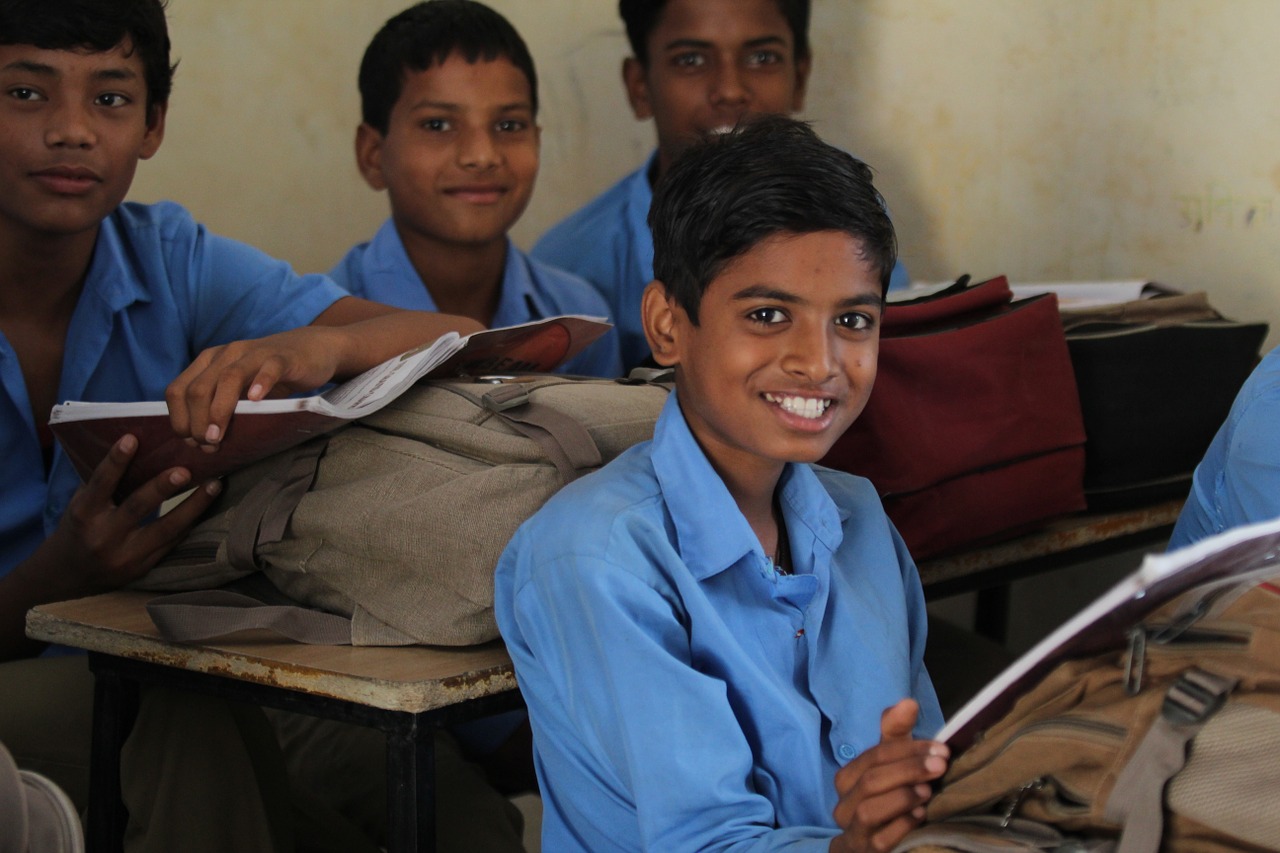
Primary school enrolment in Madhya Pradesh has fallen to one of the lowest levels in the country, with the State recording the steepest decline in Gross Enrolment Ratio (GER) over the past decade, according to NITI Aayog's report School Education System in India: Temporal Analysis and Policy Roadmap for Quality Enhancement.
The findings present a complex picture of the State's education system. Madhya Pradesh has one of India's largest school networks, yet enrolment trends indicate that access alone has not ensured continued participation. The report identifies structural factors, including a fragmented school network, regional disparities and weak transitions from middle to secondary education, as key challenges affecting educational continuity.
Primary enrolment decline places Madhya Pradesh among lowest performers
Madhya Pradesh recorded a primary Gross Enrolment Ratio of 76.3%, placing it among the States with the lowest reported levels. Bihar recorded 77.2%, Gujarat 79.6%, Uttar Pradesh 83.1%, Andaman and Nicobar Islands 85.1% and Rajasthan 88.3%.
At the other end of the spectrum, Meghalaya recorded the highest primary GER at 180.7%, followed by Manipur at 140.5%, Mizoram at 138%, Tripura at 117.9%, Goa at 117.8%, Telangana at 114%, Jammu and Kashmir at 113.7% and Arunachal Pradesh at 113.2%.
Gross Enrolment Ratio measures the number of students enrolled in a particular level of education, regardless of age, as a percentage of the official school-age population for that level.
The report notes that Madhya Pradesh experienced the sharpest decline in primary GER over the past decade, falling from 109.31% to 76.3%. Bihar, Uttar Pradesh, Delhi and Gujarat also recorded declines during the period, while Lakshadweep, Jammu and Kashmir, Meghalaya, and Dadra and Nagar Haveli and Daman and Diu registered improvements.
The enrolment challenge behind the numbers
The decline in GER does not simply reflect the availability of schools. According to UDISE+ data, Madhya Pradesh operates more than 122,000 schools, making it one of India's largest school systems.
However, the average enrolment per school remains low. Each school has an average of 124 students compared with the national average of 168. The report links this pattern to the State's geographically dispersed settlements, particularly in rural and remote regions.
A large number of small schools creates challenges related to staffing, infrastructure availability, resource allocation and maintaining consistent learning environments. The issue is particularly significant in areas where communities are spread across large geographical distances.
From primary access to secondary transition: where the pipeline weakens
The enrolment challenge becomes more visible as students move beyond the elementary stage. While Madhya Pradesh has maintained relatively stable participation in primary and middle school levels, the transition to secondary education remains a major concern.
According to the report, the State's primary GER stands at about 90.9%, while the middle-level GER is around 90.3%. However, the figure falls sharply to 68.5% at the secondary stage and approximately 58.4% at the higher secondary level.
The data indicate that many students who enter the education system do not continue through the higher grades. The transition from Class 8 to secondary education emerges as a critical stage where infrastructure availability, distance from schools and socio-economic factors influence continuation.
The report identifies inadequate secondary school infrastructure in several rural districts as one of the factors affecting student progression. Unlike primary schools, secondary schools require specialised teachers, laboratories and additional facilities, making expansion more challenging in geographically scattered regions.
A fragmented school network shapes Madhya Pradesh's education outcomes
Madhya Pradesh's education landscape is influenced by its geography. The State has a large rural population spread across diverse regions, including tribal areas where settlements are often located far apart.
While the expansion of schools improved physical access over the years, the report highlights that maintaining quality and efficiency across thousands of small institutions remains a challenge.
Low student density affects the functioning of schools by limiting peer interaction, increasing resource pressure and making teacher deployment more complex. The average enrolment figure of 124 students per school reflects this structural issue.
The findings from the UDISE+ school education database underline the importance of examining not only the number of schools but also their capacity, location and ability to support students through different stages of education.
District divide: Indore and Bhopal show a different trajectory
Educational outcomes within Madhya Pradesh vary significantly across districts. Urban centres with stronger economic activity and institutional networks have recorded better literacy indicators compared with several rural and tribal districts.
| District | Literacy rate | Education profile |
|---|---|---|
| Indore | 80.87% | Higher literacy levels supported by urban infrastructure and wider educational opportunities. |
| Bhopal | 80.37% | Strong educational ecosystem supported by administrative and institutional presence. |
| Alirajpur and Jhabua | Among the lowest literacy regions | Challenges linked to distance, scattered settlements, migration and limited continuity beyond elementary education. |
According to Census of India data, Indore's literacy rate stands at 80.87%, significantly higher than the Madhya Pradesh average of 69.32%. Bhopal records a literacy rate of 80.37%.
The contrast between urban and tribal regions highlights how geography continues to influence educational opportunity. Districts with stronger infrastructure and connectivity are better positioned to retain students, while remote areas face additional barriers.
Tribal districts face layered education challenges
The educational challenges in tribal regions are linked to multiple factors. Scattered settlements increase travel distances, while seasonal migration patterns can interrupt children's schooling.
In districts such as Alirajpur and Jhabua, maintaining regular attendance and ensuring progression to higher classes requires interventions beyond classroom access. The report highlights the importance of strengthening infrastructure, improving retention strategies and addressing local conditions affecting students and families.
The challenge is not limited to enrolment alone. Continuity, learning outcomes and transition rates remain equally important indicators of an effective education system.
Why northeastern States report higher primary GER
The national comparison presents a contrasting picture. Several northeastern States have recorded primary GER levels exceeding 100%.
A GER above 100% does not necessarily indicate higher quality of education. It may reflect the presence of under-age or over-age students enrolled alongside children in the official age group.
The differences highlight the importance of interpreting enrolment data carefully. A high GER indicates participation levels, but it must be examined along with retention, learning outcomes, infrastructure and transition rates.
Madhya Pradesh education data in perspective
| Education stage | GER level | Observation |
|---|---|---|
| Primary education | About 90.9% | Access remains relatively stable. |
| Middle education | About 90.3% | Transition remains comparatively stronger. |
| Secondary education | 68.5% | Major decline begins after elementary schooling. |
| Higher secondary education | 58.4% | Participation gap becomes wider. |
Policy challenge: moving from access to retention
The NITI Aayog assessment suggests that future education strategies must move beyond expanding school access and focus on retaining students through higher grades.
The report highlights the need for district-specific approaches rather than uniform interventions. Rural and tribal districts require targeted measures based on geography, infrastructure requirements and community conditions.
Strengthening secondary education infrastructure, improving transport and connectivity, ensuring teacher availability and supporting vulnerable communities will remain central to improving educational continuity.
The wider education context in Madhya Pradesh
The issue of school participation is closely connected with broader education reforms in the State. Readers interested in the development of secondary education institutions in Madhya Pradesh can also read:
- Madhya Pradesh Board of Secondary Education: developments and education trends
- Girls continue to make their mark in education and academic achievement
Conclusion: the next education challenge is continuity
Madhya Pradesh's enrolment figures reveal a complex education story. The State has expanded its school network significantly, but the latest data show that ensuring continuous participation remains a major challenge.
The decline in primary GER, combined with the fall in secondary and higher secondary participation, suggests that improving access alone will not be enough. The focus must shift towards keeping students in the education system, particularly in districts where geography and social conditions create additional barriers.
The NITI Aayog report places the emphasis on strengthening transitions, improving infrastructure and designing policies that respond to local realities. For Madhya Pradesh, the challenge ahead is not merely building more schools, but ensuring that every student who enters school has the opportunity to continue until completion.
Frequently Asked Questions
What is Gross Enrolment Ratio (GER)?
Gross Enrolment Ratio measures enrolment at a particular level of education compared with the official school-age population for that level. It includes students of all ages enrolled at that stage.
Why has Madhya Pradesh's primary GER declined?
The NITI Aayog report links the decline to structural factors, including fragmented schooling, regional disparities and challenges in retaining students through higher grades.
What is the biggest education challenge in Madhya Pradesh?
The major challenge is the transition from elementary education to secondary and higher secondary levels, where enrolment declines significantly.
Which districts of Madhya Pradesh show stronger literacy performance?
Urban districts such as Indore and Bhopal record higher literacy rates compared with several tribal districts, reflecting differences in infrastructure and access.
Does a GER above 100% mean better education quality?
Not necessarily. A GER above 100% may indicate participation by students outside the official age group. It should be analysed along with retention, learning outcomes and infrastructure indicators.