Gender, Education and Rural India
Playing their own game: Rural MP's schoolgirls refuse to follow the script
From cricket and classroom leadership to a future in nursing, three teenage girls in rural Madhya Pradesh are beginning to question the limits others place on their ambitions.
"It's a girl thing!" echoes through rural Madhya Pradesh as teenage girls pick up the bat to play cricket alongside boys and take steps towards challenging gender stereotypes in a technical-skills landscape where men account for 81.4% of participation.
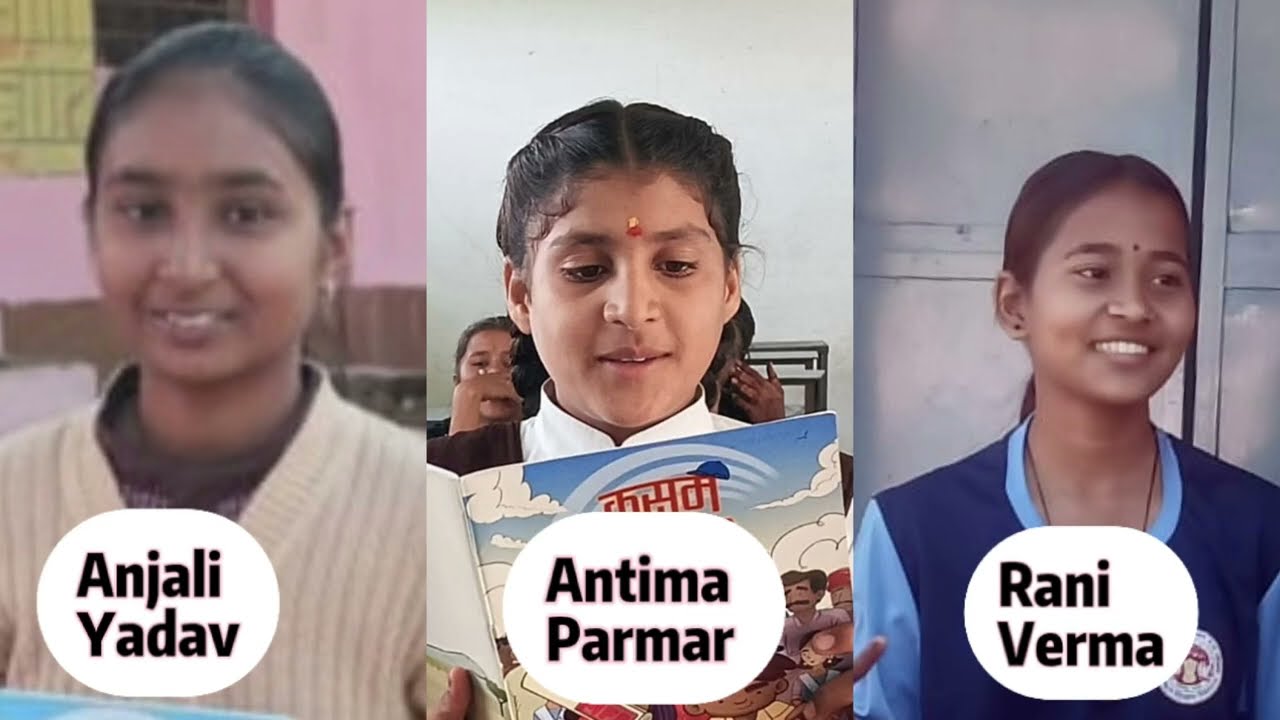
This International Day of the Girl Child, we celebrate three teenage girls from rural Madhya Pradesh who are challenging age-old gender stereotypes and showing that a girl's dreams need not come with boundaries.
Three girls, three ways of challenging expectations
- Antima Parmar: Finding the confidence to pursue cricket and question restrictions placed on girls.
- Anjali Yadav: Learning to listen, encourage classmates and practise leadership.
- Rani Verma: Turning admiration for a nurse in her family into a practical career aspiration.
For 13-year-old Antima Parmar, playing cricket is about more than just the game. Growing up in Tikod village, she has often been told that cricket is for boys and that motorbikes are not meant for girls. But Antima is learning to question these everyday restrictions rather than accept them.
In Bhilwadiya village, 15-year-old Anjali Yadav is discovering that leadership begins with something as simple as listening. Once quick to react in anger, she now encourages her classmates to join school activities and is working towards her dream of becoming a teacher. Meanwhile, 13-year-old Rani Verma is looking beyond the classroom, exploring how she can follow her cousin into the nursing profession.
Their stories reflect a change that begins long before girls enter college or the workforce. In many rural communities, expectations around what girls should do, where they should go and which careers they should pursue can shape their choices from an early age. Sports may be seen as a boys' domain, while career ambitions can remain vague when girls have limited exposure to role models and practical guidance.
For Antima, Anjali and Rani, school has become a space to question those assumptions.
Through confidence-building workshops under initiatives like RISE run by Girl Rising, the girls are learning to express themselves, understand their emotions, listen to others and set goals. The sessions are helping them connect everyday decisions with the larger question of what they want their futures to look like.
The shift has not come through grand gestures. It is visible in Antima's refusal to give up on cricket, Anjali's efforts to bring her friends onto the playground and Rani's decision to ask her cousin about the steps required to become a nurse.
Antima Parmar: One Bat, No Boundaries
In Tikod village, 13-year-old Antima Parmar, a Class 9 student, has never been short of interests. The problem has been that some of them come with a familiar warning: girls are not supposed to do that.
When she expressed a desire to play cricket, she was told it was a "boy thing". Her fascination with motorbikes drew similar reactions. For a young girl, such comments can make even ordinary interests feel like something that needs to be defended.
Antima was initially sceptical about the additional classroom activities. But stories of girls who challenged social expectations and pursued their interests began to change how she saw herself.
The lessons also influenced how she approached her everyday responsibilities.
"Whatever task I perform, I do it with complete awareness. Even if I am helping my mother with work, I make sure that I'm doing it carefully and properly." Antima Parmar
Ask her what she would say to someone who insists that girls should not play cricket or dream of riding a motorbike, and her answer is immediate.
"Aisa koi kaam nahi jo ek ladka kar sakta hai aur ek ladki nahi." Antima Parmar
There is no task that a boy can do that a girl cannot.
For Antima, the point is simple: the chance to try should not depend on whether she is a girl or a boy.
Her story raises a question that extends well beyond one village or one cricket bat. How many interests are abandoned before they are explored because a child has been told that they do not belong to her? Access to sports, encouragement from adults and the freedom to experiment can help girls discover abilities that restrictive expectations might otherwise leave unexplored.
Antima's ambition does not need to be extraordinary to matter. Her insistence on being allowed to try is itself a meaningful challenge to the idea that everyday activities should be divided into those meant for boys and those meant for girls.
Anjali Yadav: Learning to Listen, Learning to Lead
In Bhilwadiya village, 15-year-old Anjali Yadav did not immediately warm to the leadership workshops. When her teacher first introduced the sessions, she recalls feeling annoyed and confused. Curiosity eventually took over.
One lesson stayed with her: a leader is not someone who gets their way, but someone who takes others along.
"Leader vo hota hai jo sabko saath leke chalta hai." Anjali Yadav
She began putting that idea into practice during her school's Saturday extracurricular activities.
"Every Saturday our school conducts extracurricular sessions. I'm the first one in and the last one out, and I call on other friends to participate too." Anjali Yadav
The change is particularly meaningful to Anjali because she once saw herself as someone who reacted before listening. She said her anger had become part of how others perceived her, and she had come to identify herself as "the angry girl".
Learning to pause, hear others out and understand a situation before responding has helped her reconsider that image.
"Main pehle aisi nahi thi! Ab main pehle sunti hoon, samajhti hoon, phir bolti hoon." Anjali Yadav
I wasn't like this before. Now, I listen first, understand, and then speak.
The workshops have also helped her give direction to a question many young people struggle to answer: what do I want to become?
Anjali now wants to be a teacher. And as she encourages her classmates to participate, she is already practising one part of the role she hopes to take on.
Her experience offers a useful reminder that leadership is not always about holding a formal position or speaking the loudest. It can begin with listening, making space for others and helping classmates feel welcome. In a school environment, these everyday actions can create opportunities for more students to participate and discover their own strengths.
For Anjali, the playground and the Saturday sessions have become places to practise the kind of leadership she wants to carry into her future classroom.
Rani Verma: From Admiration to Ambition
For 13-year-old Rani Verma, a Class 8 student, the first change was learning to speak more openly.
She had rarely shared her thoughts with teachers and had not given much consideration to what she wanted to do after school. The future felt distant, with few concrete steps connecting the classroom to a career.
A goal-setting exercise changed that.
Rani began thinking about her cousin, who works as a nurse in a nearby city. She had long admired her cousin's work, but had never seriously considered whether she could follow the same path.
Once she began thinking about nursing as a possibility, she did something practical: she contacted her cousin to ask about the education and training needed to enter the profession.
"I love the sessions so much, I don't want them to end." Rani Verma
For her, the progress is not only about choosing a career. It is also about finding the confidence to ask questions, seek advice and share her plans with the people around her.
A dream that once felt distant now has a starting point.
Rani's experience illustrates how career guidance can become more meaningful when young people can connect an aspiration to a real person and a practical next step. Her cousin offers an example of a career that Rani can imagine for herself, while their conversation gives her an opportunity to learn more about the education and training involved.
That first question matters. A career does not become accessible overnight, and admiration alone cannot replace reliable information about qualifications, costs, training and opportunities. But asking someone with experience can be a useful beginning, helping a student move from a general interest towards a better-informed plan.
For a young student who had rarely shared her thoughts with teachers, speaking about her future is itself a step forward.
Infographic: Understanding the Gender Gap in Industrial Training
The stories of Antima, Anjali and Rani show why it matters for girls to have opportunities to explore interests, build confidence and learn about careers. Wider participation data can help put these questions into context, provided the figures are described accurately and their scope is clear.
India Skills and Technical Education
Who gets access to industrial training?
Gender distribution of admissions to Industrial Training Institutes, 2019 to 2024.
The gap in these admissions figures provides context for conversations about access to technical education. It does not, on its own, explain why the gap exists. Family expectations, awareness of available courses, access to institutions, financial circumstances, local opportunities and perceptions about suitable occupations are among the questions that require closer examination rather than assumptions.
It is also important not to treat technical education as the only measure of a girl's aspirations. Antima's interest in cricket, Anjali's ambition to become a teacher and Rani's interest in nursing point to different futures. What connects them is the importance of having room to explore possibilities and the support to make informed decisions.
Reliable data can show where participation is uneven. Individual stories can help readers understand how confidence, encouragement and access to information may influence choices. Neither replaces the other: both are necessary for a fuller understanding of gender and opportunity.
Watch the Feature
Watch the video accompanying this story for additional visual context about the girls and the initiative described in the feature.
Video source: YouTube. Video ID: DIFJXx36tZ8.
Publication note: This article is dated October 9, 2026, Indian Standard Time, ahead of the International Day of the Girl Child on October 11. The article publication date is not necessarily the video's original upload date. The video upload date should be taken from the YouTube video's published information before being added to video structured data.
What These Stories Tell Us About Opportunity
Antima, Anjali and Rani are at different stages of discovering who they want to become. One wants the freedom to play cricket and explore her interests without being told that they belong to boys. Another is learning that leadership begins with listening and bringing people together. The third is taking her first practical steps towards a career she admires.
Their experiences are different, but they share an important thread: the opportunity to imagine a future can become more meaningful when a young person has the confidence to speak, ask questions and explore possibilities.
For schools, this means that education is not only about completing lessons or preparing for examinations. A supportive learning environment can also help students recognise their strengths, express their views, understand their emotions and learn how to work with others. Activities that encourage participation and reflection can create space for students to consider interests and ambitions they might not otherwise have explored.
Families and communities matter, too. Encouragement does not require every adult to have all the answers. It can begin with listening to a child's interests, allowing her to try something new and helping her find reliable information about the opportunities available to her.
Career aspirations also need practical support. A student interested in nursing may need guidance about recognised qualifications and training pathways. A girl interested in sport may need access to equipment, playing space and supportive adults. A student who hopes to become a teacher may benefit from learning about the education and qualifications required for that profession.
Confidence is important, but it is not a substitute for access. Girls need both the freedom to imagine and the information, resources and opportunities that help them pursue their ambitions.
These three stories do not suggest that every barrier has disappeared or that one workshop can resolve deep-rooted inequalities. Instead, they offer a closer look at small but meaningful changes: a girl continuing to express an interest in cricket, another inviting classmates to participate, and a third contacting a family member to learn about a possible career.
Change can begin with such ordinary moments. Their significance lies in what they make possible next.
Beyond the Stereotypes
For Antima, Anjali and Rani, the future is still unfolding. Their aspirations may develop as they gain experience, learn new skills and encounter opportunities they have not yet imagined. That is part of growing up: discovering possibilities rather than being expected to decide everything at once.
Their stories invite adults to reconsider the messages children hear about what is appropriate for girls and boys. They also invite schools and communities to make room for curiosity, participation and practical guidance.
Antima should be able to pick up a cricket bat without having to defend her gender. Anjali should be encouraged to develop her own style of leadership. Rani should be able to explore nursing with access to accurate information about the education and training involved.
On the International Day of the Girl Child, their experiences are a reminder that equality is not only a question of what girls are allowed to dream about. It is also a question of whether they have the encouragement, opportunities and support to explore those dreams.
The most important first step may be simple: let girls try, let them ask questions, and take their ambitions seriously.
Sources and Further Reading
This feature combines the individual stories supplied for publication with contextual material about gender, technical education and the International Day of the Girl Child. The links below provide readers with resources for further research.
- NITI Aayog: Official website. Consult the relevant working paper for the definitions, period and methodology associated with the ITI admission figures used in the infographic.
- India Skills Report 2024: Read the report PDF. This report provides broader context on employability and skills in India. Its measures should not be treated as interchangeable with ITI admission figures.
- Drishti IAS: India Skills Report 2024 analysis. A secondary explainer for readers interested in the report's wider findings.
- United Nations: International Day of the Girl Child. Official information about the observance held each year on October 11.
- Video accompanying this feature: Watch on YouTube.
Data transparency: The infographic identifies the figures as the reported gender distribution of ITI admissions during 2019 to 2024. Before publication, check the cited NITI Aayog document and its relevant table to confirm the exact wording, dates and methodology. Do not describe these figures as participation in all technical-skills programmes.
Editorial note: The individual stories and quotations in this article are reproduced from the supplied source text. Confirm names, ages, village details, quotations, programme attribution and permissions with the original reporting or publishing source before publication.