From waste to worth: SGSITS students turn discards into design
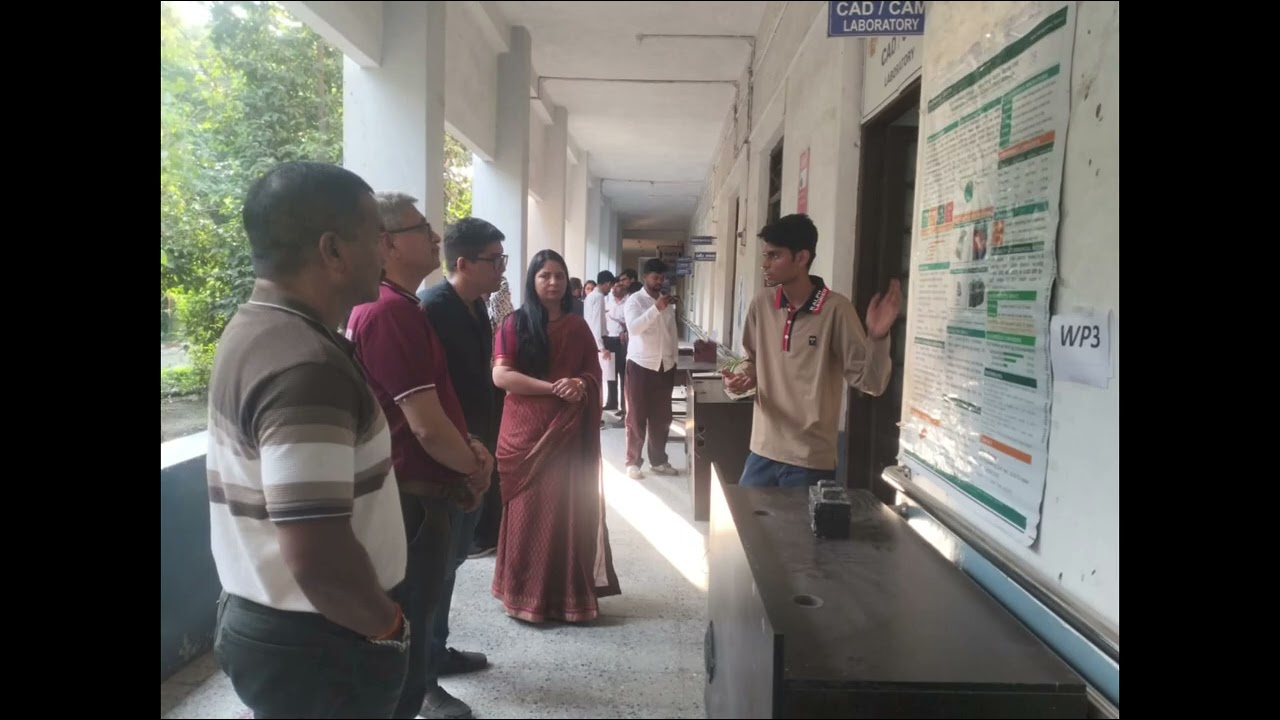
INDORE: Students at Shri Govindram Seksaria Institute of Technology and Science (SGSITS), Indore, developed prototypes from discarded plastic, paper, cardboard and metal scrap at the Best Out of Waste competition organised as part of AAROHAN 2026. Conducted by the Department of Industrial and Production Engineering (IPE) under the theme Waste to Wonder, the event featured projects addressing plastic waste in road surfaces, organic waste composting, recycled construction materials, waste segregation and household products.
The competition brought together students from different departments to explore practical applications for discarded materials. Participants worked in teams of three to four members and presented models, posters and working prototypes, with waste or previously used materials forming the main component of their projects.
Commercially available ready-made kits were not permitted. Each team had three to five minutes to present its work, followed by questions from the jury on technical feasibility, material selection, intended applications and environmental relevance.
The entries included GRIP-X, a concept exploring the use of plastic waste in road surfaces; an in-vessel rotational composter designed to process organic waste; and an interlocking brick made from plastic waste and metal scrap. Other projects focused on waste segregation, household utility products and decorative items made from recycled paper.
In this report
- Engineering innovation at SGSITS
- GRIP-X plastic waste road surface
- In-vessel rotational composter
- Interlocking plastic brick
- Waste-based segregation dustbin
- Household utility products
- Recycled paper handicrafts
- Jury evaluation and feedback
- IPE department and event organisation
- Waste reuse and the circular economy
- Watch the video report
- Frequently asked questions
SGSITS students explore engineering solutions through waste reuse
The Best Out of Waste competition encouraged students to apply engineering principles and creative design to material recovery. Its focus extended from construction and waste processing to everyday products, demonstrating different ways of reusing discarded materials.
Student projects at the Best Out of Waste competition
1. GRIP-X explores plastic waste in road surfaces
Ankit Jharbade, Muskan Verma and Mohini Bamoriya presented GRIP-X, a concept exploring the incorporation of plastic waste into road surfaces to address plastic disposal and vehicle skidding.
Ankit Jharbade said the team wanted to address plastic pollution while improving road safety, particularly in wet conditions.
"We wanted to solve two major problems at once, repurposing non-biodegradable plastic and making wet roads safer for drivers."
Ankit Jharbade
Muskan Verma said the team's work examined the relationship between the plastic polymer blend and surface friction.
"Testing our plastic polymer blend showed a significant rise in surface friction, which directly reduces braking distance."
Muskan Verma
Mohini Bamoriya said the concept aimed to combine plastic waste recovery with road safety applications.
"It's a practical, low-cost road safety solution that keeps tonnes of plastic out of landfills."
Mohini Bamoriya
The proposed benefits relate to material reuse and road surface performance. Further technical assessment would be needed to establish suitability for road construction, including durability, skid resistance and compliance with applicable engineering standards.
2. Rotational composter targets faster organic waste processing
Nikhil Kumar Vyas, Diksha Mandloi, Abhishek Tiwari and Preeti, MTech students from the civil engineering department, developed an in-vessel rotational composter for decentralised organic waste management.
The proposed system aims to convert organic waste into compost within approximately 21 to 30 days. Its design centres on a rotating, aerated vessel intended to support decomposition.
Nikhil Kumar Vyas said the team sought to improve on conventional composting methods by incorporating rotation and aeration.
"Traditional composting takes months, but our rotational aerated barrel speeds up thermal decomposition significantly."
Nikhil Kumar Vyas
Diksha Mandloi said the design focused on making the unit suitable for households and local communities.
"We focused on making the unit compact enough for households and local communities to adopt effortlessly."
Diksha Mandloi
Abhishek Tiwari said the system was designed to manage moisture and airflow within the vessel.
"By controlling moisture and airflow inside the vessel, we eliminated foul odours while maximising nutrient retention."
Abhishek Tiwari
Preeti said the project aimed to demonstrate how kitchen waste could be processed into a useful soil amendment within a shorter period.
"Seeing kitchen waste turn into high-quality organic fertiliser in less than a month makes urban waste management truly doable."
Preeti
Actual processing time and compost quality depend on the composition of the waste, moisture, temperature, aeration and operating conditions. The proposed period should be understood in the context of the team's design and testing.
3. Interlocking plastic brick explores recycled construction materials
Aditya Bankey presented an interlocking building brick made using plastic waste and metal scrap. The concept explored the use of recovered materials in construction and the possibility of reducing the need for conventional mortar in suitable applications.
Bankey said the objective was to develop an alternative building material through an interlocking design.
"My goal was to eliminate the need for traditional mortar entirely by creating interlocking plastic-metal bricks that make eco-friendly construction both faster and affordable."
Aditya Bankey
The concept raises questions about the suitability of recycled plastic and metal combinations for construction. Structural strength, stability, fire performance, weather resistance and long-term durability would need to be assessed before the material could be considered for specific building applications.
4. Waste-based dustbin promotes source segregation
Aditya Raipure, Keshav Rathore and Anurag Mehra developed a functional dustbin using discarded materials to encourage waste collection and segregation.
Aditya Raipure said the team focused on the importance of separating waste at the point where it is generated.
"Proper waste management starts at the source, so we built a segmented bin using discarded barrels and scrap metal."
Aditya Raipure
Keshav Rathore explained that the design incorporated visual cues and dividers intended to help users separate different waste streams.
"We engineered simple visual cues and mechanical dividers so users automatically segregate wet and dry waste."
Keshav Rathore
Anurag Mehra said the project explored how discarded materials could be used to create a functional product.
"Creating a durable utility item out of discarded materials proves that zero-cost community solutions are entirely possible."
Anurag Mehra
Source segregation can support recycling and organic waste processing by keeping different materials separate. The project's proposed benefits depend on its construction, usability and the availability of appropriate collection and processing systems.
5. Household utility products demonstrate everyday reuse
Oshi Agrawal and Vansh Kaushal showcased household utility products made from discarded cardboard, plastic bottles, bottle caps and old newspapers.
The project focused on repurposing common household materials into functional items rather than disposing of them after their initial use.
Oshi Agrawal said the team wanted to demonstrate how discarded materials could be redesigned for everyday use.
"We wanted to demonstrate that everyday household trash can be redesigned into functional, elegant desk organisers and home utilities."
Oshi Agrawal
Vansh Kaushal highlighted the potential for reusing plastic bottles and cardboard in household products.
"By rethinking discarded plastic bottles and cardboard, we can significantly reduce daily residential solid waste."
Vansh Kaushal
The project connected product design with resource conservation and showed how reuse can be applied to materials commonly found in homes.
6. Recycled paper dolls combine handicrafts with sustainability
Purvi Nagar presented decorative African dolls made from waste paper, using recycled material for an artistic application.
Nagar said the project aimed to demonstrate that material reuse could also extend to decorative crafts.
"Crafting decorative art from old newspapers shows that sustainability also has a rich aesthetic side."
Purvi Nagar
The entry illustrated how paper that might otherwise be discarded could be used in handicrafts and decorative products, extending its useful life through creative design.
SGSITS jury evaluates student projects
The projects were assessed on technical feasibility, effective use of waste materials, problem-solving potential and environmental relevance. Participants answered questions about their designs and explained the intended applications of their prototypes.
The jury comprised Samkit Sethi, an SGSITS alumnus from the 2007 batch and proprietor of Anand Coolers, and Vinod Pare, professor in the mechanical engineering department at SGSITS.
Samkit Sethi said the projects demonstrated how students could apply engineering knowledge to sustainability challenges.
"Returning to my alma mater and seeing such practical, scalable sustainability ideas from young engineers is incredibly inspiring."
Samkit Sethi
Vinod Pare said the evaluation considered how the teams approached technical design and material use.
"The judges were particularly impressed by how teams balanced structural integrity and environmental impact without using pre-made kits."
Vinod Pare
The question-and-answer sessions gave participants an opportunity to explain the reasoning behind their designs, discuss potential applications and respond to feedback from the jury.
IPE department leads AAROHAN 2026 competition
The competition was organised under the leadership of Girish Thakkar, head of the Department of Industrial and Production Engineering at SGSITS, who also served as the event coordinator.
Sumit Dwivedi, Adarsh Jaiswal and Angoor Bala Jayant contributed as members of the organising committee.
Girish Thakkar said the event was intended to encourage students to apply engineering knowledge through practical projects.
"AAROHAN 2026 was designed to push our students beyond theoretical engineering and into hands-on sustainable innovation."
Girish Thakkar
Sumit Dwivedi highlighted the use of discarded materials in the student prototypes.
"The level of creativity shown in turning everyday scrap into functional prototypes was exceptional."
Sumit Dwivedi
Adarsh Jaiswal said the organising team supported participants in explaining their ideas and presenting their projects.
"It was fulfilling to guide teams in refining their technical pitches and proving the real-world viability of their models."
Adarsh Jaiswal
Angoor Bala Jayant said interdisciplinary teamwork could help students approach waste as a resource rather than an unwanted material.
"Encouraging multidisciplinary teamwork helps our students view waste not as garbage, but as a valuable resource."
Angoor Bala Jayant
Waste reuse connects engineering education with the circular economy
The Best Out of Waste competition linked student learning with practical questions about resource use, waste generation and disposal. The projects explored applications in road engineering, composting, construction, waste collection, household products and handicrafts.
The initiative reflected the principles of the circular economy, which seeks to keep materials and products in use for longer through reuse, recovery and recycling. These approaches can reduce demand for virgin resources and divert suitable materials from disposal, although the environmental benefits depend on the materials, processing methods and end use.
The range of entries demonstrated how students can examine waste management through different disciplines. Engineering prototypes require attention to material properties, performance and safety, while household products and handicrafts show how reuse can also be applied through design and practical creativity.
By providing a platform for students to develop and present their ideas, SGSITS encouraged participants to consider how engineering knowledge could be applied to resource recovery and environmental challenges.
The central message of the competition was that discarded materials may still have value when matched with suitable applications. Turning waste into useful products requires creative ideas, technical evaluation, responsible material selection and attention to environmental impact.
For students, the competition offered an opportunity to connect classroom learning with prototype development, interdisciplinary collaboration and the practical challenges of sustainable engineering.
From discarded materials to practical ideas
The projects presented at SGSITS connected student engineering with questions about recycling, organic waste management, construction materials and everyday reuse. Their long-term value will depend on further evaluation, suitable applications and responsible implementation.
The wider lesson is that waste management begins with how materials are designed, used, separated and recovered. Student projects can help bring these questions into engineering education and public discussion.
Watch the SGSITS Best Out of Waste video report
Watch the video accompanying this report on the Best Out of Waste competition at SGSITS, Indore. The video upload date supplied for this article is 12 October 2026, Indian Standard Time.
Watch on YouTube Official SGSITS website
Related coverage on TinaKhatri.in
Explore more reporting on engineering education, SGSITS and student innovation.
Frequently asked questions
What was the Best Out of Waste competition at SGSITS?
The Best Out of Waste competition was part of AAROHAN 2026 at Shri Govindram Seksaria Institute of Technology and Science, Indore. Organised by the Department of Industrial and Production Engineering, it invited students to develop projects using discarded and previously used materials.
What was the theme of the SGSITS competition?
The theme was Waste to Wonder. It encouraged students to explore ways to reuse waste materials through engineering prototypes, composting, product design and handicrafts.
Which projects were presented at the competition?
The entries included GRIP-X, a plastic waste road surface concept; an in-vessel rotational composter; an interlocking brick made from plastic waste and metal scrap; a waste-based segregation dustbin; household utility products; and decorative dolls made from recycled paper.
Who organised the Best Out of Waste competition?
The Department of Industrial and Production Engineering at SGSITS organised the competition under the leadership of Girish Thakkar, head of the department and event coordinator. Sumit Dwivedi, Adarsh Jaiswal and Angoor Bala Jayant served on the organising committee.
Who evaluated the student projects?
The jury comprised Samkit Sethi, an SGSITS alumnus from the 2007 batch and proprietor of Anand Coolers, and Vinod Pare, professor in the institute's mechanical engineering department.
How long did teams have to present their projects?
Each team was allotted three to five minutes for its presentation, followed by a question-and-answer session with the jury.
How long does the proposed rotational composter take to process organic waste?
The team proposed a processing period of approximately 21 to 30 days. Actual composting time and final compost quality depend on operating conditions and the composition of the organic waste.
When was the accompanying YouTube video uploaded?
The upload date supplied for this report is 12 October 2026, Indian Standard Time. Confirm the published date on YouTube before publication to ensure the structured data matches the actual video metadata.
About this report: Reported by Tina Khatri for TinaKhatri.in. Quotations are reproduced from the interview material supplied for this report. Technical performance claims should be interpreted in the context of the respective project and its available testing evidence.
Official institute website: Shri Govindram Seksaria Institute of Technology and Science.
Video source: YouTube video report.