Education and Environment
Learning to Sustain: Students Explore the Link Between Economy and Ecology in Indore
A visit to the Jimmy McGilligan Centre for Sustainable Development introduces students to renewable energy, food conservation, organic farming and the everyday choices that shape environmental responsibility.
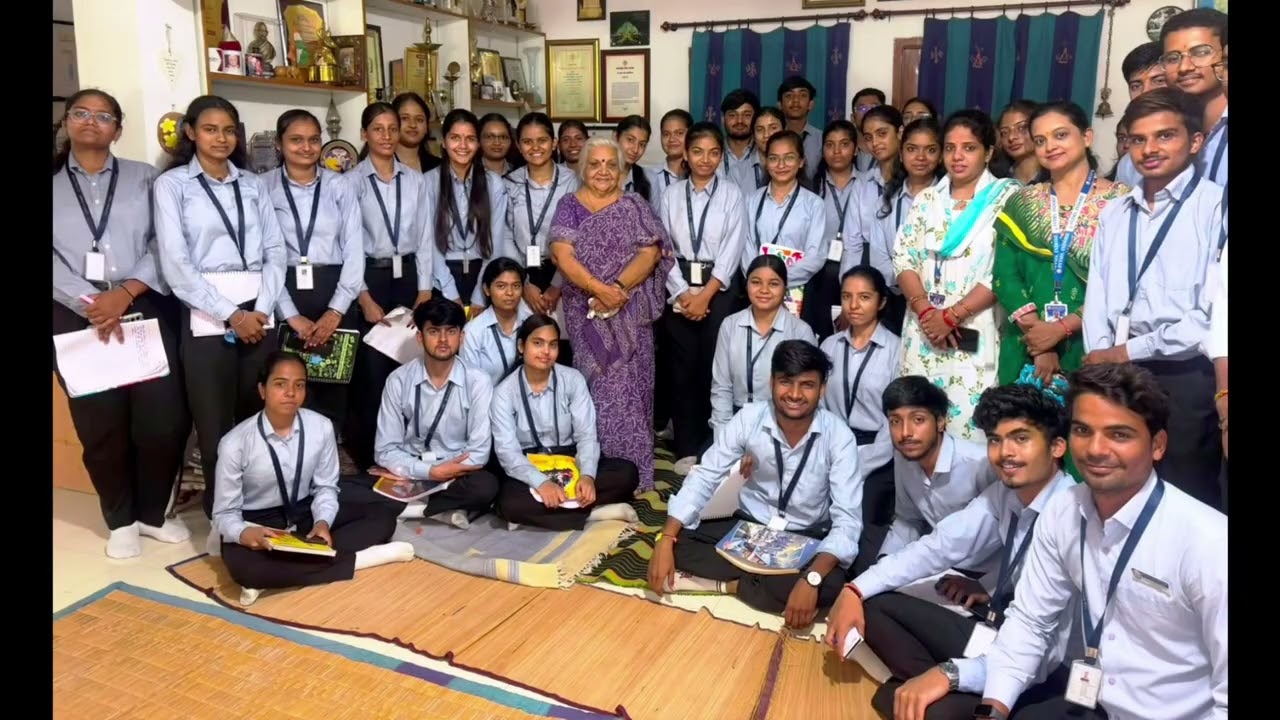
What does sustainable living look like when lessons about energy, food and natural resources move beyond the classroom? For students visiting the Jimmy McGilligan Centre for Sustainable Development in Sanawadiya village near Indore, the answer lay in observing how renewable energy and conservation practices can become part of everyday life.
Students enrolled in the BCA, BBA and BSc programmes at Shri Vaishnav Institute of Management and Science visited the centre to understand the relationship between economic activity and ecological responsibility. The visit offered them an opportunity to see how practical measures can reduce dependence on conventional energy sources and encourage more careful use of natural resources.
The centre's director, Janak Palta McGilligan, welcomed the students and took them around the biodiversity campus. The campus operates using renewable energy generated from solar and wind power, providing a setting in which students could examine the application of sustainable practices.
The visit focused on a central question for communities facing pressure on energy, food and other resources: how can people meet their needs while avoiding unnecessary waste?
A campus built around renewable energy
At the Jimmy McGilligan Centre for Sustainable Development, the use of solar and wind power gave students a practical introduction to renewable energy. Rather than approaching sustainability only as a subject in textbooks, they could observe how energy choices are connected with the daily functioning of a campus.
During the tour, Janak Palta McGilligan spoke about her life journey and commitment to environmental sustainability. She discussed the importance of adopting practices that conserve resources and explained why environmental protection requires participation at the individual and community levels.
The interaction encouraged students to consider how decisions about electricity, food, purchasing and waste affect the environment. It also brought attention to the fact that sustainable development involves not only technological solutions but also changes in everyday behaviour.
The central lesson
Sustainability begins with the way resources are produced, used and conserved. Renewable energy, reduced waste and responsible consumption can contribute to a more careful relationship between economic activity and the natural environment.
Understanding food and energy conservation
Food availability and energy security were among the key themes discussed during the visit. Janak Palta McGilligan expressed concern about the growing challenges associated with energy and food scarcity and emphasised the importance of conservation.
She introduced students to several approaches associated with sustainable living, including the use of solar cookers, alternative biofuels, medicinal plants and organic farming. These practices formed part of a wider discussion on the responsible use of resources and the role of communities in protecting food and energy supplies.
Solar cookers and alternative energy
Solar cookers use sunlight to generate heat for cooking. Their use can reduce the need for conventional cooking fuels under suitable conditions. The discussion helped students consider how renewable energy can support everyday needs, while also recognising that the effectiveness of any technology depends on local conditions, access and practical use.
Alternative biofuels were also discussed in the context of energy conservation. The broader lesson was that energy choices should take account of resource availability, environmental effects and the needs of the people using them.
Organic farming and medicinal plants
Organic farming and medicinal botany introduced another dimension of sustainability: the relationship between food production, plant resources and the environment. Students were encouraged to recognise the role of agricultural practices and responsible resource management in supporting long-term ecological well-being.
These subjects also highlighted the importance of community knowledge and participation. Sustainable practices are more likely to become part of daily life when people understand their purpose and can adapt them to their circumstances.
Reducing waste and reconsidering consumption
Food and energy wastage formed another part of the interaction. Students learnt about the causes and consequences of waste and the importance of using resources carefully rather than treating them as unlimited.
Janak Palta McGilligan discussed zero-waste management and decentralised power production. Zero-waste approaches seek to prevent waste wherever possible, encourage reuse and recovery, and reduce the quantity of material sent for disposal. Decentralised power production, meanwhile, involves generating electricity closer to the places where it is needed, depending on the system and local requirements.
She also shared her no-shopping philosophy, prompting reflection on consumption habits and the difference between essential needs and unnecessary purchases. The discussion connected personal choices with wider questions about resource use, waste generation and environmental impact.
Reducing waste does not depend on one action alone. Avoiding unnecessary food disposal, switching off unused electrical equipment, choosing products thoughtfully and making better use of existing resources are examples of steps that households and institutions can consider.
Key sustainability themes covered during the visit
- Renewable energy generated through solar and wind power.
- Energy conservation and the use of solar cookers.
- Alternative biofuels and decentralised power production.
- Organic farming and medicinal botany.
- Food conservation and the reduction of food waste.
- Zero-waste management and responsible consumption.
- Water and air conservation through sessions conducted under the United Nations Environment Programme.
What students learnt
The educational visit was designed to connect academic learning with practical environmental concerns. Students were introduced to the principles of sustainable development and the importance of protecting food, energy and other natural resources.
The programme also included awareness of oral care and hygiene products, culinary goods and bio-compressed fuels. These subjects broadened the discussion to include everyday products and the resources, processes and choices associated with their use.
Sessions on water and air conservation, conducted under the United Nations Environment Programme initiative as described in the submitted report, provided further exposure to environmental protection. The discussions encouraged students to consider how conservation can be incorporated into personal habits and collective action.
From classroom concepts to daily practice
The visit sought to develop an understanding of sustainable development, improve awareness of food and energy conservation and encourage a responsible approach to resource use. Students were also encouraged to recognise that environmental protection is not solely the responsibility of governments, institutions or environmental organisations.
Individuals, educational institutions and local communities can all contribute through the decisions they make about energy, food, water, consumption and waste. These choices may appear small in isolation, but consistent action can help establish more responsible patterns of resource use.
Why practical environmental education matters
Environmental education becomes more relevant when students can connect concepts with practices they can observe. A visit to a campus that uses renewable energy gives learners an opportunity to ask how such systems work, what resources they require and how conservation measures might be applied in other settings.
For management and science students, these questions also connect sustainability with planning, resource allocation and decision-making. Understanding environmental constraints can help learners consider the longer-term implications of how organisations and communities use energy, manage waste and source materials.
The visit also placed individual responsibility within a collective framework. Sustainable development requires practical measures, informed choices and participation by communities. Awareness is an important starting point, but its wider value depends on whether lessons translate into consistent action.
Faculty members and students expressed their appreciation for the practices demonstrated at the centre. They acknowledged the effort involved in implementing conservation measures and reflected on the possibilities for adopting similar habits in everyday life.
A lesson that extends beyond the visit
Understanding sustainability is the first step. Applying that understanding through careful energy use, reduced food waste and responsible consumption is what gives environmental education a practical purpose.
Watch the video report
The video accompanying this article provides a direct link to the YouTube feature associated with the report on sustainable living and environmental conservation. Readers can watch it below for additional visual context.
Video source: YouTube. The upload date and time shown in the structured data are based on the information supplied for this post and should be verified against the original video.
About the report
The information about the educational visit was provided in a report submitted by Kshama Paithankar, dean of academics and head of the department of computer science at Shri Vaishnav Institute of Management, Indore.
The report stated that the visit gave students practical insights into sustainable living and natural resource conservation. It identified the sessions on water and air conservation, along with the discussions on renewable energy, food preservation and waste reduction, as important parts of the learning experience.
The programme brought together environmental awareness and practical observation, encouraging students to consider how responsible resource use can support communities and contribute to a more sustainable future.
Ultimately, the significance of the visit lies in the questions it leaves with its participants: how much energy can be saved, how much food can be protected from waste and how can everyday decisions become more responsible? The answers begin with awareness, but they take shape through the habits people choose to practise.
Reporting note: This article is based on the report supplied by Kshama Paithankar, dean of academics and head of the department of computer science at Shri Vaishnav Institute of Management, Indore. No student quotations or individual student testimonials were included because none were provided in the source material.
Share this report
Help more readers discover the role of environmental education and sustainable living.