Home > Environment > Sustainable Development
From Barli to biodiversity: Janak Palta McGilligan's journey of regeneration
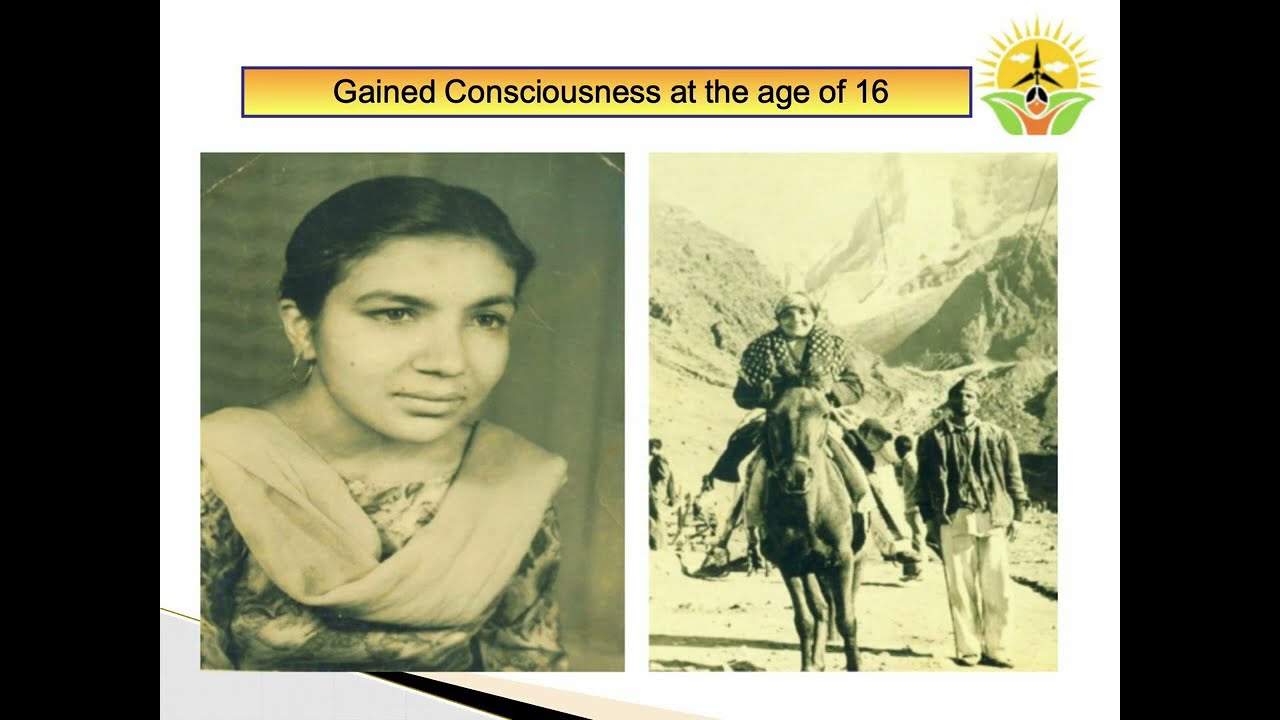
Image sourced from the YouTube video featuring Janak Palta McGilligan.
For Janak Palta McGilligan, sustainable development has been a continuing process of learning, teaching and applying what works at the community level. Her work in Indore has connected the education of rural and tribal women with solar cooking, livelihood generation, water conservation, organic food production and biodiversity. Through the Barli Development Institute for Rural Women and the Jimmy McGilligan Centre for Sustainable Development, she has worked to make environmental responsibility part of everyday life.
FOUR DECADES OF REGENERATION
FROM BARLI TO BIODIVERSITY
The journey of Janak Palta McGilligan
The numbers behind the journey
Tap any number to explore its story.
Barli Development Institute
Community-based learning
Wider training programmes
Recorded at the Centre
A journey across generations
Select a milestone to discover what happened.
Janak Palta McGilligan joined as director and began building the Barli Development Institute for Rural Women in Indore.
The six interconnected pillars
Select each pillar to see how it contributes to regeneration.
Education, vocational training and community leadership help women become participants in local development.
THE REGENERATION CYCLE
Knowledge becomes meaningful when communities put it into practice and share it with others.
Figures based on programme records and information supplied by Janak Palta McGilligan. Wider outreach figures are separate from the Barli training figures.
- Early life and education
- The beginning of Barli
- Public health in tribal villages
- A partnership with Jimmy McGilligan
- Solar cooking and livelihoods
- The Jimmy McGilligan Centre
- Regenerating land and biodiversity
- Zero-waste practices
- Training and wider outreach
- Recognition and public advocacy
- A continuing approach to regeneration
- Watch the video
Early life, education and a commitment to service
Janak Palta McGilligan was born in Jalandhar, Punjab, and grew up in Chandigarh. Her academic background brought together English, political science, research and community development. She completed a bachelor's degree, postgraduate studies in English and political science, an MPhil in political science and a doctorate in sustainable community development from Devi Ahilya University, Indore.
Her academic interests were connected with questions of social equality, education and the role of women in community development. Her doctoral research examined sustainable community development through the training of rural and tribal women as human resources.
Before moving to Indore, she worked in different professional and research settings. Her decision to leave Chandigarh and establish a development institution in Madhya Pradesh marked a change from conventional employment to long-term community work.
She moved to Indore as a Bahá'í pioneer to establish the Barli Development Institute for Rural Women. The principles of human unity, equality of women and men, education and service formed part of the values guiding her work.
The beginning of the Barli Development Institute
The Barli Development Institute for Rural Women was established to address the limited access rural and tribal women had to education, vocational training and economic opportunities.
When Janak joined the Institute as director, the work involved building an organisation from the ground up. She lived in a small servant's room on the campus for three years and worked with very limited staff during the initial period.
The Institute's approach was based on practical education. Women were trained not only to acquire skills but also to understand health, nutrition, hygiene, rights, environmental issues and community participation.
Vocational courses included garment making, tailoring, indigenous arts and handicrafts, machine knitting, computer education, organic gardening and food processing.
The programme was designed to enable women to return to their villages and apply what they had learnt. Rather than limiting education to individual employment, the Institute aimed to develop women as local resource persons and community change agents.
The Institute's work extended beyond vocational education. It developed training materials, newsletters and community-learning activities. Its newsletter, originally called Kokila, was later renamed Barli Ki Duniya and circulated among rural and tribal communities.
Further information is available through the Barli Development Institute for Rural Women.
Public health and the Guinea worm intervention
Health education formed an important part of the Institute's work in tribal areas. In Jhabua district, Guinea worm disease was among the public health concerns addressed through community awareness and safe drinking water initiatives.
Institutional records describe work covering 302 villages. The programme involved educating communities about safe water practices and supporting behavioural changes that could reduce the spread of the disease.
The Barli Development Institute received the United Nations Environment Programme's Global 500 Roll of Honour for its environmental contribution. The recognition was associated with its work on Guinea worm eradication and community awareness in the region.
The programme illustrated the relationship between environmental conditions and public health. Access to safe water, community education and local participation were treated as connected development priorities.
The Institute's recognition is documented on its official awards page.
Jimmy McGilligan and a partnership in sustainable development
Janak's work was supported by her husband, James R. McGilligan, known as Jimmy. Originally from Northern Ireland, he moved to India and worked with the Barli Development Institute as its manager.
Jimmy brought practical engineering knowledge and an interest in alternative energy. He worked on infrastructure development, water management and the introduction of renewable-energy technologies.
One of his early contributions involved reviving a defunct well and developing rainwater harvesting systems across the campus. This work helped establish water conservation as part of the Institute's operating model.
He received the Order of the British Empire for services to social causes and the use of alternative energy in rural communities in India, particularly solar cooking systems.
Jimmy died following a road accident. Janak subsequently continued their shared interest in sustainable living through the Jimmy McGilligan Centre for Sustainable Development.
Solar cooking became a tool for women's empowerment
Solar thermal cooking became one of the central areas of the Barli Institute's environmental programme. The technology uses sunlight to prepare food and can reduce household dependence on firewood and other conventional fuels.
In many rural communities, collecting firewood requires women to travel long distances. The task consumes time and can expose them to physical risks. Traditional cooking methods can also expose households to smoke and burns.
The Institute introduced different solar cooking systems and provided practical training in their use. Women learnt to prepare meals, boil drinking water, roast food, bake products and process agricultural produce.
The programme also promoted SK14 solar cookers for household use and livelihood activities.
According to the Institute's presentation, its solar community kitchen saved approximately one tonne of firewood annually and reduced carbon dioxide emissions by an estimated 1.8 tonnes each year. These figures are programme-reported estimates.
Solar cooking and rural enterprises
The programme extended into income-generating activities. Solar tea stalls were established in Semlipura and Babli in Dhar district through a rural livelihoods initiative.
Project records indicate that the tea stall operators reported earnings of around Rs 500 on weekly market days and Rs 200 on other days.
Solar cooking was also introduced to microcredit groups. Women were trained to use solar cookers for preparing food products that could be sold locally. The training included calculating material costs, labour, selling prices, profit and loss, packaging and presentation.
This approach connected renewable-energy education with enterprise development.
Making solar cooking a shared responsibility
The Institute also encouraged men to learn solar cooking. Training sessions linked to International Women's Day were intended to challenge the assumption that cooking was exclusively women's work.
Men were encouraged to operate solar cookers and participate in food preparation. The initiative linked renewable-energy awareness with shared household responsibilities.
Giridarshan and the Jimmy McGilligan Centre for Sustainable Development
After completing their work at Barli, Janak and Jimmy planned to continue promoting sustainable living from Sanawadiya village near Indore.
They developed Giridarshan as a home and demonstration space where renewable energy, water conservation, organic food production and waste reduction could be practised together.
Following Jimmy's death, Janak continued the initiative through the Jimmy McGilligan Centre for Sustainable Development. The Centre became a place for practical training and demonstrations involving students, farmers, self-help groups, entrepreneurs and visitors.
The activities include solar cooking, solar baking, food processing, solar drying, rainwater harvesting, organic gardening, composting and biodiversity restoration.
The Centre's objective is to show how sustainable technologies can be incorporated into ordinary household routines and small community enterprises.
Read more through the official Jimmy McGilligan Centre website.
Regenerating land through water conservation and biodiversity
Land restoration became another part of the Centre's work. The programme began with tree planting and the participation of children and local residents.
The objective was to demonstrate how land with rocky soil and limited vegetation could support more plant life through water conservation, soil protection and organic management.
According to the Centre's presentation, its recorded biodiversity inventory included 345 trees and 82 other plants, comprising fruit-bearing, vegetable, medicinal, flowering and ornamental species.
Rainwater harvesting and groundwater recharge
Rainwater harvesting systems help retain water and support groundwater recharge. The Centre uses a borewell and a surrounding water-harvesting system to manage its water requirements.
Its records describe a borewell approximately 200 feet deep and compare this with neighbouring areas where groundwater is reported at considerably greater depths.
The Centre identifies several benefits of its water management practices:
- Maintaining moisture in the soil.
- Reducing soil erosion.
- Supporting groundwater recharge.
- Improving soil conditions for plant growth.
- Maintaining habitats for biodiversity.
- Reducing unnecessary water consumption.
Organic soil management
The Centre uses homemade plant-based preparations for pest management and organic materials for soil improvement.
Leaves remaining after preparing plant-based insect repellents are used as mulch. Lemon peels and other kitchen residues are reused. Ash is used for cleaning utensils, while suitable weeds are used as fodder, manure or mulch.
These methods reduce the need to purchase certain household and agricultural inputs and encourage the use of locally available resources.
Zero-waste living through everyday practices
Waste reduction at Giridarshan is based on using materials more than once and converting suitable residues into useful products.
The Centre's activities include producing paper briquettes, organic manure, lemon-based cleaning products, homemade detergents, peanut butter, fruit preparations and natural colours.
Orange and kinnow peels are used in products such as natural festival colours, jams and face packs. Home-grown wheat is processed into bread, biscuits, cakes and scones.
Solar cookers are used for baking, roasting and food processing. Solar drying provides another method of preserving agricultural produce.
The programme connects environmental education with household economics. It encourages people to examine what they discard and consider whether it can be reused, processed or converted into another product.
The economics of regeneration
The Centre records the production costs of various household and food products. These calculations are intended to show the potential economic value of using local resources.
- Paper briquettes, 2.75 kilograms: Rs 56.50.
- Homemade peanut butter, 950 grams: Rs 92.65.
- Organic lemon sharbat, 1.7 litres: Rs 42.
- Organic manure, 5 kilograms: no additional production cost recorded.
- Homemade grass broom: made in-house without a recorded purchase cost.
These figures are drawn from the Centre's own presentation and represent reported production calculations rather than standard market prices.
Food processing provides opportunities for value addition. Fruit peels can be converted into natural colours and other products, while home-grown wheat can be used to prepare different baked foods.
Solar food processing can also reduce dependence on conventional fuels and provide opportunities for small enterprises.
Training and knowledge-sharing beyond the village
The Centre's work extends beyond Sanawadiya. Its training activities involve students, educational institutions, farmers, self-help groups, NGOs and government-linked programmes.
Janak's presentation records more than 187,538 people reached through solar cooking, food processing and sustainable-development training programmes. It also refers to engagement across approximately 1,000 villages.
These figures represent the wider outreach reported by the programme and should not be confused with the separate figure of more than 6,000 women trained at the Barli Institute.
Training covers:
- Solar cooking at household and institutional levels.
- Solar baking, roasting and food processing.
- Solar drying and food preservation.
- Use and construction of solar cooking devices.
- Organic gardening and food production.
- Rainwater harvesting and water conservation.
- Composting and waste management.
- Entrepreneurship and sustainable livelihoods.
Jaivik Setu and organic markets
Organic food promotion is another part of the Centre's activities. Through Jaivik Setu, the programme seeks to connect organic producers with consumers and encourage local markets.
Village-level outlets can provide farmers with access to customers while helping consumers find locally produced food. Such initiatives can also support awareness of organic cultivation and responsible consumption.
From training to enterprise: The people carrying the work forward
The work initiated by Janak Palta McGilligan at the Barli Development Institute and continued through the Jimmy McGilligan Centre for Sustainable Development has also provided a platform for students, researchers and entrepreneurs to develop practical solutions in renewable energy and sustainable food processing.
Several individuals associated with these initiatives have taken their learning into professional and entrepreneurial activities.
Varun Raheja is associated with Raheja Solar Food Processing Private Limited, an enterprise working in the solar food-processing sector. His inclusion reflects the connection between sustainability training and the development of businesses based on renewable-energy applications.
Raghav Deosthale's work is associated with the development of solar cooking solutions and the Solar Pilot initiative. His journey demonstrates how practical learning and exposure to renewable-energy technologies can contribute to further innovation.
Deval Verma developed Celestino's Pucca Solar Cooker during his internship with Janak Palta McGilligan at the Jimmy McGilligan Centre. The project formed part of his master's degree programme at MIT Institute of Design. It illustrates the role of design education in adapting solar cooking technology to practical requirements.
Aprajita Bhadouria and Sureka Sonawane are also among the individuals identified in the Centre's records in connection with its wider network of sustainable-development initiatives.
Professor R. L. Sawhney has a place in the Centre's history for initiating the plantation programme in memory of Jimmy McGilligan. The planting of 69 saplings became a starting point for the Centre's continuing efforts to restore vegetation and encourage biodiversity.
These contributions illustrate an important aspect of Janak Palta McGilligan's approach: training should lead to application, innovation and independent action. The objective is not simply to demonstrate a technology but to encourage people to develop, adapt and use it in their own professional and community settings.
Recognition and international advocacy
Janak Palta McGilligan received the Padma Shri for her contribution to social work. The Government of India conferred the award in recognition of her work in rural and tribal women's empowerment and sustainable development.
The Barli Development Institute received the UNEP Global 500 Roll of Honour for its environmental work. Jimmy McGilligan received the Order of the British Empire for services to social causes and alternative energy in rural India.
Janak has also received recognition from environmental and social organisations, including Solar Cookers International.
Her work has included advocacy for solar cooking technologies at the United Nations High-Level Political Forum on Sustainable Development in New York.
Her involvement with educational institutions and development organisations has helped bring practical sustainability education to wider audiences.
Regeneration as a community development approach
The work associated with Janak Palta McGilligan connects areas of development that are often addressed separately.
Women's education is connected with income generation and community participation. Renewable energy is connected with cooking and food processing. Water conservation is connected with soil health and biodiversity. Waste reduction is connected with household economics and local production.
This integrated approach provides a practical framework for regenerative development.
It also raises questions for institutions and policymakers. How can solar thermal technologies become more accessible to households and public kitchens? How can women-led enterprises receive support? How can local organic markets be developed? How can rainwater harvesting and soil conservation become part of village planning?
The Centre's work offers examples for these discussions, while the results of individual interventions need to be assessed in their local environmental and economic context.
From individual action to community regeneration
Janak Palta McGilligan's work connects education, women's empowerment, renewable energy and ecological restoration. At Barli, the focus was on developing the knowledge and skills of rural and tribal women. At the Jimmy McGilligan Centre, the work continues through demonstrations, training and sustainable household practices.
The experience illustrates how development programmes can move beyond providing services and build knowledge that communities can apply independently.
Cooking, growing food, managing water, processing waste and creating livelihoods are all part of the same development process.
The work places women at the centre of decisions about household resources, technology and community welfare. It also encourages men, young people and local institutions to participate in sustainable practices.
The journey from Barli to Giridarshan shows that regeneration involves more than planting trees or installing renewable-energy equipment. It also involves creating opportunities for people to learn, earn, participate and take responsibility for the resources on which their communities depend.
Sources and further reading
- Janak Palta McGilligan's institutional biography at Barli
- Barli Institute awards and recognition
- Jimmy McGilligan Centre for Sustainable Development
- Solar Cookers International
- The Energy and Resources Institute
Editorial note: Figures concerning the number of women trained, village coverage, biodiversity, household production costs and energy savings are attributed to institutional records and Janak Palta McGilligan's presentation. They are not presented as independently audited measurements.
Watch the video
The following video provides an additional perspective on the work and sustainable-development initiatives associated with Janak Palta McGilligan.
Video source: YouTube.
Published on Tina Khatri | Environment and Sustainable Development