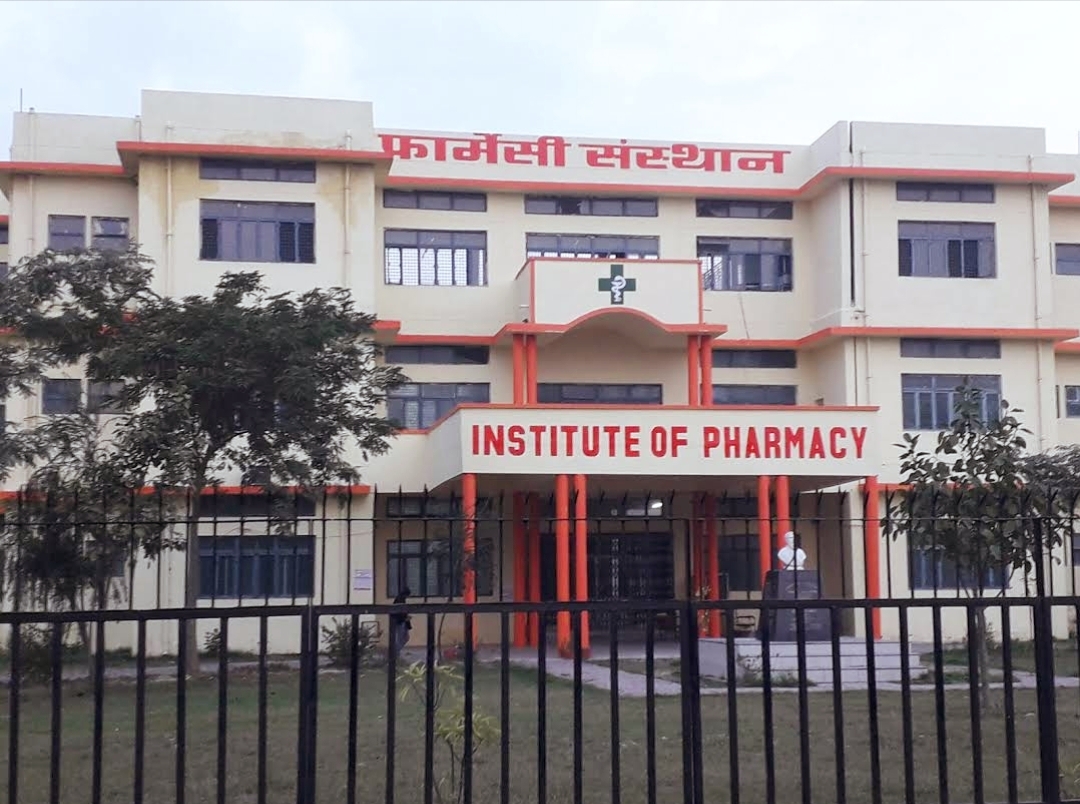
INDORE — A familiar admission-season fear has begun circulating among pharmacy aspirants in Madhya Pradesh: wait, and you could lose your seat; act now, and you can save the academic year.
That message is powerful because it sounds plausible. Pharmacy admissions have been surrounded by regulatory uncertainty, changing approval timelines, court proceedings and shifting counselling schedules. Parents who are already worried about fees and their children's careers can easily interpret one alarming headline or WhatsApp forward as a final warning.
But when the noise is stripped away and the primary documents are read carefully, the picture is considerably less dramatic.
The short version
There is no basis in the official Madhya Pradesh counselling schedule for telling students that pharmacy admissions are suddenly ending in August. The revised 2026–27 MPDTE schedule provides centralized counselling rounds for B.Pharm, D.Pharm and Pharm.D, a separate schedule for M.Pharm, and subsequent College Level Counselling (CLC) for seats remaining vacant after centralized counselling. The schedule runs through 30 October 2026.
That does not mean every college, every course or every seat is guaranteed to remain available. It means something more precise: students should make admission decisions from the official counselling framework rather than from panic-driven claims about an immediate statewide shutdown.
What Started the Confusion?
The 2026 pharmacy admission cycle has been unusually complicated because the regulatory timetable itself has been under scrutiny. The Pharmacy Council of India approached the Supreme Court seeking changes and extensions connected with the approval process for pharmacy institutions.
In its proceedings, the Supreme Court dealt with the longstanding technical-education admission timetable and the practical difficulties that had repeatedly resulted in requests for extensions. The Court's July 2026 proceedings therefore need to be understood as part of a larger regulatory transition — not as a simple announcement that pharmacy admissions were being cancelled.
That distinction is crucial.
A headline that says "Supreme Court extends pharmacy admission deadline" can be interpreted by one reader as a routine regulatory adjustment. Another reader may read it as evidence that colleges have suddenly lost approval or that the admission system is collapsing.
Social media makes that distortion even easier. A complicated court order can become a one-line forward within minutes. By the time it reaches a parent or student, the legal context may have disappeared completely.
The Supreme Court Background: Why Was the Timeline Being Changed?
The Supreme Court material is important because it shows that the problem did not begin with a random social-media rumour.
In Miscellaneous Application No. 1976 of 2026, arising in the long-running matter involving Parshavanath Charitable Trust v. All India Council for Technical Education & Ors., the Pharmacy Council of India placed an affidavit before the Court seeking an extension of the applicable schedule.
The affidavit referred back to the Court's established timetable for technical education, under which approval decisions were expected to be completed by April, with appeals following thereafter. It also acknowledged that the Pharmacy Council had repeatedly approached the Court in earlier academic years for extensions.
More importantly for 2026–27, the affidavit stated that the Court had already approved a new schedule applicable from academic session 2026–27.
Why this matters
The official court record shows a regulatory timetable being revised after repeated difficulties with the earlier schedule. That is very different from saying that pharmacy admissions themselves were being abolished or abruptly stopped.
The right question for a student therefore is not "What did the latest WhatsApp message say?" but "What does the applicable state counselling schedule say today?"
The Official MPDTE Schedule Is the Real Story
Madhya Pradesh subsequently issued its revised online off-campus counselling schedule for the 2026–27 academic session in compliance with the Supreme Court proceedings.
The schedule covers pharmacy admissions under the state counselling system and sets out dates for registration, registration editing, choice filling, common merit lists, allotment and admission. It then provides a second centralized round followed by institution-level counselling for seats that remain vacant.
In other words, the official document itself contains multiple opportunities after the first round.
B.Pharm, D.Pharm and Pharm.D — First Centralized Round
| Stage | Official Schedule |
|---|---|
| Online Registration / Registration Cancellation | 29 May–16 September 2026, up to 11:45 PM |
| Registration Editing for eligible candidates | 17–18 September 2026, up to 5:30 PM |
| Online Choice Filling and Locking | 1 June–20 September 2026, up to 11:45 PM |
| Common Merit List | 21 September 2026 |
| Allotment Letter / Reporting / Document Verification / Admission | 24–30 September 2026, up to 6:30 PM |
Second Centralized Round
| Stage | Official Schedule |
|---|---|
| Online Registration / Registration Cancellation | 26 September–3 October 2026, up to 11:45 PM |
| Registration Editing | 4–5 October 2026, up to 5:30 PM |
| Online Choice Filling and Locking | 1–7 October 2026, up to 11:45 PM |
| Common Merit List | 8 October 2026 |
| Allotment / Reporting / Verification / Admission | 11–15 October 2026, up to 6:30 PM |
What About M.Pharm?
Master of Pharmacy (M.Pharm) has its own schedule within the revised counselling framework. The official document specifically refers to admission on the basis of a valid GPAT score or qualifying examination, with valid GPAT candidates receiving priority in the applicable process.
| M.Pharm Stage | Official Schedule |
|---|---|
| Registration | 1 July–28 September 2026, up to 11:45 PM |
| Registration Editing | 29–30 September 2026, up to 5:30 PM |
| Choice Filling | 20 July–2 October 2026, up to 11:45 PM |
| Common Merit List | 3 October 2026 |
| Allotment / Reporting / Verification / Admission | 9–15 October 2026, up to 6:30 PM |
SGSITS, Indore also states that B.Pharm admissions are conducted through the Directorate of Technical Education, Madhya Pradesh, with admission based on Class 12 merit. Its institutional information further states that B.Pharm and M.Pharm seats are offered through DTE counselling. This is a useful institutional cross-check against the broader state counselling framework.
And Then Comes CLC — College Level Counselling
This is perhaps the single most important detail for students who have been told that "everything ends after the main counselling round."
The revised MPDTE schedule explicitly provides College Level Counselling (CLC) for pharmacy seats that remain vacant after centralized counselling.
The key takeaway for students
A student should not interpret the first centralized round as the only possible admission opportunity. The official schedule itself anticipates vacancies and provides subsequent counselling mechanisms.
That does not mean a particular college or course will necessarily have a vacant seat. It means that the counselling system has expressly provided later stages for valid vacancies.
So, Was the Panic Completely Fake?
This is where responsible reporting needs to be more careful than social media.
There is a real regulatory story behind the confusion. The Pharmacy Council of India has been dealing with approval timelines, the Supreme Court has considered applications concerning the schedule, and the Centre has discussed possible changes to the regulatory framework.
The Supreme Court also expressed concern in August about uncertainty created by the existing year-to-year approval system. The Court questioned why institutions with the required infrastructure should continue to face a system in which course approvals are effectively revisited annually.
That concern is real.
What is not supported by the MPDTE schedule is the leap from "the regulatory system is complicated" to "students must immediately pay a private college or lose the academic year."
What we can verify — and what we cannot
We found official documentation for the revised counselling schedule, the multiple centralized rounds, the CLC process and the October 30 final scheduled date.
We have not found a reliable statewide dataset establishing an exact number of students who were targeted by misleading admission messages, an exact number of illegal advance-seat bookings, or a percentage of applicants affected by such claims.
Therefore, this report does not invent a figure such as "37 incidents," "214 complaints" or "18 percent of applicants." Such numbers would create a false impression of statistical certainty.
The Numbers Game: How Big Is the Pharmacy Ecosystem?
Madhya Pradesh has a substantial pharmacy-education network, with institutions spread across Indore, Bhopal, Gwalior, Jabalpur, Sagar, Ujjain and other districts.
Indore is particularly important to this story because of its concentration of educational institutions and its wider pharmaceutical and manufacturing ecosystem. Students also look toward the nearby Pithampur industrial belt for internships, manufacturing exposure, quality-control opportunities and other pharmaceutical-sector experience.
However, claims circulating online about the precise number of colleges, annual intake and total active students need to be treated cautiously.
PCI's public approval material contains institution-level information, including approvals and approved intakes for individual institutions. But an older approval listing should not automatically be converted into a precise count of active 2026–27 colleges, current seats or enrolled students.
That distinction matters because pharmacy institutions can experience changes in approval status, intake, affiliation and course availability over time.
What We Can Say With Confidence
- Madhya Pradesh has a large pharmacy education ecosystem.
- Indore is one of the state's major pharmacy and pharmaceutical-industry centres.
- PCI maintains institution-level approval records.
- MPDTE is the relevant state counselling mechanism for the applicable pharmacy admissions covered by the schedule.
- The 2026–27 counselling process contains multiple stages rather than a single one-shot admission window.
- The official schedule extends the overall process through 30 October 2026.
What We Should Not Pretend to Know
- The exact number of students who received misleading WhatsApp messages.
- The exact number of private admission agents involved in unauthorized offers.
- The percentage of MP pharmacy applicants affected by misinformation.
- The exact number of illegal "advance bookings" unless supported by complaints, enforcement records or documentary evidence.
- The precise 2026–27 enrollment total until the relevant official data are available.
Prof. Vivek Tiwari: Why the Warning Matters
In discussions around the admission confusion, Prof. Vivek Tiwari, Coordinating Admissions Official for the pharmacy program, emphasized the danger of students and parents making financial decisions based on unverified information.
"We received dozens of frantic calls every single day from parents asking if they should pay private fees immediately to save their child's year. It became clear that unverified media reports were driving people into making reckless financial decisions. We had to step in immediately with clear facts to prevent parents from losing their hard-earned money to unauthorized seat bookings." — Prof. Vivek Tiwari, Coordinating Admissions Official for the pharmacy program
The practical message is straightforward: panic is a poor substitute for a counselling schedule.
A parent who is told that a seat will disappear within hours should ask for the official notification, the applicable counselling rule, the allotment mechanism and the institution's current approval status before transferring money.
Five Rules Every Pharmacy Applicant Should Follow
What Students Should Do Right Now
If you are a B.Pharm, D.Pharm, Pharm.D or M.Pharm aspirant in Madhya Pradesh, the safest approach is surprisingly simple.
First, identify the exact course for which you are eligible. Second, read the current MPDTE counselling notification. Third, complete registration and choice filling within the applicable window. Fourth, monitor the official merit list and allotment information. Finally, if you do not obtain a seat in an earlier stage, check the subsequent round and CLC provisions instead of assuming that the process has ended.
This is particularly important for parents. Admission anxiety creates a natural tendency to reward speed: "Pay now; we will sort out the paperwork later."
The official counselling model works in the opposite direction. It rewards documentation, deadlines, choices, merit and verification.
Red flag: "Pay today or lose your seat"
A private institution or intermediary may have legitimate reasons to explain fees and admission procedures. But a claim that a student must immediately hand over an unofficial advance payment because "government counselling is ending tomorrow" should be independently verified against the current official notification before money changes hands.
Why the Supreme Court Story Was Easy to Misread
The legal background is complicated even for professionals.
The Supreme Court case concerns a broader technical-education approval framework. The Pharmacy Council of India has had to work within court-prescribed schedules while dealing with inspection, approval and institutional submissions. The 2026 proceedings therefore contain several layers: the old schedule, the revised schedule, applications for extension, institutional approval requirements and the practical relationship between regulatory approval and student counselling.
A social-media post that extracts one date from that chain can therefore sound dramatically different from the complete order.
That is exactly why students should read the state counselling notification that applies to them rather than attempting to reconstruct the admission process from headlines.
Official MPDTE Schedule: The Dates at a Glance
| Admission Area | Key Date / Window |
|---|---|
| B.Pharm / D.Pharm / Pharm.D — First Registration | 29 May–16 September 2026 |
| First Choice Filling | 1 June–20 September 2026 |
| First Common Merit List | 21 September 2026 |
| First Allotment / Admission | 24–30 September 2026 |
| B.Pharm / D.Pharm / Pharm.D — Second Registration | 26 September–3 October 2026 |
| Second Common Merit List | 8 October 2026 |
| Second Allotment / Admission | 11–15 October 2026 |
| M.Pharm Registration | 1 July–28 September 2026 |
| M.Pharm Merit List | 3 October 2026 |
| M.Pharm Allotment / Admission | 9–15 October 2026 |
| CLC Registration | 16–19 October 2026 |
| CLC stages | 20–29 October 2026 |
| Final scheduled date | 30 October 2026 |
What About Direct Admission and "Management Seats"?
This is an area where students need to be especially precise.
The existence of private pharmacy institutions does not by itself establish that every seat can be sold directly to a student outside the applicable state process. The precise rules can depend on the institution, category, course and current counselling notification.
Therefore, students should not assume that a phrase such as "management seat" automatically means that an agent can accept an informal cash reservation. The correct question is whether the proposed admission route is authorized under the applicable rules and whether the institution is permitted to fill that particular seat in that manner at that stage.
If a college representative makes a financial demand, ask for a written fee structure, receipt, admission category, applicable rule and official confirmation. Keep copies of every payment and document.
Approval Matters: Why Students Should Check More Than a College's Advertisement
Pharmacy education is regulated through a combination of institutional approvals, affiliations and state-level admission mechanisms. The PCI's public records demonstrate why a simple "PCI approved" label is not always enough to answer every question about a particular academic year.
Approval records can specify a course, intake and academic session. Some records also contain historical decisions concerning extension, restoration or changes in intake.
For a 2026–27 applicant, the safest approach is therefore to verify the current applicable status for the exact institution and course rather than relying on an old screenshot or a generic statement on an admissions brochure.
Indore's Special Position in the Story
Indore has an unusually visible role in this admission cycle because the city combines a major higher-education ecosystem with proximity to the Pithampur pharmaceutical and industrial belt.
Institutions such as Shri G. S. Institute of Technology and Science (SGSITS), Indore provide an important public institutional reference point. SGSITS states that its B.Pharm admission process is conducted through DTE Madhya Pradesh and that B.Pharm admission is based on Class 12 merit. r1
The PCI's public records also list numerous pharmacy institutions in Madhya Pradesh, including institutions in and around Indore. Those records illustrate the breadth of the state's pharmacy network, but they should not be treated as a live 2026–27 enrollment census. r2
For students, that distinction is important. A large educational ecosystem creates choice, but it also makes it more important to distinguish between an institution that is actively participating in the relevant counselling process and one that is merely advertising pharmacy courses.
Our Related SGSITS Coverage
tinakhatri.in has also been following developments around SGSITS and its wider academic ecosystem. Readers interested in related institutional coverage can explore:
What Parents Should Ask Before Paying a College
If someone approaches you with an immediate admission offer, do not argue with them and do not panic. Ask questions.
- What exact course is the offer for — B.Pharm, D.Pharm, Pharm.D or M.Pharm?
- What admission category is being offered?
- Is the seat part of the current MPDTE counselling process or a separately authorized category?
- What is the current approval and intake status for that exact course?
- What university affiliation applies?
- What is the official fee structure?
- Will the institution issue a proper receipt for every payment?
- Can the claim be confirmed through the official counselling portal or authorized help centre?
If the answers are vague, the pressure increases, or the student is told not to wait for official counselling because "the government seats are finished", that is the moment to slow down rather than speed up.
There Is a Difference Between Regulatory Uncertainty and Admission Cancellation
This may be the most important distinction in the entire story.
The Supreme Court's scrutiny of the pharmacy regulatory system is real. The PCI's repeated requests concerning approval timelines are real. Institutional approval uncertainty can be real. But none of those facts automatically means that a student's entire admission opportunity has disappeared.
The MPDTE schedule is the operational document students need for the state counselling process. It sets out dates, stages and subsequent opportunities.
Good admission journalism should therefore resist both extremes: it should not dismiss legitimate regulatory concerns, but it should also not turn regulatory complexity into an unsupported panic story.
Bottom line
The pharmacy admission system is complicated. That does not mean students should panic.
For Madhya Pradesh's 2026–27 pharmacy admissions, the official schedule provides multiple centralized counselling stages and later College Level Counselling for remaining vacancies, with the scheduled process extending through 30 October 2026.
Final Advice: Don't Let a Deadline You Cannot Verify Make the Decision for You
Admissions are emotional because the stakes are high. A four-year B.Pharm programme, a D.Pharm qualification, a Pharm.D pathway or an M.Pharm specialization can shape a student's early professional life. Parents understandably want certainty.
That is exactly why misinformation works.
The antidote is not another social-media post. It is the original notification.
Check the official MPDTE schedule. Check your registration status. Check the applicable choice-filling deadline. Check the allotment letter. Check the institution. Check the course. Check the approval and affiliation information. And keep documentary evidence of every transaction.
If a person tells you that the opportunity will disappear today, ask them to show you the official order saying so.
If they cannot, do not let their urgency become your financial risk.
Official and primary sources to check
Editorial methodology
This report distinguishes between primary-source information and estimates circulating online. The counselling dates in this article are based on the revised 2026–27 MPDTE schedule supplied for this report and cross-checked against the state's online counselling framework. The Supreme Court discussion is based on the court material concerning Miscellaneous Application No. 1976 of 2026 and the related proceedings in Civil Appeal No. 9048 of 2012.
Claims concerning the number of colleges, total students, vacant seats or people affected by misinformation have not been presented as precise statistics unless supported by a sufficiently reliable underlying dataset. In particular, this report does not manufacture a percentage of students affected by alleged admission misinformation.
Institutional approval status can change. Students should always verify the current status of the exact course and institution through the applicable official sources before making an admission or payment decision.