Indore Turtle Smuggling: 30 Turtles Seized, Two Men Arrested
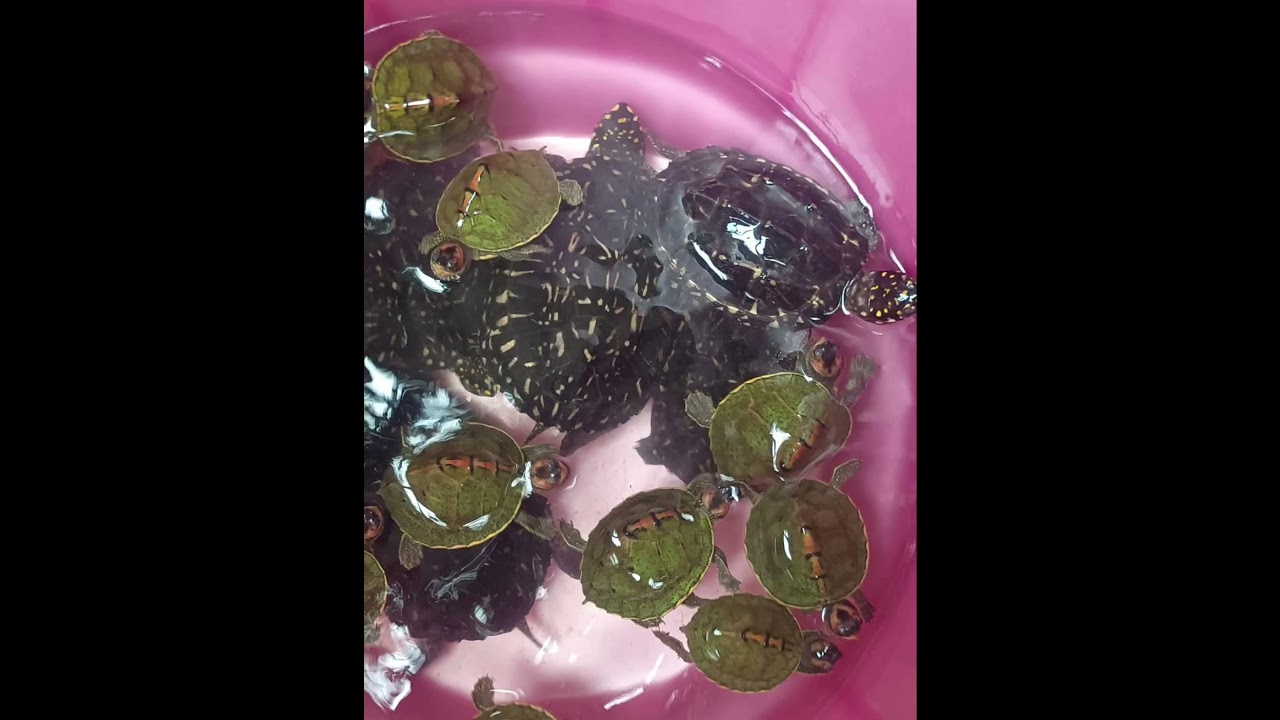
Image from the turtle seizure footage supplied by the Forest Department and published on the Tina Khatri YouTube channel. The footage shows the turtles recovered during the reported enforcement operation.
The State Tiger Strike Force arrested two men in Indore on Thursday in connection with a turtle smuggling case and seized 30 turtles of different species from their possession.
The arrested men were identified as Keshav Sharma and Rohan Gaur, both residents of Musakhedi. According to the verified case details, the two were looking for customers to sell the turtles when the Tiger Strike Force received information about the alleged activity and formed a team to take action.
The operation resulted in the arrest of both men and the recovery of 30 turtles belonging to different species.
According to the case information, Sharma contacted customers to arrange the sale of the turtles, while Gaur was responsible for delivering the wildlife to customers. The two were allegedly working together in the turtle trade.
Following the seizure, Sharma and Gaur were produced before a court.
What happened in the Indore turtle smuggling case
The State Tiger Strike Force carried out the operation after receiving information that two men were seeking customers for turtles they allegedly intended to sell.
The force formed a team and acted on the information. Sharma and Gaur were apprehended during the operation.
The enforcement team recovered 30 turtles from their possession. The verified information describes the turtles as belonging to different species but does not provide a complete species-by-species inventory of all 30 animals.
The distinction is important. The number of animals seized and the fact that they were described as belonging to different species are confirmed details of this case. Specific species names should not be added unless they are confirmed by the Forest Department or another competent source.
Who are the two accused?
Keshav Sharma and Rohan Gaur, both residents of Musakhedi, were arrested in connection with the case.
Alleged role of Keshav Sharma
According to the case details, Sharma was involved in contacting prospective customers for the sale of the turtles.
Alleged role of Rohan Gaur
Gaur was allegedly responsible for delivering the wildlife to customers.
The case information therefore describes two distinct roles within the alleged activity: customer contact and delivery.
No buyer has been identified in the verified details supplied for this report, and no additional person or wider network should be attributed to the case without confirmation from investigators.
Thirty turtles seized: what the official footage shows
The photographs and video accompanying this report are not stock or representative wildlife images. The footage was supplied by the Forest Department in connection with the enforcement operation and was subsequently published on the Tina Khatri YouTube channel.
The footage shows the turtles recovered during the reported operation. It provides visual documentation of the seizure described in the case details.
Video: Forest Department-supplied footage, published on the Tina Khatri YouTube channel.
The visual material is directly relevant to this report because it concerns the turtles recovered during the operation described here.
At the same time, species identification is a separate question. The footage can document the animals recovered without requiring this news report to independently assign a species name to each turtle.
Why the species identification matters
Turtles are not a single legal category in the way the word might suggest to a casual reader. Different species can have different conservation classifications and different legal treatment under wildlife-protection laws.
That is why responsible wildlife reporting needs to distinguish three separate facts: what the enforcement team recovered, what species experts or officials identify those animals as, and what legal provisions apply to those species and the alleged conduct.
A clear photograph can be highly useful for scientific identification. A qualified herpetologist, zoologist or trained wildlife officer may be able to identify a turtle from visible characteristics such as shell structure, markings, head pattern and other diagnostic features.
But a journalist should not turn a visual impression into a legal conclusion.
In this case, the verified information already establishes that the Forest Department supplied footage showing the recovered turtles and that 30 turtles of different species were seized. There is no need to speculate beyond those facts.
What Indian law says about protected wildlife
The principal central legislation governing wildlife protection in India is the Wild Life (Protection) Act, 1972.
The official India Code record describes the law as legislation providing for the protection of wild animals, birds and plants and matters connected with ecological and environmental security.
The Act contains provisions dealing with hunting, protected areas, trade or commerce in wild animals and animal articles, scheduled specimens, search and arrest powers, offences and penalties, among other matters.
The current official statutory material can be checked through India Code's official record of the Wild Life (Protection) Act, 1972.
The Act has also been amended over time. The current schedule structure should therefore be checked rather than relying on older articles or older versions of the law when explaining the legal status of a particular turtle.
India's turtle trafficking problem: the documented scale
The Indore seizure involves 30 animals. National records show that turtle and tortoise trafficking has previously involved much larger consignments.
A major study by TRAFFIC examined reported seizures of Indian tortoises and freshwater turtles between September 2009 and September 2019. The organisation reported a minimum of 111,310 tortoises and freshwater turtles entering illegal wildlife trade during that 10-year period.
TRAFFIC's detailed factsheet recorded 348 reported seizure cases. It said 83,230 animals were reported seized alive and 855 were reported dead, while the condition of the remaining 27,227 animals was unknown or unreported. Seizures were reported from 19 states and two Union territories. The organisation also cautioned that an unknown proportion of illegal wildlife trade goes undetected. TRAFFIC's India turtle and tortoise trade report provides the underlying analysis.
The 111,310 figure should not be interpreted as a census of all turtles illegally traded in India. It represents animals documented through reported seizure records during the study period. TRAFFIC specifically noted that the actual level could be higher because illegal trade can go undetected.
What the TRAFFIC research found
TRAFFIC reported that unauthorised extraction from the wild for illegal trade as pets, food and medicine were among the main drivers identified in its analysis.
The study found reported seizures involving 14 Indian turtle and tortoise species. Indian Star Tortoise accounted for 49% of identifiable individuals in the dataset, followed by Indian Softshell Turtle at 26%, Indian Flapshell Turtle at 15% and Black-spotted or Spotted Pond Turtle at 9%.
Uttar Pradesh and West Bengal emerged as the two major hotspots by the number of animals seized, accounting for more than 60% of the reported seizures in the study.
These historical statistics provide national context. They do not establish the origin of the 30 turtles seized in Indore.
The current case information does not state where the turtles were collected, where they were intended to be sold or whether investigators have identified suppliers or buyers.
Operation Kachchhap: 955 turtles recovered in a Bhopal-linked operation
One of the most significant recent government-recorded turtle trafficking operations involving Madhya Pradesh was Operation Kachchhap in September 2023.
According to a Press Information Bureau release issued by the Government of India, the Directorate of Revenue Intelligence apprehended six people and recovered 955 live baby Gangetic turtles of different species at Nagpur, Bhopal and Chennai on Sept. 30, 2023.
The government said the operation followed intelligence about a syndicate involved in the illegal trafficking and trade of turtles of the Ganges.
The recovered species listed in the government release were Indian Tent Turtle, Indian Flapshell Turtle, Crown River Turtle, Black-spotted or Pond Turtle and Brown Roofed Turtle.
Following the initial seizure under the Wild Life (Protection) Act, the people apprehended and the turtles were handed over to the respective Forest Departments for further investigation, according to the government release.
| Operation or dataset | Animals reported | What the record establishes |
|---|---|---|
| Indore case, 2026 | 30 turtles | Two men arrested; turtles of different species seized; accused produced before court |
| Operation Kachchhap, 2023 | 955 live baby Gangetic turtles | Six people apprehended; recovery made at Nagpur, Bhopal and Chennai |
| TRAFFIC study, 2009-2019 | Minimum 111,310 tortoises and freshwater turtles | 348 reported seizure cases across 19 states and two Union territories |
These figures come from different sources and represent different things. They should not be added together. The Indore figure is a single enforcement case; Operation Kachchhap was a coordinated multi-city operation; and the TRAFFIC number is a research dataset based on reported seizure records over a decade.
What the Bhopal operation tells us about trafficking investigations
Operation Kachchhap is useful background because Bhopal was one of the locations where live turtles were recovered in a coordinated enforcement action.
The operation also illustrates why wildlife-trafficking investigations can extend beyond the location where animals are ultimately seized. DRI described its action as a coordinated plan involving multiple locations and the simultaneous apprehension of suspects.
But the existence of that earlier operation does not establish a connection with the current Indore case.
There is no verified information in the present case material linking Sharma or Gaur to the people apprehended in Operation Kachchhap. Nor does the current information establish that the 30 turtles came from the same source or were intended for the same market.
Those distinctions are essential when reporting wildlife crime. A previous case can provide context without becoming evidence against people in a new case.
Why seizure numbers can be misleading without context
A wildlife seizure is a measure of detected activity, not a complete measure of illegal activity.
If enforcement agencies improve intelligence gathering, increase surveillance or conduct more targeted operations, the number of animals seized may rise even when the underlying level of trafficking is not known to have increased.
Likewise, fewer seizures do not automatically prove that trafficking has declined.
TRAFFIC's study illustrates the problem. Its 111,310-animal figure was explicitly described as a minimum because some illegal wildlife trade is likely to remain undetected.
For journalists, the practical lesson is simple: seizure statistics should be described as documented recoveries, not as a complete count of the illegal market.
Why turtles are trafficked
TRAFFIC's research identified several drivers behind the illegal trade in Indian tortoises and freshwater turtles, including demand for pets and use in food and medicine.
The organisation's analysis also found evidence of a broad trade spanning multiple states.
That national pattern helps explain why individual cases can involve different participants and routes. But the existence of a known trafficking market does not mean every person arrested in an individual seizure is part of a larger organised network.
For the Indore case, the verified information establishes an alleged effort to find customers and describes the alleged roles of the two arrested men. It does not establish the full structure of any wider network.
What is known and what remains unanswered
| Question | Current verified position |
|---|---|
| How many turtles were seized? | 30 |
| Were they from different species? | Yes, according to the case information. |
| Who was arrested? | Keshav Sharma and Rohan Gaur |
| Where are they from? | Musakhedi |
| What was Sharma's alleged role? | Contacting customers for the sale of turtles |
| What was Gaur's alleged role? | Delivering the wildlife to customers |
| Were they produced before a court? | Yes. |
| Are the 30 species individually identified in the supplied information? | No complete species-by-species list is provided. |
| Has a buyer been identified? | Not stated in the verified information supplied for this report. |
| Has the source of the turtles been established? | Not stated in the verified information supplied for this report. |
| Has a wider trafficking network been established? | Not stated in the verified information supplied for this report. |
The legal significance of an arrest
Sharma and Gaur were arrested and produced before a court. That is the procedural position reported in the case details.
An arrest is not a conviction.
The allegations against the accused must be tested through the judicial process. A news report should therefore distinguish clearly between what enforcement officials allege, what was seized, and what a court ultimately determines.
This distinction becomes especially important in wildlife cases because an initial seizure can generate substantial public attention while the subsequent legal proceedings may take much longer.
Why journalists should be precise about wildlife species
There is a practical reporting problem that often arises when wildlife photographs circulate online.
A turtle shown in a photograph may look familiar to a journalist, wildlife enthusiast or reader. That does not mean the image should automatically be labelled with a species name.
At the same time, it would be incorrect to suggest that photographs can never identify turtles. They can. Specialist identification guides are specifically designed to help enforcement officers identify tortoise and freshwater turtle species encountered in illegal trade.
TRAFFIC, the Turtle Survival Alliance India and WWF-India have produced identification tools covering India's tortoise and freshwater turtle species. TRAFFIC said the tools were intended to help enforcement officers identify species encountered in illegal wildlife trade.
The identification tools were updated in May 2023 to reflect changes associated with India's amended wildlife law. TRAFFIC's wildlife identification-tools report provides further details.
The correct journalistic approach is therefore not “a photograph cannot identify a turtle.” The correct approach is: a photograph can support identification, but the publication should not independently make a scientific or legal claim when the competent authority has not supplied or confirmed it.
The Forest Department footage in this report
The visual material used in this article comes from the Forest Department and relates directly to the reported seizure.
That makes the footage materially different from a generic turtle photograph downloaded from an image library. It is case-related footage supplied by the authority involved in the enforcement action.
The footage is therefore presented here as documentation of the turtles recovered during the operation.
The accompanying caption deliberately identifies the source of the footage and its relationship to the seizure. It does not claim a species classification that has not been provided in the verified case information.
What could emerge from the investigation
The next stage of the case could establish facts that are not currently available in the verified information.
Investigators may determine the exact species of the 30 turtles, establish where the animals came from, identify prospective customers or determine whether additional people were involved.
Those are investigative questions, not established facts in the current report.
That distinction should remain in place until authorities provide additional information.
Why the current seizure deserves follow-up
The seizure of 30 turtles is significant on its own because it resulted in the arrest of two people and the recovery of live wildlife.
The wider record makes follow-up reporting even more important. TRAFFIC's decade-long analysis documented a large number of turtles and tortoises in reported illegal-trade seizures, while the 2023 Operation Kachchhap demonstrated that turtle trafficking investigations can involve multiple cities and coordinated enforcement action.
The next useful information in the Indore case will therefore be procedural and factual: the species identification, investigation findings, applicable legal provisions and eventual court outcome.
Those details can turn an initial seizure report into a complete record of what happened.
Frequently asked questions
How many turtles were seized in Indore?
Thirty turtles of different species were seized by the State Tiger Strike Force, according to the verified case details.
Who was arrested in the turtle smuggling case?
Keshav Sharma and Rohan Gaur, both residents of Musakhedi, were arrested.
What were the alleged roles of Sharma and Gaur?
According to the case information, Sharma contacted customers for the sale of the turtles, while Gaur was responsible for delivering the wildlife to customers.
Where did the turtle seizure take place?
The case is reported from Indore, and the two arrested men were identified as residents of Musakhedi.
Were the 30 turtles identified by species?
The verified information states that the turtles belonged to different species but does not provide a complete species-by-species list of the 30 animals.
Does the video show the actual turtles seized?
Yes. The video used in this report was supplied by the Forest Department and shows the turtles recovered during the reported enforcement operation. It was subsequently published on the Tina Khatri YouTube channel.
Are the photographs in this article generic turtle photographs?
No. The lead image is taken from the Forest Department-supplied video associated with the reported seizure.
Is the Indore case connected to Operation Kachchhap?
No connection has been established in the verified information available for this report. Operation Kachchhap is included as historical context because Bhopal was one of the locations involved in that separate 2023 operation.
How many turtles were recovered in Operation Kachchhap?
The Directorate of Revenue Intelligence reported the recovery of 955 live baby Gangetic turtles of different species at Nagpur, Bhopal and Chennai on Sept. 30, 2023. Six people were apprehended. The official account is available through the Press Information Bureau.
How large is India's documented turtle-trafficking problem?
TRAFFIC reported a minimum of 111,310 tortoises and freshwater turtles in illegal wildlife trade during its September 2009 to September 2019 study period, based on 348 reported seizure cases. The organisation said the actual level could be higher because some illegal trade goes undetected.
Does every turtle have the same legal status?
No. Legal treatment depends on the species and the applicable provisions of India's wildlife legislation. The current statutory position should be checked against the official India Code record of the Wild Life (Protection) Act, 1972.
Official records and authoritative sources
Readers seeking the underlying legal framework can consult the Wild Life (Protection) Act, 1972 on India Code, the Government of India's official legislation portal.
The 2023 Bhopal-linked turtle operation is documented in the Press Information Bureau release on Operation Kachchhap.
The broader 2009-2019 seizure analysis is available in TRAFFIC's report on illegal tortoise and freshwater turtle trade in India.
TRAFFIC's material on species identification tools is available in its report on identification tools for Indian tortoises and freshwater turtles.
Readers can also refer to the Ministry of Environment, Forest and Climate Change for government information relating to wildlife protection.
Related Forest and wildlife coverage
More reporting on forests, wildlife and environmental issues is available in the Forest section of Tina Khatri.
Related local coverage includes Nag Panchami 2026 in Indore and the report on five snakes.
Readers can also see the Indore forest reality check for related environmental reporting.
Interactive case facts
Indore turtle seizure: quick calculation
This simple tool shows the average number of turtles per accused based only on the two arrests and 30-turtle seizure reported in this case. It is a mathematical comparison, not an assessment of individual responsibility.
The bottom line in the Indore case
The verified facts are clear. The State Tiger Strike Force arrested Keshav Sharma and Rohan Gaur, both residents of Musakhedi, after receiving information that the two were allegedly looking for customers to sell turtles.
The enforcement team recovered 30 turtles of different species. The case information attributes customer contact to Sharma and delivery of the wildlife to Gaur. Both men were subsequently produced before a court.
The Forest Department-supplied footage accompanying this report shows the turtles recovered during the operation.
The wider record demonstrates that turtle trafficking has been a substantial wildlife-crime concern in India. TRAFFIC documented at least 111,310 tortoises and freshwater turtles in reported illegal-trade cases over a 10-year period, while the Government of India reported the recovery of 955 live baby Gangetic turtles during the 2023 Operation Kachchhap, including a recovery in Bhopal.
Those earlier cases provide important context, but they do not establish facts about the current accused beyond what has been verified in the Indore case.
The next stage will be the investigation and judicial process. Further details about the species of the 30 turtles, their source, prospective buyers, any additional suspects and the eventual court proceedings should be added only when confirmed by the authorities or the court record.