CBSE School-to-Work Transition: Skills, Teachers, Parents and the Big Gap
From marks to making: CBSE’s school-to-work shift reaches classrooms
Central Board of Secondary Education (CBSE) is pushing school education toward a more practical, skill-oriented model, with the school-to-work transition becoming an increasingly important part of classroom learning. The change places greater emphasis on what students can do, make, demonstrate and learn through experience rather than allowing marks alone to define educational progress.
The shift is closely connected with the Board’s implementation of skill education and the Kaushal Bodh framework for Classes VI-VIII from the 2026-27 academic session. CBSE’s official academic material describes Kaushal Bodh as a mandatory skill education component for these classes, built around hands-on and project-based learning.
For schools, however, the policy change is not simply a matter of adding a new subject to the timetable. It raises practical questions about teacher preparation, available resources, classroom time, assessment, project selection, student participation and the expectations of parents who have traditionally associated educational success with marks and examination performance.

Representative image: Students in an Indian school setting as school education increasingly incorporates practical, project-based and skill-oriented learning.
Image source: Wikimedia Commons. Image used as a representative visual for the story.
CBSE’s Official Skill-Education Framework
CBSE’s official academic resources provide the clearest reference point for understanding the change. The Board states that Kaushal Bodh is to be offered mandatorily in Classes VI-VIII from the 2026-27 session, with project-based learning and hands-on exposure forming a central part of the framework.
The official CBSE skill-education curriculum also includes areas such as artificial intelligence, information technology, financial markets, agriculture, healthcare, tourism, banking and other skill subjects across different stages of schooling.
View CBSE’s official Skill Education books and support material | View CBSE’s official Skill Education curriculum
From Marks to Making: What Is Changing in CBSE Schools?
CBSE is moving toward a broader understanding of educational achievement in which students are expected not only to remember information but also to apply knowledge, work collaboratively, solve problems and demonstrate practical abilities.
Under the mandatory Kaushal Bodh framework for Classes VI-VIII, students are introduced to meaningful work through projects. The objective is not simply to produce a finished object. The official framework places emphasis on the skills and learning acquired through the process of doing.
This distinction is important. A student who grows vegetables, creates something with materials, works with technology or participates in a community-oriented activity is not merely completing an extracurricular task. The activity can become a setting in which communication, creativity, collaboration, responsibility, persistence, problem-solving and practical judgment are developed.
In that sense, the school-to-work transition begins much earlier than the moment a student chooses a college course or applies for a job. It starts when young people begin to understand that learning has a relationship with the real world.
Why this matters
The biggest conceptual change may be the move from asking “What did the student score?” to asking a wider set of questions: “What can the student do? How did the student solve the problem? Can the student explain the process? Can the student work with others? Can the student learn from a mistake?”
These questions do not make academic knowledge less important. Instead, they attempt to connect knowledge with application. The challenge for schools will be making that connection meaningful without turning every practical activity into another paperwork-heavy exercise.
Kaushal Bodh and the New School Timetable
The timetable is one of the first places where the policy becomes visible to a school. A classroom cannot introduce substantial hands-on learning merely by changing the name of an existing period. Projects require time for preparation, explanation, activity, reflection and assessment.
CBSE’s official implementation guidelines indicate that skill education in Classes VI-VIII is to be integrated into the academic timetable. The Board’s guidance refers to approximately 110 hours, or around 160 periods a year, and calls for two consecutive periods twice a week, excluding examination time.
That requirement makes the transition a planning exercise for school leadership. Schools must consider room availability, laboratories and other resources, teacher allocation, project selection, student safety and the practical logistics of moving beyond conventional classroom instruction.
The timetable is not a minor administrative detail
A school may have excellent teachers and motivated students, but practical education can struggle if there is no protected time for it. A hurried activity squeezed between conventional periods risks becoming symbolic rather than transformative.
The success of the school-to-work transition will therefore depend partly on whether schools treat skill education as a genuine component of learning rather than as an additional compliance requirement.
Box 1: Balanced & Productive Transition

UK Jha, CBSE City Coordinator
UK Jha, CBSE city coordinator, said introducing skill education required careful planning.
“Adopting a comprehensive skilling timetable is an ongoing, progressive journey for any school cluster. The initial phase is naturally focused on stabilising the new routine. It takes meticulous planning to comfortably carve out these dedicated blocks, but our priority is ensuring the transition remains balanced and productive for both teachers and students,” Jha said.
Teacher capacity is another concern. CBSE’s stakeholder plan identifies the need for trained personnel for vocational education and provides for teacher, trainer and assessor preparation, along with digital content and coursework.
Box 2: Change Required in Teaching Practices
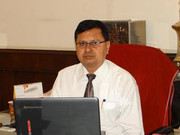
Manoj Bajpai, Principal and CBSE Resource Person
Manoj Bajpai, principal and CBSE resource person, said assessment would require a change in teaching practices.
“Transitioning from numeric marks to continuous, holistic mapping is a significant pedagogical shift for our faculty, but it is a necessary one,” Bajpai said.
He added that training should give teachers the confidence to implement the Kaushal Bodh rubric without creating excessive administrative work.
Box 3: Foundational Upgrade Over Bureaucratic Hurdle
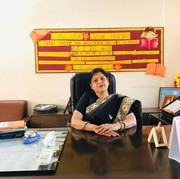
Pratibha Kanungo, School Principal
Pratibha Kanungo, a school principal, said the transition should be viewed as part of educational development.
“The timeline is demanding, but we view this as a foundational upgrade rather than a bureaucratic hurdle. By encouraging an environment where our teachers can learn alongside their students, we are building a genuinely modern classroom experience,” Kanungo said.
Box 4: Can Alleviate School-Induced Anxiety

Dr. Pawan Rathi, Consultant Neuropsychiatrist
Dr. Pawan Rathi, consultant neuropsychiatrist, said practical learning could change how students respond to mistakes.
“Moving away from an exam-only marksheet system can significantly alleviate school-induced anxiety and burnout in middle schoolers,” Rathi said.
He added that coding projects and practical activities could help students treat failure as part of learning, while warning that portfolios should not become another source of competitive pressure.
Box 5: Practical Activities Introduce Movement
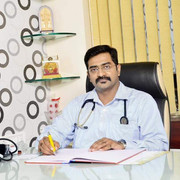
Dr. Abhyudaya Verma, Senior Endocrinologist and Diabetologist
Dr. Abhyudaya Verma, senior endocrinologist and diabetologist, said practical activities could also introduce more movement into the school day.
“Integrating tactile, physical work into the curriculum is a critical intervention,” Verma said, referring to activities such as laboratory work and agricultural projects.
What CBSE’s Official Guidelines Say About Kaushal Bodh
The official CBSE implementation material provides important context to the discussion. It describes Kaushal Bodh as a pre-vocational subject for Classes VI-VIII and connects it with the National Curriculum Framework for School Education (NCF-SE) 2023 and the National Education Policy 2020.
Students are expected to undertake projects across three broad forms of work: work with life forms, work with machines and materials, and work in human services. Across Classes VI-VIII, the framework envisages three projects per class, resulting in nine projects over the three-year middle-stage period.
The official framework also makes an important philosophical point: the emphasis is on acquiring skills through doing, rather than treating the finished product as the sole measure of success.
Read the official CBSE implementation guidelines for mandatory Skill Education and Kaushal Bodh .
What Can Students Actually Learn Through the New Approach?
The strongest argument for practical learning is that it makes education visible. A student can understand the value of measurement while working with materials, learn communication while presenting a project, develop patience while growing something, practise teamwork while solving a problem and understand responsibility through community-oriented work.
Such learning can also reveal strengths that conventional examinations may not capture easily. A student who does not consistently perform well in written tests may demonstrate exceptional observation, design, leadership, technical curiosity, communication or problem-solving ability during practical work.
This is particularly significant during the middle-school years, when students are still discovering what interests them and where their confidence lies.
AI, Coding and the Changing Meaning of Skill
Artificial intelligence and digital technology have changed the environment in which today's students learn. Students increasingly encounter AI-powered tools, automated information systems, digital platforms and new forms of work at an age when previous generations were only beginning to explore computers.
The response cannot be limited to teaching students how to operate individual software tools. The deeper educational challenge is helping children understand how technology should be used, how information should be questioned, how solutions should be tested and how human judgment remains important.
Coding, artificial intelligence and digital creation can therefore become more meaningful when they are taught alongside communication, ethics, collaboration and problem-solving.
CBSE's current academic resources also show the growing presence of Artificial Intelligence and other skill subjects within its curriculum framework.
Visit the official CBSE Academic website for current curriculum and academic updates.
The Teacher Becomes More Important, Not Less
A common misunderstanding about skill-based education is that practical learning reduces the importance of teachers. The opposite may be closer to reality.
When students work on open-ended projects, the teacher's role changes from delivering information to designing experiences, asking useful questions, observing progress, giving feedback and helping students reflect on what they have learned.
That requires professional confidence. Teachers need to understand not only the subject but also the process of facilitating learning through activity.
The teacher may have to tolerate a classroom that is noisier, more collaborative and less predictable than a conventional lecture. Students may make mistakes, disagree with each other, change their approach and produce different outcomes. Those differences are not necessarily failures. They can be evidence that genuine learning is taking place.
The Teacher-Training Gap
Teacher preparation could become one of the defining factors in whether the school-to-work transition succeeds. A policy can prescribe project-based learning, but teachers must still have time, training, resources and institutional support to implement it effectively.
CBSE's official implementation guidance specifically addresses teacher identification and training. Schools are expected to designate teachers to take responsibility for projects, with CBSE providing training support.
The practical question for schools is therefore not only whether teachers receive a training session, but whether that training is sustained enough to build confidence.
Training must go beyond compliance
If a teacher is asked to conduct a practical project but has little preparation in project design, assessment or classroom management, the activity can quickly become another worksheet exercise. Effective teacher development should instead help educators understand how to plan, facilitate, observe and assess learning.
Teachers also need permission to learn. The new classroom may require experimentation, and schools should expect the first version of a project to evolve.
Parents Are Part of the Transition Too
The school-to-work transition cannot succeed through schools alone. Parents also have to understand what the change means.
For generations, marks have provided families with a simple language for judging academic progress. A percentage can be compared, displayed and understood quickly. Practical capability is more difficult to reduce to one number.
A project portfolio may show how a child thinks, communicates, collaborates and solves problems, but parents may initially ask a different question: “How many marks will this give my child?”
That expectation will take time to change. Parents need to see that practical learning is not a relaxation of academic standards. Done properly, it can demand concentration, discipline and intellectual effort of a different kind.
The Big Gap: Policy and Classroom Reality
The most interesting part of this transition lies in the gap between policy and implementation. On paper, the direction is clear: more hands-on learning, stronger vocational exposure, broader assessment and closer connections between education and real life.
Inside schools, however, implementation depends on infrastructure, teacher capacity, timetable design, leadership, student numbers, local resources and parental understanding.
A well-resourced school may be able to create laboratories, gardens, workshops and digital spaces. Another school may have to build projects around the resources already available in its locality.
Interestingly, CBSE's own framework allows schools flexibility to select projects according to local context, available resources and student interest. This could become one of the strengths of the programme if schools use that flexibility creatively.
Assessment: Can a Portfolio Replace the Marks Mindset?
Assessment may be the most difficult cultural change of all. Students and parents are accustomed to marks because they appear objective. But a single examination can capture only a limited slice of what a student knows and can do.
Project-based assessment can provide a richer picture. It can include observation, activity records, presentations, portfolios and demonstrations of learning.
CBSE's implementation guidelines include project-based assessment and suggest a combination of written tests, oral presentation or viva, activity books, portfolios and teacher observations.
| Suggested assessment mode | Weightage in CBSE guidance |
|---|---|
| Written Test | 10% |
| Oral Presentation / Viva Voce | 30% |
| Activity Book | 30% |
| Portfolio | 10% |
| Teacher Observations during Activities | 20% |
This model illustrates the larger philosophy: written testing remains present, but it is no longer the only lens through which learning is viewed.
The Risk: When Portfolios Become Another Competition
There is also a legitimate caution. If parents begin comparing portfolios in the same way they compare examination marks, the intended reform could reproduce the same pressure in a new format.
A portfolio should document learning, reflection and growth. It should not become a competition over whose project looks most expensive or professionally produced.
Schools will therefore have to protect the distinction between a student's own work and the resources available to a student's family.
The objective should be capability, not presentation alone.
Practical Learning Can Bring Movement Back Into the School Day
Another important dimension is physical activity. Traditional classroom learning can keep students seated for long stretches of the day. Practical projects can naturally introduce movement through laboratory work, agriculture, making, field observation, community projects and other activities.
That does not mean every skill project has to be physically demanding. It means learning can take place in different environments and through different forms of engagement.
The broader principle is simple: children are not only minds sitting at desks. They learn through seeing, touching, discussing, building, testing, observing and doing.
Indore Schools and the Local Opportunity
For schools in Indore, the shift can also be viewed through the lens of the city's wider educational, industrial, healthcare, entrepreneurial and community ecosystem.
Local projects can make the idea of skill education less abstract. Students can investigate local environmental issues, understand small businesses, explore food and agriculture, document neighbourhood history, study health awareness, work with digital tools or examine how services operate in their communities.
The advantage of localised learning is that students begin to see the relationship between school subjects and the world immediately around them.
What This Means for Students
For students, the biggest change may be psychological. Learning can become less about avoiding mistakes and more about learning from them.
A practical project can fail. A model can break. A calculation can be wrong. A presentation can go badly. A coding exercise can contain an error.
In a healthy project-based environment, those moments are not the end of learning. They are the material from which learning continues.
That is particularly relevant in a world of innovation, entrepreneurship and rapidly changing technology, where the ability to revise an idea can be as valuable as the ability to produce a correct answer the first time.
What This Means for Teachers
Teachers will increasingly become facilitators, mentors, observers and designers of learning experiences. That is a demanding role.
It also offers an opportunity to make teaching more creative. Instead of asking only whether students completed a chapter, educators can ask what students discovered, how they worked together, what confused them and what they would change next time.
The professional identity of the teacher may therefore become broader, but the human fundamentals remain unchanged: patience, curiosity, communication, encouragement and the ability to understand individual students.
What This Means for Parents
Parents will need to resist the temptation to judge every new form of learning through the old marks-based lens.
A child who learns how to communicate clearly, work in a team, solve a practical problem, manage a project and recover from a mistake is building capabilities that may not appear immediately on a marksheet.
The challenge for families is to recognize those capabilities as educational achievements in their own right.
What This Means for Schools
For school leaders, the reform is fundamentally an implementation challenge.
Timetables must protect project time. Teachers must receive meaningful support. Resources must be used intelligently. Assessment must remain fair. Students must have opportunities to work with their hands and minds. Parents must understand the purpose of the change.
Most importantly, skill education should not become another layer of documentation that teachers complete simply to demonstrate compliance.
The Larger NEP 2020 Connection
The movement toward practical and vocational exposure is consistent with the broader direction of India's National Education Policy 2020, which places emphasis on holistic development, experiential learning, vocational exposure and reducing rigid divisions between academic and practical learning.
The significance of the current CBSE implementation is that this philosophy is increasingly becoming visible in the everyday timetable of schools.
The question is no longer only whether India should discuss skill-based education. The question is how effectively schools can make it real.
CBSE School-to-Work Transition: Five Questions to Watch
1. Will teachers receive enough preparation?
Training will need to be practical and continuous rather than limited to one-time orientation.
2. Will schools protect project time?
If skill education is repeatedly displaced by examinations and other priorities, its impact will remain limited.
3. Will parents accept broader definitions of achievement?
The marks mindset will not disappear simply because assessment formats change.
4. Will portfolios remain about learning?
Schools will need safeguards against turning project work into another source of social and competitive pressure.
5. Will local context be used creatively?
The flexibility available to schools could allow students to learn directly from the communities, occupations, environments and resources around them.
The Real School-to-Work Transition Begins Before the Workplace
The phrase “school-to-work transition” can sound as though it concerns students who are about to leave school and enter employment. The more important idea may be that preparation for work begins much earlier.
It begins when a child learns to arrive prepared, complete a task, work with another person, communicate an idea, accept feedback, solve an unexpected problem and take responsibility for an outcome.
Those behaviours are not separate from education. They are part of becoming capable.
Academic knowledge gives students foundations. Skill education gives them opportunities to apply those foundations. Values and character determine how they eventually use what they know.
From Marks to Making: The Cultural Shift
India's education culture has long placed enormous importance on examination performance. That history cannot be changed overnight.
But the classroom can gradually broaden the definition of success. A student can be academically strong and practically capable. Another student can discover a strength through project work that was invisible in conventional examinations.
The real opportunity is not to replace marks with projects as another single measure of success. It is to create an education system in which different forms of learning reinforce one another.
That is where the school-to-work transition becomes more than a policy phrase. It becomes a cultural change in how schools, teachers, parents and students understand learning itself.
Related CBSE Coverage on Tina Khatri
Follow the continuing education and CBSE coverage on Tina Khatri, including reporting and analysis around examinations, school policy, NEP 2020 and the changing classroom.
Related CBSE and Education Stories
More Education, CBSE and School Stories
- MP Board Exam Pattern 2026-27 and the Changing Examination Landscape
- CBSE News, Updates and Education Stories
- Indore Educators Prepare for NEP 2020
- CBSE Supplementary Exam 2026 Admit Card
- Almost 60% Improve Scores in CBSE Class Examination
- CBSE Class 12 Supplementary Result 2026: 53.08% Pass, MP Students Get Second Chance
About the Author
Editor’s Note
This report examines the classroom implications of CBSE’s skill-education direction, particularly the implementation of Kaushal Bodh and the broader school-to-work transition. The policy context has been cross-checked against official CBSE academic resources. Statements attributed to individuals are retained as supplied for this feature, while additional sections provide editorial context and analysis for readers.
The intention is not to suggest that practical learning should replace academic learning. The larger issue is how schools can bring academic knowledge, practical capability, values, creativity and real-world problem-solving together.