Soybean scientists harvest zero-waste lessons in Indore
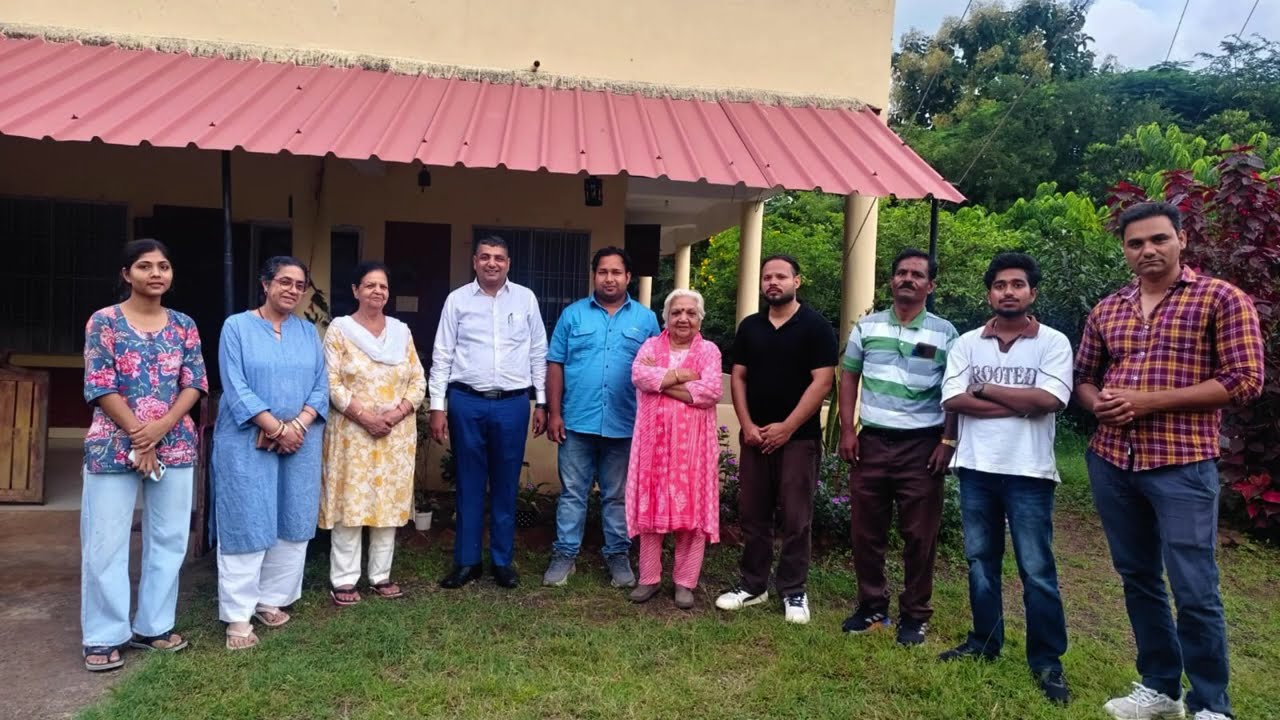
When scientific inquiry aligns with deep personal conviction, the boundaries of research expand into purposeful action. In an inspiring exchange dedicated to environmental responsibility, a delegation of agricultural scientists stepped away from their laboratories to observe how green energy and total waste reduction function in a living, breathing community ecosystem.
A team of scientists from the ICAR National Soybean Research Institute in Indore visited the Jimmy McGilligan Centre for Sustainable Development in Sanawadiya to study practical applications of renewable energy and zero-waste management during the Swachhata Hi Seva campaign.
Bridging Agricultural Science and Green Technology
Agricultural microbiology scientist Hemant Maheshwari led the delegation alongside technical officers Rakesh Chandra Shakya, Rishap, and Deepak Upadhyaya. The group inspected the centre’s solar-powered food processing equipment, industrial solar dryers, electricity generation units, and wind turbines.
The visit provided hands-on access to sustainable technologies that demonstrate how agricultural output can be processed cleanly without reliance on fossil fuels or producing non-recyclable waste streams. By experiencing solar food processing in real time, the scientific team gathered direct field observations on how renewable systems lower operational footprints while maintaining high standards of food safety and resource efficiency.
"Cleanliness is not merely a campaign; it is a sustainable way of life and a collective responsibility," Maheshwari said.
A Life Dedicated to Purposeful Living
Environmentalist Janak Palta McGilligan addressed the delegation, reflecting on her four decades of community work in rural and tribal sectors. "How we will die is not in our hands, but how we choose to live is in our hands," she said, recalling her decision to enter full-time public service following heart surgery at age 17.
Her words resonate with an unwavering warmth and clarity that have transformed thousands of lives. Palta McGilligan detailed her work founding the Barli Development Institute for Rural Women, an organisation focused on capacity building, green technology, and economic independence for tribal populations. The institute constructed the first solar kitchen in Madhya Pradesh, capable of preparing daily meals for up to 50 people purely using solar thermal energy.
Her rural development programmes have covered 302 villages across Alirajpur, Jhabua, and Dhar, while the Sanawadiya centre has trained approximately 187,000 individuals in clean energy, sanitation, and sustainable agriculture.
Expanding the Definition of Cleanliness
Addressing the broader context of environmental health, Palta McGilligan stated that cleanliness extends beyond basic physical hygiene to encompass organic farming, water conservation, plastic reduction, and renewable energy adoption. True ecological balance requires treating every natural resource as a precious trust rather than a disposable commodity.
Former airport director Aryama Sanyal, educator Poonam Palta, Ayurveda student Deepika, and local social worker Vinay Kakrecha also attended the briefing, contributing diverse institutional and youth perspectives to the dialogue on community-driven sustainability.
Institutional Commitments to Green Campuses
Following the site visit, Maheshwari noted that the institute plans to implement enhanced waste management, green-campus protocols, and resource conservation measures based on the centre's practices. By adopting these organic, zero-waste methodologies, the institute aims to serve as a practical model for sustainable agricultural research facilities across the region.
The spirit of the Swachhata Hi Seva movement thrives when institutional leadership connects directly with grass-roots pioneers. The insights gathered at Sanawadiya reinforce a shared understanding: protecting nature is not a periodic task, but an enduring commitment embedded in daily choices, scientific practice, and community leadership.
Explore more stories of perseverance and empowerment in our Inspirational Category.