SGSITS patent puts a smarter step in focus for visually impaired mobility

A patent connected with Shri G. S. Institute of Technology and Science (SGSITS), Indore, covers a “Smart Assist Stick for Physically Challenged People”. The inventor-side description supplied by Prof. Satish Kumar Jain, head of the electronics department, describes a walking stick that combines ultrasonic obstacle sensing, user alerts, GSM/GPRS communication, SOS messaging and audio feedback.
What the SGSITS Smart Assist Stick is designed to address
A white cane is a mobility tool through which a blind or visually impaired person can detect aspects of the immediate physical environment through contact and movement. Its usefulness is established within the broader assistive-technology landscape. Its basic operating principle, however, does not provide electronic information about an object before the cane encounters it.
Prof. Satish Kumar Jain's explanation of the SGSITS innovation begins with that limitation. In the material supplied for this report, he describes visually impaired and blind persons as traditionally relying on a simple white cane to detect obstacles through direct physical contact.
Jain's inventor-side description identifies situations involving low-lying objects, overhanging obstacles, wet floors and poorly lit pathways as examples of hazards that may not be accompanied by electronic warning from a conventional manual cane.
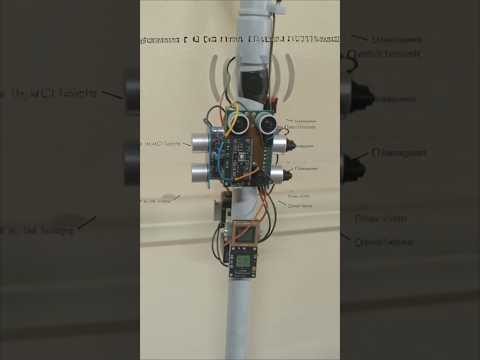
The Smart Assist Stick is described as an attempt to add an electronic sensing and communication layer to the familiar walking-stick form. Its proposed architecture brings together obstacle detection, alerts, mobile communication, emergency messaging and audio feedback.
These figures describe the wider global burden of vision impairment. They are not estimates of the number of people who would use the SGSITS Smart Assist Stick and are not measurements of the device's performance.
How the Smart Assist Stick is described by Prof. Satish Kumar Jain
Ultrasonic sensing and obstacle detection
According to the technical material supplied by Prof. Satish Kumar Jain, the Smart Assist Stick uses ultrasonic-based sensing with sensors and a microcontroller to detect obstacles at a distance.
An ultrasonic sensor can emit a sound wave beyond the range of normal human hearing and detect a returning signal. Electronics can process that response to determine that an object is present and trigger an appropriate alert.
The intended difference from a conventional cane is that electronic sensing can provide information before direct physical contact, depending on the design, sensor orientation, environment and actual performance of the system.
No specific detection range or accuracy percentage is assigned to the SGSITS device in this report because independently verifiable test figures were not supplied with the material used here.
Vibration and buzzer alerts
Detection is useful only when information reaches the user in an accessible form. Jain's description says the system can issue vibration or buzzer alerts when obstacles are detected.
Tactile or audible feedback means that the user does not need to look at a display to receive a warning. The precise alert thresholds, sensor arrangement, timing and user-interface behaviour would need to be assessed through technical and usability testing.
GSM/GPRS connectivity and SOS communication
Another element identified by Jain is the integration of GSM/GPRS communication.
According to the supplied technical explanation, pressing an SOS button can allow the user's location to be transmitted through SMS to pre-configured contacts.
This gives the walking stick a communication function in addition to its mobility role. In an emergency, the intended system could provide another route through which the user requests assistance.
The reliability of such a function would depend on factors including network availability, positioning capability, power supply, configuration and whether the intended contacts can receive and respond to the message.
DF-Mini player and spoken guidance
The technical material supplied by Jain also refers to a DF-Mini player and speaker for spoken guidance or multimodal feedback.
Audio output provides another channel through which information can reach the user. Instead of depending only on vibration or a buzzer, the proposed architecture can use speech as part of the user interface.
Vibration may communicate proximity or urgency without requiring speech, while audio can provide more detailed information. The usefulness of either mode would ultimately depend on how the system is configured and how users respond to it.
The inventor's explanation
The following statements are from the material supplied directly by Prof. Satish Kumar Jain. They are presented as the inventor's explanation of the problem the technology is intended to address and the functions described for the device.
“Consequently, blind individuals are at constant risk of tripping over low-lying objects, walking into overhanging obstacles, or inadvertently stepping into hazardous areas such as wet floors or poorly lit pathways.”
— Prof. Satish Kumar Jain, head of the electronics department, SGSITS
“Moreover, conventional canes offer no means of alerting caregivers or seeking assistance in emergencies, nor do they facilitate recovery if the cane itself is misplaced or lost.”
— Prof. Satish Kumar Jain, head of the electronics department, SGSITS
“To address these shortcomings, ‘smart stick’ solutions have been developed, which use ultrasonic-based walking sticks employing sensors and microcontrollers to detect obstacles at a distance and issue vibration or buzzer alerts to the user.”
— Prof. Satish Kumar Jain, head of the electronics department, SGSITS
“Designs integrate GSM/GPRS so that, upon pressing an SOS button, the user's location can be transmitted via SMS to pre-configured contacts, and use a DF-Mini player with a speaker for spoken guidance or multimodal feedback.”
— Prof. Satish Kumar Jain, head of the electronics department, SGSITS
“Therefore, it is a unified mobility aid that not only detects obstacles and environmental hazards in real time, but also combines GSM-enabled message alerts, voice-guided navigation and emergency alerting features into a single, ergonomic walking stick to significantly enhance the safety, autonomy and situational awareness of visually impaired users.”
— Prof. Satish Kumar Jain, head of the electronics department, SGSITS
These statements describe the intended functionality and potential benefits from the inventor's perspective. They are not presented as independently measured clinical or field outcomes.
Patent No. 508093: what the supplied certificate says
The patent certificate supplied for this report identifies the invention as “Smart Assist Stick for Physically Challenged People”.
| Patent detail | Information supplied on the certificate |
|---|---|
| Patent number | 508093 |
| Application number | 202521132034 |
| Filing date | 26 December 2025 |
| Invention title | Smart Assist Stick for Physically Challenged People |
| Date of grant | 6 August 2026 |
| Patent term stated on supplied certificate | 20 years from 26 December 2025 |
The supplied certificate states that a patent was granted under the provisions of the Patents Act, 1970 for the invention identified above. It also states that the patent is granted for a term of 20 years from the filing date specified on the certificate.
The certificate and its annexure supplied for this report list the following names:
- Satish Kumar Jain
- Shri G. S. Institute of Technology and Science, Indore, Madhya Pradesh
- Ashwin Shrivastava
- Harsh Jain
- Pranav Shrivastav
- Kaushal Sharma
- Himanshu Dohre
A patent grant establishes patent rights in the invention described in the patent record. It does not, by itself, establish clinical validation, commercial-scale deployment, injury reduction, fall reduction, guaranteed reliability or superiority over every conventional mobility aid.
Readers seeking to independently verify the patent record should consult the Government of India's Intellectual Property India resources.
Intellectual Property India — official patent resources
Why the patent matters beyond the hardware
The significance of the device is not necessarily any single electronic component. Ultrasonic sensors, microcontrollers, GSM communication and audio modules are established technologies. The engineering question is how those elements are combined around a mobility problem.
A visually impaired user does not experience a technology as a circuit diagram. The user experiences a warning, a vibration, a spoken instruction, an emergency message or, in a critical situation, the absence of a warning.
That makes integration important. A device containing several functions must also deal with weight, ergonomics, power consumption, charging, reliability, network connectivity, accidental activation, environmental conditions and simplicity of operation.
These factors can determine whether an assistive invention remains an engineering prototype or becomes a device that people can use in daily life.
The wider global picture: vision impairment
The potential relevance of mobility technologies becomes clearer when the scale of vision impairment is considered.
WHO's fact sheet on blindness and vision impairment reports that at least 2.2 billion people globally have near or distance vision impairment. For at least 1 billion people, WHO says the impairment could have been prevented or has yet to be addressed.
WHO also estimates that two out of three people in low-income countries who need eyeglasses do not have access to them. It estimates annual global productivity losses associated with vision impairment at approximately US$411 billion.
These figures are contextual. They do not indicate how many people would use the SGSITS Smart Assist Stick, nor do they establish the device's effectiveness. They show the scale of the wider vision-impairment challenge in which mobility and independence form part of the user's everyday experience.
Read the World Health Organization's blindness and vision impairment fact sheet.
Assistive technology: the need is growing
The Smart Assist Stick also sits within the wider assistive-technology ecosystem. WHO describes assistive technology as products, systems and related services that help people maintain or improve functioning and independence.
WHO includes physical products such as white canes, wheelchairs, glasses, prosthetic limbs and hearing aids within the assistive-technology landscape.
WHO estimates that more than 2.5 billion people currently need one or more assistive products and that the number will exceed 3.5 billion by 2050. WHO also reports that access can be as low as 3% in some settings.
The access gap matters for any new assistive device. A product can have a useful technical design and still have limited social impact if the people who need it cannot afford it, obtain it, maintain it or access the services required to use it.
WHO also notes that many people need more than one assistive product. This makes coordination and integration relevant when considering the future of assistive support.
Read WHO's assistive technology fact sheet.
Read WHO's information on improving access to assistive technology.
What the technology could mean for users
WHO identifies white canes among physical assistive products. The Smart Assist Stick described by Prof. Satish Kumar Jain can therefore be understood as an attempt to add sensing, feedback and communication capabilities to a familiar form of mobility assistance.
Earlier information about obstacles
If a sensor detects an obstacle before the cane physically reaches it, the user may receive additional information with more time to respond. The intended benefit is not that every hazard will be eliminated, but that another information channel may be available.
More than one form of feedback
Vibration, buzzer alerts and spoken feedback give the proposed system multiple ways to communicate with a user. This is relevant to a device intended to operate without requiring the user to look at a screen.
Emergency communication
The SOS function described by Jain is intended to connect the user with pre-configured contacts through mobile communication. In an emergency, that could provide another mechanism for requesting assistance.
Potentially greater situational awareness
The combination of sensing and audio feedback is intended to provide information about conditions that may not be immediately apparent through physical cane contact alone.
A familiar physical form
Integrating electronics into a walking stick rather than requiring a separate wearable device may provide a familiar physical form. Whether that improves adoption would depend on factors such as weight, durability, reliability, ergonomics and user preference.
What the patent does not automatically prove
This distinction is important when reporting assistive technology.
A patent does not automatically prove that an invention has been clinically validated. It does not establish that the system has been tested across a representative population of blind or visually impaired users. It does not establish a particular obstacle-detection rate, battery life or location accuracy.
Nor does the existence of a patent establish that the device has reached mass production, commercial deployment or widespread adoption.
What this report deliberately does not claim
This report does not assign an unverified detection range, accuracy percentage, battery runtime, cost, fall-reduction percentage, clinical-benefit figure or commercial-deployment figure to the SGSITS Smart Assist Stick.
Such figures should be published only when supported by documented testing or independently verifiable evidence.
References to improved safety, autonomy and situational awareness describe the intended benefits identified by Prof. Satish Kumar Jain. They are not presented as independently measured outcomes.
From engineering innovation to a real-world assistive product
The next question is what it would take for a smart stick to become useful at scale.
Assistive technology has a different success test from ordinary consumer electronics. A consumer device can be inconvenient when it fails. A mobility aid can create a serious problem if it supplies unreliable information at a critical moment.
A future evaluation of the SGSITS Smart Assist Stick should therefore examine obstacle-detection reliability, false alerts, missed detections, battery performance, charging requirements, weight, durability, ease of use, network dependency, SOS reliability, audio intelligibility and operation in different environments.
User testing is equally important. A device intended for visually impaired users should ultimately be assessed with the people it is designed to serve. Their feedback can establish whether alerts are understandable, whether the cane remains comfortable, whether electronics interfere with traditional cane techniques and whether the overall device makes navigation easier.
Accessibility also includes affordability. A technically advanced device that is too expensive, difficult to repair or dependent on infrastructure unavailable to its intended users may struggle to deliver the social benefit envisaged by its designers.
India's assistive-technology opportunity
India's scale and diversity make assistive technology an important area for engineering work. Users live across urban and rural environments, with different levels of income, infrastructure, network access and availability of technical support.
For an Indian engineering institution, developing an assistive mobility device therefore raises questions beyond electronics. They include accessibility, inclusive design, affordability, local manufacturing, maintenance, user training and adoption.
India's Rights of Persons with Disabilities Act, 2016 provides a statutory framework concerning the rights and entitlements of persons with disabilities, including accessibility and participation.
In this context, engineering solutions for mobility can be considered not only as devices but also as potential tools for independence and participation.
Read the Rights of Persons with Disabilities Act, 2016 on India Code.
Why SGSITS's role matters
The Smart Assist Stick adds an example of engineering work at SGSITS aimed at a practical mobility problem.
The patent also illustrates one route through which technical-institution research can move from an identified problem towards an engineering architecture and intellectual-property protection.
Whether the invention becomes a widely used product is a separate question. The patent, as documented in the certificate supplied for this report, establishes an intellectual-property milestone for the work described by the listed patentees and inventors.
The user remains at the centre
Technology stories can easily become lists of components: ultrasonic sensors, GSM modules, microcontrollers, audio players and batteries. For assistive technology, however, the central question is whether the system works for the person using it.
A mobility aid has to fit into a person's daily routine. Alerts have to be understandable. The device has to be comfortable enough to carry and use. Electronics must not make the cane cumbersome. Emergency functions have to be dependable. The device also needs to remain useful when network coverage is weak, the battery is low or the environment is unpredictable.
Future evaluation of innovations such as the SGSITS Smart Assist Stick should therefore combine engineering measurements with human-centred testing.
What comes next for the innovation
The patent grant is a milestone, but it is not the end of the evaluation process.
The next stage for an innovation of this kind would ideally include documented engineering tests, structured usability studies, feedback from visually impaired users, reliability assessment, safety evaluation, cost analysis and evidence concerning long-term maintenance.
If those stages establish that the system performs reliably and remains affordable and usable, the invention would have stronger evidence for moving from engineering development towards practical assistive technology.
The central test is therefore not simply whether a smart stick can be built. It is whether the resulting mobility aid can be trusted and used by the people for whom it was designed.
Patent milestone and user impact
The SGSITS Smart Assist Stick described by Prof. Satish Kumar Jain brings together ultrasonic obstacle sensing, microcontroller-based processing, vibration or buzzer alerts, GSM/GPRS communication, SOS messaging and audio feedback in a walking-stick form.
WHO's figures show the scale of the wider vision-impairment and assistive-technology challenges. They do not establish the performance of this invention, but they help explain why mobility, accessibility and independence remain important areas for engineering research.
The patent therefore marks an intellectual-property milestone. The next stage is evidence: engineering performance, human-centred testing, accessibility, affordability, maintenance and real-world user experience.
If those elements are established through testing, the technology could have a pathway towards practical assistive use. Until then, its potential should be distinguished from independently demonstrated outcomes.
Frequently asked questions
What is the SGSITS Smart Assist Stick?
The SGSITS Smart Assist Stick is an assistive mobility device described by Prof. Satish Kumar Jain as combining ultrasonic obstacle sensing, microcontroller-based processing, vibration or buzzer alerts, GSM/GPRS communication, SOS messaging and audio feedback in a walking-stick form.
What patent number was granted for the Smart Assist Stick?
The patent certificate supplied for this report identifies Patent No. 508093 and Application No. 202521132034 for the invention entitled “Smart Assist Stick for Physically Challenged People”.
Who are the patentees and inventors listed in the supplied certificate?
The supplied patent certificate and annexure list Satish Kumar Jain, Shri G. S. Institute of Technology and Science, Indore, Ashwin Shrivastava, Harsh Jain, Pranav Shrivastav, Kaushal Sharma and Himanshu Dohre.
How does the Smart Assist Stick detect obstacles?
According to the technical material supplied by Prof. Satish Kumar Jain, the device uses ultrasonic-based sensing with sensors and a microcontroller to detect obstacles at a distance and provide alerts.
Does the Smart Assist Stick include an SOS function?
The inventor-side description says that the design integrates GSM/GPRS communication so that an SOS button can be used to transmit the user's location through SMS to pre-configured contacts.
Does the patent prove that the Smart Assist Stick reduces falls or injuries?
No. A patent grant does not by itself establish clinical validation, fall reduction, injury reduction, reliability, commercial deployment or superiority over other mobility aids. Those claims require separate technical, usability or clinical evidence.
Has the Smart Assist Stick been independently clinically validated?
No independent clinical validation has been established by the material used for this report. The technical description and intended benefits are attributed to Prof. Satish Kumar Jain, while independent WHO statistics are used only for wider context.
Sources and verification
Patent certificate supplied for this report
The patent details in this article are based on the patent certificate and annexure supplied for this report. The supplied document identifies Patent No. 508093, Application No. 202521132034 and the invention title “Smart Assist Stick for Physically Challenged People”.
For official patent-register and application information, readers should verify the record through the Government of India's Intellectual Property India resources.
Intellectual Property India — official patent resources
Primary inventor-side source
Prof. Satish Kumar Jain, head of the electronics department at SGSITS. His interview and technical material supplied for this report form the inventor-side basis for the description of the Smart Assist Stick's intended architecture, functions and potential user benefits.
World Health Organization: vision impairment
WHO reports that at least 2.2 billion people globally have near or distance vision impairment and that, for at least 1 billion people, the impairment could have been prevented or has yet to be addressed. WHO also estimates that two out of three people in low-income countries who need eyeglasses do not have access to them and estimates annual global productivity loss associated with vision impairment at approximately US$411 billion.
Read WHO's Blindness and vision impairment fact sheet
World Health Organization: assistive technology
WHO estimates that more than 2.5 billion people need one or more assistive products globally and that the number will exceed 3.5 billion by 2050. WHO also reports that access to assistive products can be as low as 3% in some settings.
Read WHO's Assistive technology fact sheet
Read WHO's information on improving access to assistive technology
Indian disability law
India's Rights of Persons with Disabilities Act, 2016 provides the country's statutory framework concerning the rights and entitlements of persons with disabilities, including accessibility-related provisions.
Read the Rights of Persons with Disabilities Act, 2016 on India Code
Editorial integrity statement
This report deliberately separates facts contained in the supplied patent certificate, technical explanations and claims supplied by Prof. Satish Kumar Jain and independent contextual statistics from authoritative sources such as the World Health Organization.
The patent certificate supplied for this report establishes the patent particulars reproduced in this article. Prof. Jain's interview and technical material provide the inventor-side explanation of the device's intended design and functionality. Independent WHO data is used to establish the wider context of vision impairment and assistive-technology needs.
No unsupported detection-range, battery-life, accuracy, cost, clinical-benefit, fall-reduction or commercial-deployment figure has been invented or presented as established fact.
The existence of a patent should not be interpreted as independent proof that the device has been clinically validated, commercially deployed at scale or demonstrated to reduce injuries or falls. Those questions require separate evidence, including technical testing, reliability measurements, usability studies and feedback from actual users.
Likewise, descriptions of increased safety, autonomy and situational awareness are presented as intended benefits described by the inventor, rather than as independently measured outcomes.