Krishna Janmashtami Celebrations in Indore 2026: Faith, Rain and Hope
Across Indore, Krishna Janmashtami brought devotees together in temples, homes and community spaces. A cooler Friday following rain the previous night added a welcome sense of relief, while for many residents the showers also carried a simple but powerful hope: that the monsoon might still improve enough to keep a difficult water situation at bay.
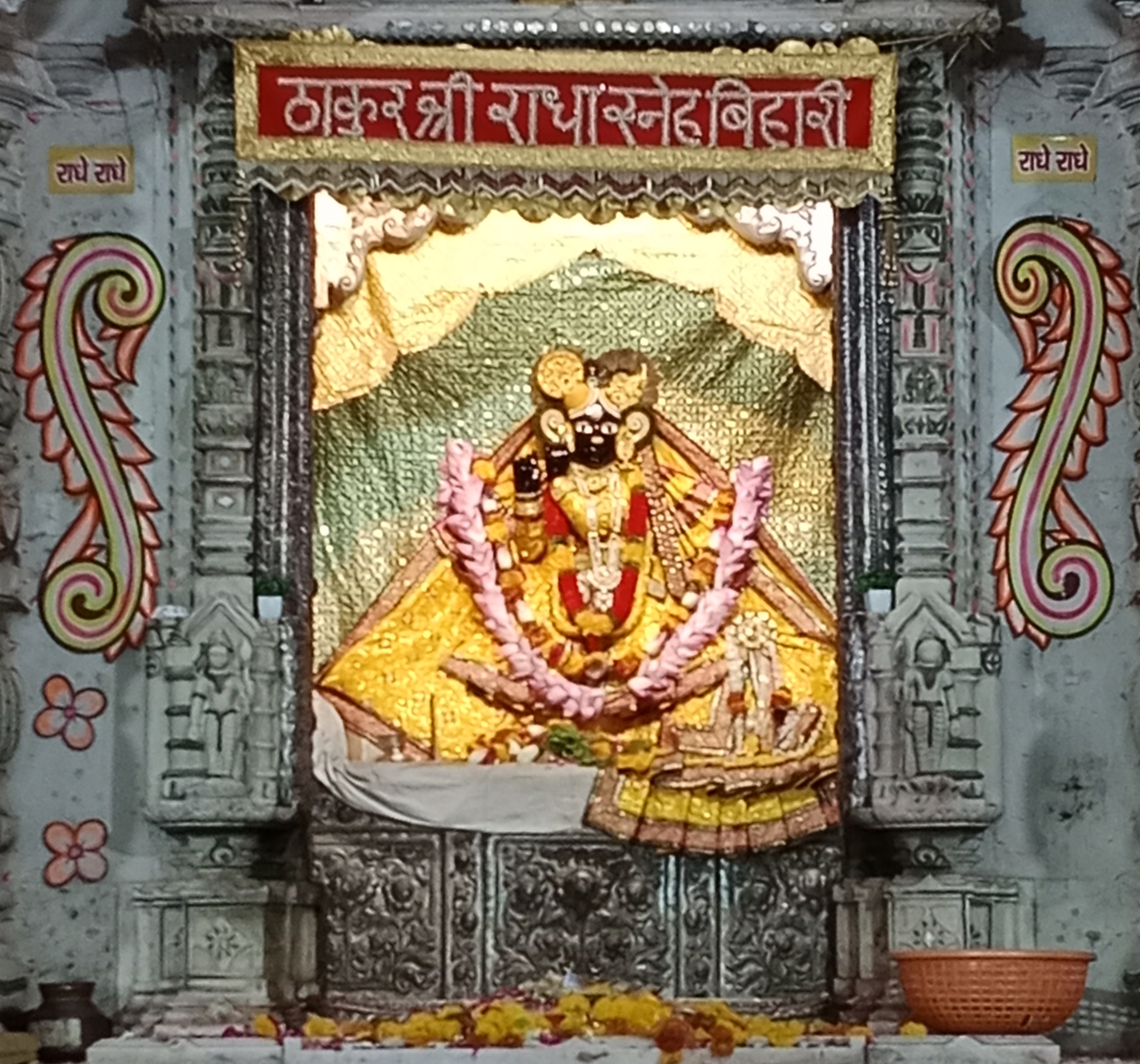
The rain came the night before Janmashtami, but its effect was still being felt when Indore woke up to the festival on Friday.
The showers of Thursday night brought cooler weather to the city and offered welcome relief after a spell of heat and humidity. For devotees preparing to visit temples, attend special prayers and wait for the midnight celebration of Krishna's birth, the change in weather made the festival more comfortable. For residents who had been concerned about inadequate rainfall, however, the rain meant something more.
It brought hope.
The hope was not that one spell of rain could suddenly erase the concerns of an entire monsoon. Rather, it was the hope that the season might still turn around, that more showers could follow and that Indore might avoid the more serious water difficulties that a prolonged rainfall deficit can create.
Yet the rain remained a backdrop to the day's larger story. The focus across the city was firmly on Krishna Janmashtami and the traditions surrounding the birth of Lord Krishna.
From the historic temple areas around Rajwada and Khajuri Bazaar to newer centres of worship in the city's expanding neighbourhoods, devotees participated in special prayers, abhishek, devotional singing, religious discourses, offerings and preparations for the midnight ceremony.
Children dressed as Krishna added another familiar element to the celebrations, while families prepared devotional food and homes and temples took on the colours and imagery associated with the festival.
For many people, Janmashtami is not simply a date on the religious calendar. It is a festival that brings together memory, belief and community. It is also a festival that continues to find contemporary meaning because Krishna's story begins in circumstances of fear and uncertainty, yet ultimately becomes a story of hope.
A homemaker's prayer for rain becomes part of the festival
For homemaker Anju Shankarlal, the concern over rainfall was not an abstract discussion about weather figures. It was connected to the practical realities of running a household.
She had been praying for rain, and the showers before Janmashtami gave that prayer an emotional resonance.
“When you run a home, a dry spell isn't just news—it weighs on your kitchen, your budget, and your daily life. I’ve been praying every morning for rain, and seeing the skies finally burst open on the night before Krishna’s birth feels like a direct answer. It feels like the universe is finally breathing again.”
Shankarlal's words illustrate why the rain became part of the conversations around Janmashtami without becoming the central subject of the festival. For a household, an extended dry spell can influence everyday calculations, from water use to expenses and the uncertainty that comes with a weak monsoon.
The showers did not resolve those concerns, but they offered relief. More importantly, they offered a small change in the emotional weather of the city.
People who had been watching the sky with concern could, at least for a moment, look at wet roads, cooler air and the possibility of more rain with renewed optimism.
Why Janmashtami continues to matter in a changing city
Indore has changed considerably over the years. Its residential areas have expanded, its professional population has grown and technology has become part of everyday life. Yet religious festivals continue to draw people into shared public spaces.
Janmashtami is particularly suited to this kind of collective celebration because it combines ritual with storytelling. The festival is not only about observing a ceremony; it is also about remembering Krishna's life, childhood and teachings and passing those stories to another generation.
Marketing professional Deepak Sharma believes that the value of the festival lies in keeping that sense of hope alive rather than turning faith into a rigid checklist.
“Faith isn't about rigid rules, dogmas, or checking off ritualistic boxes. It’s about keeping hope alive when times get tough. Celebrating Janmashtami isn't just about tradition; it’s a living, breathing pulse of optimism that reminds us better days—and rain—are always around the corner.”
Sharma's point speaks to an important aspect of contemporary religious practice. Traditions remain meaningful when people continue to understand why they are observing them. A festival can retain its rituals while allowing each generation to find its own connection with those rituals.
For one person, Janmashtami may mean fasting and midnight worship. For another, it may mean taking children to a temple, preparing a special offering or listening to devotional music with family. For someone else, it may simply be the annual moment when childhood memories return.
All of these experiences can exist within the same celebration.
The midnight birth remains the emotional centre
However different the celebrations may look across Indore, they eventually move towards the same central moment: midnight.
Devotees traditionally observe Janmashtami through fasting, prayer, devotional singing, religious readings and temple rituals before gathering for the celebration of Krishna's birth at night.
According to Hindu tradition, Krishna is born to Devaki and Vasudeva in Mathura while they are imprisoned by Kamsa. His birth takes place in circumstances of danger and darkness, but becomes the beginning of a story in which righteousness ultimately triumphs.
That narrative has helped keep the festival relevant across generations. Krishna's birth is not remembered because the circumstances were easy. It is remembered because hope emerges in the middle of difficulty.
That message has a particular resonance in a year when many residents have been concerned about the monsoon.
Janmashtami's midnight observance commemorates the traditional account of Krishna's birth at midnight. The long wait through the evening, followed by prayer, chanting and the ceremonial welcome of the infant Krishna, is one of the defining emotional features of the festival.
A software developer finds an experience beyond algorithms
For software developer Jay Gera, the festival offered a striking contrast to the logic-driven world of his professional life.
“My entire day is spent in logic, systems, and strict algorithms, but faith operates on a frequency that code just can't measure. Seeing thousands of people standing shoulder-to-shoulder under the rain clouds, completely united in joy, gives you an emotional reboot that no technology ever could.”
Gera's observation points to one of the most visible features of Janmashtami in Indore: its ability to bring together people whose everyday lives may have little in common.
A software developer can find himself standing beside a shopkeeper. A banker can share a devotional moment with a homemaker. Children, young professionals, senior citizens and families can all become part of the same crowd.
The experience is increasingly unusual in a world where so much communication happens through screens. Festivals provide a different kind of connection. They require people to show up, wait together, listen together and participate in a shared experience.
That is perhaps why the traditional festival continues to fit naturally into a modern city.
When faith becomes a form of resilience
Banker Aarti Jain views the same experience through the language of scarcity, numbers and resilience.
“In banking, we look at scarcity in numbers and balance sheets, and a bad monsoon usually means stress. But standing here among the crowds, you realize faith generates a different kind of capital. It restores the morale and resilience that dry spells try to steal from a community.”
Jain's observation adds another dimension to the festival. The effects of an uncertain monsoon can be discussed through rainfall figures, agricultural concerns, water availability and economic indicators. But the human response to uncertainty is not entirely captured by numbers.
People also need reassurance, community and a sense that difficult periods can be endured.
Religious festivals can provide that space without claiming to solve the underlying problem. A prayer cannot substitute for water management, and faith cannot alter a rainfall statistic. But the social and emotional strength created by a shared celebration can still matter to a community dealing with uncertainty.
That is the distinction worth preserving in the story of this year's Janmashtami. The rain brought relief and hope, while the festival gave that hope a larger cultural and spiritual setting.
At Khajrana, the rain takes on a devotional meaning
At Khajrana, Pandit Satpal Bhatt connected the circumstances of Krishna's birth with the sense of relief created by the rain.
“Lord Krishna was born in the middle of a storm to dispel darkness and bring relief to the world. The cool rain falling over Khajrana today isn't a coincidence—it is grace in action. When thousands pray with pure intent, nature itself responds to restore balance.”
Bhatt's words represent a devotional interpretation of the weather. For believers, events in nature can carry personal or spiritual significance, particularly when they arrive after a period of prayer and concern.
The important point is not to confuse that belief with a scientific explanation of rainfall. The showers remain a weather event, while the meaning devotees attach to them belongs to the realm of faith.
For a festival centred on Krishna's birth, that distinction is part of what makes the celebrations so personal. The same rain can be a meteorological event, a relief for a household, an encouraging sign for a resident worried about the monsoon and, for a devotee, an auspicious moment.
Yashoda Mata Temple keeps the childhood Krishna at the heart of Janmashtami
Among the city's traditional centres of celebration, the Yashoda Mata Temple in Khajuri Bazaar holds a particularly intimate connection with the childhood imagery of Krishna.
The temple's image of Yashoda holding child Krishna brings a maternal dimension to the festival. Krishna is remembered not only as a divine figure or as the central personality of the Bhagavad Gita, but also as the mischievous child associated with Yashoda, butter, playfulness and the warmth of family life.
Janmashtami celebrations at the temple include special worship, abhishek, bhajan-kirtan, Chhappan Bhog and preparations for the midnight birth celebration.
The atmosphere around such celebrations is shaped as much by anticipation as by ritual. Devotees arrive knowing that the most important moment is still to come.
The waiting is part of the experience.
So is the repetition. Every year, the same story is told, yet every year it is heard by a different generation.
Children encounter Krishna through costumes, stories and songs. Parents see familiar traditions returning through their children. Older devotees recognise rituals that have accompanied them throughout their lives.
In that way, the temple becomes more than a place of worship. It becomes a point where generations meet.
Gopal Mandir connects Janmashtami with Indore's history
At Gopal Mandir, the celebration carries an additional layer of historical memory. The temple, built in 1832 by Krishnabai Holkar, remains an important centre of Krishna worship in Indore.
Janmashtami observances include special worship, Panchamrit abhishek, adornment, offerings, religious discourse, Vedic worship, bhajan-kirtan and the midnight mahā-ārati.
The setting matters. In the old city, religious celebrations unfold amid markets, historic buildings, familiar streets and neighbourhoods that have witnessed generations of festivals.
The result is a distinctive blend of heritage and living culture. The architecture may belong to another era, but the people filling the temple and surrounding streets belong to today's Indore.
That continuity is one of the most valuable aspects of a festival such as Janmashtami. A city can modernise without abandoning the rituals through which it remembers itself.
Chhappan Bhog, makhan-mishri and the taste of devotion
Food is another important part of Janmashtami, and the festival has a particularly strong association with Krishna's childhood stories involving butter, milk and sweets.
At Banke Bihari Temple, Chhappan Bhog and makhan-mishri form part of the devotional offerings associated with the celebration.
Such offerings demonstrate how Indian festivals often bring together the spiritual and the everyday. Food prepared in a household or temple kitchen becomes part of worship before being shared as prasad.
The act is simple, but its meaning is layered. Preparing food becomes an expression of care. Offering it becomes an expression of devotion. Sharing it becomes an expression of community.
That is one reason Janmashtami can feel both grand and intimate at the same time.
ISKCON in Nipania brings the celebration to newer Indore
The Janmashtami celebrations at ISKCON's Radha Govind Temple in Nipania represent another side of the city's religious landscape.
The programme includes Mangal Aarti, guru puja, Krishna katha, special abhishek, Bhagavat katha, cultural programmes and devotional singing before the midnight mahābhishek and mahā-ārati.
The official ISKCON Indore website provides information about the temple's activities and devotional programmes.
Nipania is very different in character from the historic areas around Rajwada and Khajuri Bazaar. It belongs to an expanding part of Indore shaped by newer residential development and a younger urban population.
Yet the central ritual remains familiar. Devotees gather, listen to Krishna's story, participate in worship and wait for midnight.
The location changes. The generation changes. The format may evolve. The central story continues.
One festival, many Indores
The different celebration points across the city also reveal something about Indore itself.
There is the historic Indore of Rajwada and Khajuri Bazaar, where temples and old markets provide the setting for religious traditions that have endured for generations.
There is the expanding Indore of Nipania and other newer neighbourhoods, where large organised religious programmes attract devotees who may live far from the old city.
And there is the private Indore of homes, where families prepare offerings, observe fasts, decorate small prayer spaces and introduce children to stories of Krishna.
Janmashtami connects all three.
That is what makes the festival more than a temple event. It becomes a city-wide cultural experience.
When the festival changes the rhythm of the city
Large religious gatherings inevitably affect the practical rhythm of urban life. Roads around major temples become crowded, devotees move through markets in large numbers and arrangements have to be made to manage traffic and crowds.
Areas around Rajwada and the old city are particularly important during Janmashtami because of the concentration of temples and markets. Similar attention is required around the ISKCON temple in Nipania.
For volunteers, temple workers, security personnel and civic teams, the festival involves considerable preparation behind the scenes.
For devotees, however, those arrangements gradually disappear into the background as the evening progresses.
What remains is anticipation.
The anticipation of midnight.
The anticipation of Krishna's birth.
The anticipation of the moment when the temple atmosphere changes from waiting to celebration.
Why tradition survives without remaining frozen in time
One of the most interesting aspects of Janmashtami in Indore is the way tradition has adapted without losing its identity.
The essential rituals remain recognisable, but the people participating in them live very different lives from those of previous generations.
A young professional may spend the day in front of a computer and the evening in a temple. A banker may spend the working week analysing financial data and then participate in a religious celebration with family. A child may know Krishna first through a school programme or costume and later learn the deeper stories associated with him.
Tradition, in that sense, is not a museum object. It is something people continue to use, interpret and pass on.
That is also why Sharma's point about faith being more than a checklist matters. A ritual survives most meaningfully when people understand what it gives them.
For many devotees, Janmashtami gives them continuity.
For others, it gives them community.
For some, it provides a moment of reflection.
And in a year of monsoon uncertainty, it has also given many people a language for hope.
The rain is part of the mood, not the whole story
The showers before Janmashtami deserve attention precisely because they meant something to people, not because they changed the nature of the festival.
The rain made Friday cooler. It provided relief. It made temple visits more comfortable. For residents concerned about rainfall, it offered a reason to believe that the monsoon might still strengthen.
But Janmashtami was never simply about the weather.
It was about Krishna.
It was about families continuing a tradition.
It was about devotees standing together in temples.
It was about children discovering a familiar story in a new way.
It was about midnight prayers, music, offerings, abhishek and the anticipation surrounding the birth of Krishna.
The rain simply happened to give this year's celebration an especially welcome backdrop.
From rainfall anxiety to cautious optimism
It is important not to overstate what one spell of rain can accomplish. A single shower cannot erase a seasonal rainfall deficit, and it cannot guarantee that the city's water concerns have disappeared.
What it can do is change how people feel about the days ahead.
That distinction runs through the comments of the devotees interviewed for this report.
Shankarlal speaks of the relief that rain brings to a household. Sharma speaks of faith as a way of keeping hope alive. Gera sees in the gathering a form of human connection that technology cannot reproduce. Jain describes faith as a source of resilience. Bhatt sees the rain through the language of grace.
Their interpretations are different, but the underlying sentiment is remarkably similar.
People want to believe that difficult periods can change.
That desire is not unique to Janmashtami, but the festival gives it a powerful cultural expression.
What Janmashtami teaches beyond the rituals
The enduring appeal of Krishna's story lies partly in its refusal to begin with perfect circumstances.
Krishna is born in a prison. His parents are in danger. The world around his birth is marked by fear. Yet his arrival becomes a symbol of a different future.
That does not mean that faith promises an immediate solution to every difficulty. Instead, for devotees, it can provide a way of facing uncertainty without surrendering hope.
That distinction is particularly relevant to the way people have spoken about the rain this year.
The showers did not prove that drought concerns were over. They simply made optimism easier.
The festival did not remove the uncertainties of everyday life. It gave people a reason to gather despite them.
The traditions did not make modern life disappear. They showed that modern life can still make room for inherited practices.
For children, Krishna remains both deity and story
Janmashtami's appeal among children is one of the reasons the festival continues to renew itself.
The child Krishna is easy for young devotees to connect with. Stories of his childhood, his playful nature, his relationship with Yashoda and his association with butter and sweets give the festival a warmth that is immediately accessible to children.
Dressing children as Krishna has therefore become a familiar part of Janmashtami celebrations in schools and homes. It allows a religious narrative to become something visual and participatory.
The previous day's rain and the cooler conditions also helped create a more comfortable setting for families stepping out for celebrations.
The festival thus works on several levels at once. Adults may focus on worship and tradition, while children experience it through costumes, stories, music and food. Over time, those childhood experiences can become the memories through which the next generation understands the festival.
Janmashtami as a living piece of Indore's identity
Festivals often reveal aspects of a city that ordinary working days conceal.
On Janmashtami, Indore's religious history becomes more visible. Historic temples become crowded, devotional music travels through neighbourhoods and families organise their evenings around temple visits and midnight worship.
At the same time, newer parts of the city create their own versions of the celebration, showing that tradition is capable of travelling with a changing population.
This coexistence of old and new is central to Indore's cultural character.
The city can be modern without becoming disconnected from its past. It can be technologically ambitious while retaining spaces for collective worship. It can change rapidly while continuing to tell a centuries-old story to its children.
Janmashtami makes that continuity visible.
The festival ends where the story begins
As midnight approaches, the day's different threads come together.
The fast, the prayers, the temple decorations, the devotional singing, the offerings, the family gatherings and the long wait all lead towards the celebration of Krishna's birth.
For a few moments, the concerns of the day recede.
The city listens.
The devotees pray.
The child Krishna is welcomed.
Then the celebration begins again.
In Indore this year, that familiar ritual has unfolded against an unusual emotional backdrop. Residents have had reason to worry about the monsoon, but the rain on Thursday night offered a welcome reminder that the season may still have more to give.
For Anju Shankarlal, it felt like an answer to a prayer. For Deepak Sharma, it reinforced the value of hope. For Jay Gera, it offered an emotional connection beyond the measurable world of technology. For Aarti Jain, it showed the resilience that communities can draw from faith. For Pandit Satpal Bhatt, it carried the meaning of grace.
Their words give this year's Janmashtami a distinctly human dimension.
The rain was welcome, but it was not the reason people gathered.
They gathered because Krishna's birth remains a story worth returning to.
They gathered because traditions become stronger when shared.
They gathered because families want their children to inherit more than photographs of the past.
And they gathered because, in uncertain times, people still look for occasions that remind them to hope.
The cooler Friday morning may have made the festival more comfortable. The rain may have made the monsoon feel a little less uncertain. But the enduring story of Janmashtami was always larger than the weather.
It was a story of faith continuing through difficult circumstances, of tradition remaining relevant without becoming rigid, and of a community finding reassurance in coming together.
In that sense, the rain arrived at the right moment. It did not solve the city's worries. It simply gave people another reason to believe that better days may still be ahead.
More Stories from Tina Khatri
If you are following the wider cultural and community life of Madhya Pradesh, these related reports offer more perspectives on education, tradition, civic life, women, heritage and changing communities.
- Janmashtami Celebrations in MP Schools: Little Krishnas, Big Lessons
- Happy Teachers' Day: Think, Make, Taste
- Explore more Community News from Tina Khatri
- Balancing Act: Inside Indore's 400-500
- More Than a Flag: Urjasvini Students Find...
- From Sarpanch-Pati to Self-Rule: Women and Local Leadership
- Princess of Barn: The Modern-Day Ahilyabai
For information about devotional programmes and activities associated with ISKCON Indore, readers can visit the official ISKCON Indore website .
Editorial note: This report distinguishes between factual reporting and individual devotional interpretations. References by devotees to prayer, grace or a spiritual connection between rainfall and faith are presented as their personal religious beliefs and are not stated as scientific explanations of weather.