Beyond the Screen: A Weekend of Discovery!
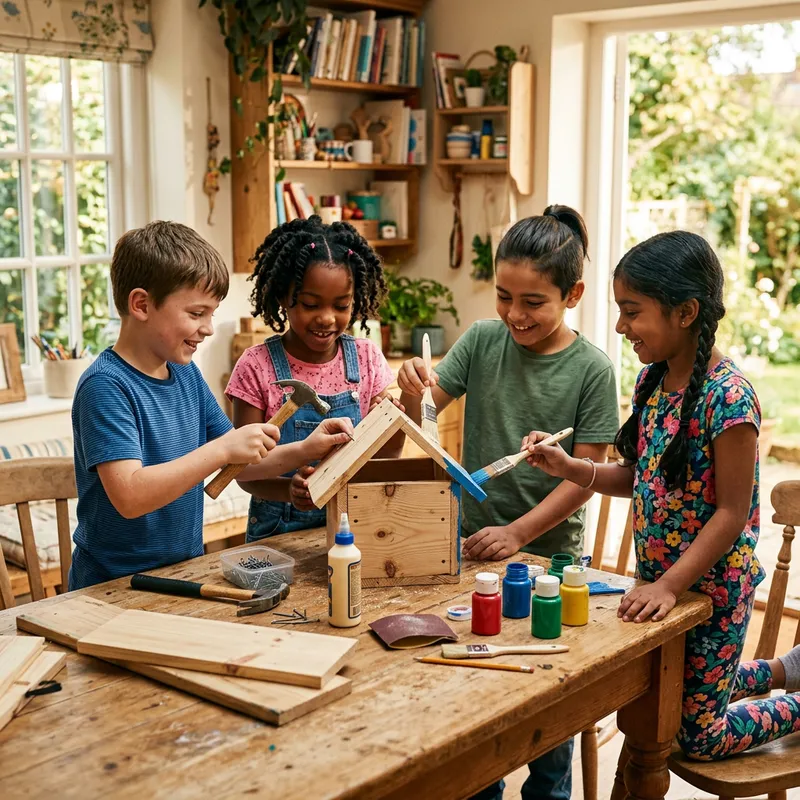
A little science, a little wordplay, a dash of imagination and something delicious from the kitchen. This weekend, curiosity takes centre stage.
A screen can be a window to a world of possibilities, but the real fun begins when you put your curiosity to work!
This weekend, get ready to explore the mysterious depths of the ocean, crack clever word puzzles, unleash your creativity through writing and discover the magic of making a delicious treat in the kitchen.
From fascinating science facts to brain-teasing challenges and hands-on culinary fun, there is plenty to keep curious minds engaged.
So, scroll less, think more and get ready for a weekend packed with learning, imagination and discovery!
Inside This Weekend Edition
- The Deep-Sea Giants of Hydrothermal Vents
- The Word Pyramid: A Vocabulary Challenge
- Young Reporter's Journal
- Make Crispy Leche Frita
- The Curious Mind
- Answer Desk
Learning challenges completed: 0 of 3.
01. Read and Respond: The Deep-Sea Giants of Hydrothermal Vents
Imagine a world without sunlight. Would you expect to find life there? Deep below the ocean, scientists have discovered an extraordinary answer.

Hydrothermal vents are associated with geological activity beneath the ocean floor.
Where the Ocean Floor Comes Alive
Far beneath the ocean surface, where sunlight never reaches and water pressure is enormous, marine scientists have discovered thriving ecosystems around hydrothermal vents.
These underwater features form along geologically active areas of the ocean floor, particularly near tectonic plate boundaries. Seawater seeps into cracks in the Earth's crust, becomes heated by nearby magma and rises back through the seabed carrying dissolved minerals and chemicals.
Instead of depending on sunlight and photosynthesis, certain bacteria use a fascinating process called chemosynthesis. They obtain energy from chemical reactions involving substances such as hydrogen sulphide and use that energy to produce organic matter.
In simple terms, these microorganisms make food using chemical energy rather than sunlight.
Giant tube worms, ghostly white crabs and specialised shrimp are among the remarkable animals associated with hydrothermal vent ecosystems. Some depend directly on symbiotic bacteria, while others feed on organisms that are part of this unusual food web.
These extraordinary communities remind us that life can flourish in places that once seemed completely unsuitable for living organisms.
Quick Questions
Read carefully and enter your answers.
2. Chemosynthesis.
3. Any two: giant tube worms, white crabs or specialised shrimp.
02. Brain Booster: The Word Pyramid Challenge
Five words. Five different meanings. One carefully constructed vocabulary pyramid. Think before you type!
Think you have a strong vocabulary? This challenge will test your spelling, observation, reasoning and ability to recognise patterns.
- Begin with a two-letter word.
- Every following word must contain all the letters of the previous word.
- Introduce exactly ONE new letter at each stage.
- You may rearrange the letters to form a completely different word.
- Pay attention to the clues, but do not expect the answers to come easily!
Build the Pyramid
Scoring: One point for each correct level. Five points are required to complete the challenge. The solution is intentionally not displayed here.
Bonus Challenge: Become a Word Detective
Once you have completed the pyramid, try creating your own five-level word pyramid. Begin with any two-letter word and add exactly one letter at every stage.
Can you create a sequence in which the words become progressively more interesting, surprising or difficult to guess?
03. Young Reporter's Journal: A Journey to the Deep
Your imagination is the only passport you need. This time, you are the journalist making an extraordinary discovery.
Breaking News from 2,500 Metres Below!
Imagine you are a marine scientist aboard a deep-sea submersible descending 2,500 metres to the ocean floor.
The water outside is completely dark. Your instruments are glowing softly, and the only sounds are the gentle hum of the submersible and the occasional communication from your research team.
Suddenly, your spotlight sweeps across the ocean floor and illuminates a hydrothermal vent for the very first time.
What do you see outside your porthole? Are strange creatures moving around the mineral chimneys? Does the water appear cloudy? Can you describe the unusual landscape? What goes through your mind as you witness this hidden world?
Write Your Deep-Sea Dispatch
Write an 80 to 100-word dispatch for School Newspaper, describing what you see when your spotlight hits the hydrothermal vent for the first time.
A Few Writing Tips from the Editor
- Begin with an interesting headline that makes readers want to know more.
- Describe what you can see, hear and imagine.
- Use vivid adjectives to bring the underwater world to life.
- Include your feelings and reactions as a scientist and reporter.
- End with a memorable observation or a question for readers.
A good report does more than tell readers what happened. It helps them feel as though they were there with you.
04. Kitchen Corner: Make Crispy Leche Frita!
A traditional Spanish dessert meets a little kitchen creativity. Get ready for a creamy centre and a wonderfully crunchy coating.

Leche Frita, a traditional Spanish milk-based dessert.
What Is Leche Frita?
The name Leche Frita translates to fried milk. It is a traditional Spanish dessert made by thickening milk into a firm, creamy custard, allowing it to cool, cutting it into pieces and coating it before cooking.
Traditionally, the pieces are coated in flour and egg before being fried. Our version takes a slightly different route. We use crushed cornflakes for an extra-crunchy finish and an air fryer instead of deep-frying.
The result is a fun kitchen experiment that brings together measuring, mixing, chilling, coating and cooking. It is also a lovely opportunity to discover how a liquid mixture can become firm enough to cut into neat little squares.
Leche Frita with a Cornflake Crunch
Preparation: About 15 minutes, plus 2 to 3 hours chilling time.
Air-frying: Approximately 7 to 8 minutes per batch.
Temperature: 190 degrees Celsius or 375 degrees Fahrenheit.
Ingredients
- Milk: 2 cups for the custard, plus 2 to 3 tablespoons for dipping.
- Cornstarch: 1/2 cup.
- Sugar: 1/4 cup, plus extra for topping.
- Ground cinnamon: 1/2 teaspoon, plus extra for topping.
- Vanilla extract: 1/2 teaspoon.
- Crushed cornflakes: 1/2 cup for coating.
- Cooking spray or melted butter for greasing and crisping.
Method: Five Easy Steps
Mix the Custard
In a microwave-safe bowl, whisk together 2 cups of milk, 1/2 cup of cornstarch, 1/4 cup of sugar, 1/2 teaspoon of cinnamon and 1/2 teaspoon of vanilla extract. Mix until smooth, making sure there are no lumps.
Heat Until Thick
Microwave the mixture for 2 minutes and stir thoroughly. Continue heating in 1-minute bursts, stirring after each interval, until it becomes thick like pudding. Microwave ovens vary, so keep checking the consistency and avoid overheating.
Chill and Set
Spoon the thick custard into a greased dish and smooth the surface. Cover with food-safe plastic wrap and refrigerate for 2 to 3 hours or until completely firm.
Cut and Coat
Once firm, cut the custard into small squares using a butter knife. Dip each piece quickly in 2 to 3 tablespoons of plain milk or melted butter, then press gently into crushed cornflakes until coated.
Air-Fry and Serve
Lightly spray the coated pieces with cooking oil. Air-fry at 190 degrees Celsius for approximately 7 to 8 minutes, turning halfway through, until the coating is golden and crisp. Roll the warm pieces in cinnamon sugar and allow them to cool slightly before serving.
Try This Kitchen Question
Why does the milk mixture become thick after heating, and why does it become firm after refrigeration? Think about the role of cornstarch, heat and cooling.
For further reading about the traditional Spanish dessert, see Leche Frita on Spain.info. Our cornflake-coated air-fryer version is an adapted variation.
05. The Curious Mind: What Did You Discover?
Every activity has a little lesson hidden inside it. The deep-sea reading introduces an unusual ecosystem. The word pyramid encourages careful thinking. The writing challenge develops observation and expression. The recipe brings science into the kitchen.
Before you finish, take a moment to reflect on your experience.
06. The Answer Desk: How Did You Do?
Have you attempted all the activities? Excellent! Now it is time to check your understanding.
Read and Respond: Science Answer Key
- Hydrothermally active regions associated with tectonic plate boundaries.
- Chemosynthesis.
- Any two: giant tube worms, white crabs or specialised shrimp.
Young Reporter's Journal: Evaluation Guide
This is a creative writing activity, so there is no single correct answer. A successful report should include an appropriate headline, vivid descriptions, observations about the hydrothermal vent and 80 to 100 words.
Keep Exploring: The Learning Continues
Curious readers often have more questions than answers. These resources offer more opportunities to explore the fascinating world beneath the ocean.
- NOAA Ocean Exploration: Hydrothermal Vents and Volcanoes.
- NOAA Ocean Service: What Is a Hydrothermal Vent?.
- NOAA Student Investigation: Life on a Hydrothermal Vent.
- Spain's Official Tourism Portal: Discover the Traditional Leche Frita Recipe.
More to Explore with Tina Khatri
Think, Make, Taste and Discover
Continue exploring creative activities that bring food, science, observation and language together.
Read moreTaste, Experiment and Discover
Explore another collection of hands-on kitchen activities, science experiments and clever riddles.
Read moreSTEM Projects, Healthy Recipes and Language Puzzles
Discover how simple materials, cooking and vocabulary challenges can become engaging learning experiences.
Read moreYour Weekend Workbook
Your answers and notes deserve to be kept. Use the tools below to save your activity responses on this device or download a copy of your work.
Keep Your Work Together
Saving stores your responses in this browser on this device. Download your workbook if you want to keep a separate copy or move your work to another device. Clearing browser data may remove locally saved responses.
The Best Discoveries Begin with Curiosity
A little reading, a little thinking, a little writing and a little cooking can turn an ordinary weekend into an adventure.
Keep asking questions. Keep trying new things. And never stop discovering.
Happy Exploring!
This activity collection is designed for informal learning and family participation. Children should have appropriate adult supervision for kitchen activities.